BLM pursues changes to oil and gas leasing in hopes of spurring new development, but environmental groups have concerns
Advocates warn that shortened public comment timelines and changes to well-cleanup funding will harm public lands

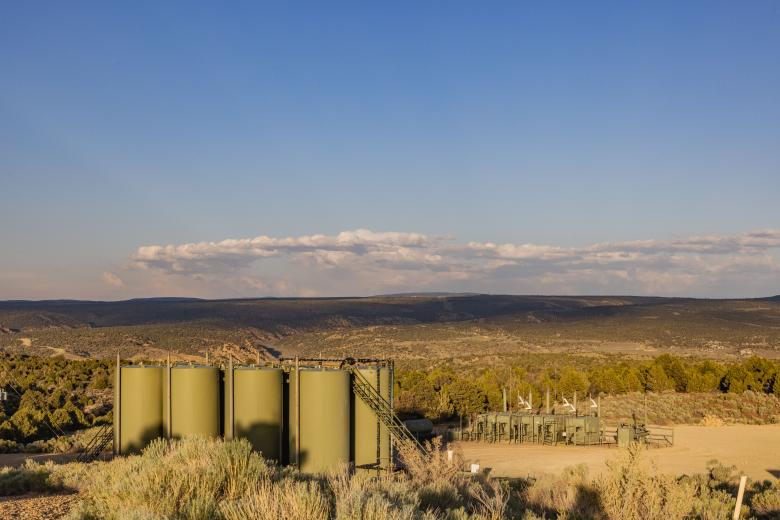
Bureau of Land Management/Courtesy Photo
The U.S. Department of the Interior is proposing changes to the Bureau of Land Management’s oil and gas leasing process. While the industry is lauding the proposal as a repeal of punitive measures implemented during former President Joe Biden’s administration, environmental advocacy groups say it will stifle critical public participation and reduce incentives for companies to clean up drilling sites.
The department announced its proposal on Monday, June 22, issuing two proposed rule changes that it argues will “eliminate the significant and overburdensome regulatory requirements” on oil and gas operators. The proposals cover a variety of measures from shortening public comment periods, reducing bonding requirements, repealing a waste minimization rule and more.
Secretary of the Interior Doug Burgum said the energy dominance sought by President Donald Trump’s administration since the day one executive order to “unleash” American energy “requires regulatory clarity” in a press release.
“These targeted updates cut through the red tape that has historically deterred investment, ensuring our public lands remain a reliable engine for economic growth and innovation,” Burgum said.
On Tuesday, June 23, a group of environmental policy advocates — including The Wilderness Society, Taxpayers for Common Sense, the National Wildlife Federation and Public Land Solutions — hosted a press call to express concerns with the proposals.
“The agency is effectively saying that our public lands are on sale to the highest bidder,” said Greg DeBie, senior staff attorney at The Wilderness Society. “Interior is letting the oil industry dominate over any other use of the public lands, which will come at the cost of community wellbeing and the ability of future generations to access and enjoy those lands.”
Under the Mineral Leasing Act of 1920, the BLM is required to hold quarterly oil and gas lease sales when eligible lands are available for leasing. Over 80% of public land managed by the Bureau of Land Management is open to oil and gas leasing. In Colorado, where the agency manages 8.3 million surface acres and 27 million subsurface mineral acres, the BLM oversees around 4,700 leases spanning 3.7 million acres.
The proposed rule changes are the latest move by the Trump administration to increase oil and gas production on public lands, including the reduction of royalty rates in the One Big Beautiful Bill Act.
BLM Colorado has held four lease sales since Trump took office — including one initiated under Biden — that have resulted in the lease of 266 parcels, spanning over 215,000 acres and amassing nearly $54.94 million.
Is public participation burdensome or critical?
Among the proposed changes is reducing public participation from 90 days to 10 days. In the Federal Register notice, the Interior Department said the goal is to “significantly expedite” the process.
“By reducing the time spent in public comment and review, the BLM could still draft strong analyses while facilitating quicker decision-making, thus allowing for more timely access to resources,” the agency reports.
Ashley Korenblat, managing director of Public Land Solutions, said on the Tuesday call that under these changes, “the industry, without local input, will end up with an increased number of questionable leases on their balance sheets.”
Aaron Kindle, director of sporting advocacy at the National Wildlife Federation, said it would harm those who live, work and play near public lands the most. “We really firmly believe that the public should be given plenty of time to analyze any proposal from the BLM, leasing on public lands, any type of activity that would occur on public lands,” he said.
Reversal of Biden-era rules, bonding requirements
In 2024, Biden’s administration issued its own reforms of the BLM oil and gas leasing rules, including increasing royalty rates and the statewide minimum bonding requirement — which assures that companies, not taxpayers, will foot the bill for plugging and reclaiming well sites after production ceases — from $25,000 to $500,000. It also introduced a waste prevention rule, aimed at reducing natural gas flaring, venting and leaks.
At the time, the Interior Department said the changes were meant to modernize regulations in light of evolving market conditions and technologies as well as an increased understanding of the programs’ “significant and environmental and climate impacts,” amid the administration’s push away from fossil fuels and toward clean energy.
In its June notice, the BLM is now proposing to rescind the waste prevention rule and return the bonding requirement to the previous $25,000 standard. This is in addition to other proposed changes, including filing fee changes, authorization of non-competitive leases after competitive auctions and more.
In an emailed statement, Melissa Simpson, president of the Western Energy Alliance, said the trade group, which represents industry interests in Colorado and 12 other western states, viewed the proposed rule as a return to “more reasonable policies that existed prior to 2020.”
“Under the Biden Administration, the leasing rule was a primary vehicle to restrict oil and natural gas development on lands explicitly open to multiple uses that include energy development,” Simpson said. “It did so through excessive increases to bonding rates that targeted small and mid-sized operators and by placing significant limits on lands made available for leasing.”
Environmental groups, however, view it as a return to policies and bonding minimums set in the 1950s and 1960s that could ultimately harm public lands and taxpayers.
“Those outdated minimums bear little relationship to the actual cost of plugging wells and restoring sites today,” said Autumn Hanna, vice president of Taxpayers for Common Sense, on the Tuesday call. “Adequate minimum bond requirements are important. They establish the baseline level of financial assurance across the federal program and help ensure taxpayers are not left exposed when operators fail to meet their obligations.”
Korenblat argued that reducing the bonding requirements “puts many places on a path toward a growing number of orphaned wells, because when bonding is woefully inadequate, taxpayers have to pick up the tab, and when wells are sold to local, smaller operators, who often don’t have sufficient capital to make up the difference, that’s when they end up unplugged.”
Aaron Johnson, vice president of public and legislative affairs for Western Energy Alliance, pushed back on this claim and said that the issue of orphan wells — inactive oil and gas wells that have no solvent owner to plug and reclaim them — on public lands is “overstated.” Johnson cited a 2019 Government Accountability Office report, in which the BLM identified 296 orphan wells on its lands. That same year, the agency had over 96,000 producible or service wells.
The report concluded that the existing bond amounts, including the $25,000 statewide bond minimum, were insufficient to prevent orphaned wells, and recommended that BLM “take steps to adjust bond levels to more closely reflect expected reclamation costs.” The report recommended the statewide bond minimum be set at $198,000.
Johnson said the $500,000 minimum set in 2024 was too high and meant to be “punitive” and meant to fulfill the administration’s campaign promise to end oil and gas production on public lands. He cited that the actual cost is likely lower based on a 2023 report from the Interstate Oil and Gas Compact Commission. The report said the average cost of plugging an orphan well across 26 states increased from $20,502 in 2018 to $41,955 in 2023.





Support Local Journalism
Support Local Journalism
Readers around Glenwood Springs and Garfield County make the Post Independent’s work possible. Your financial contribution supports our efforts to deliver quality, locally relevant journalism.
Now more than ever, your support is critical to help us keep our community informed about the evolving coronavirus pandemic and the impact it is having locally. Every contribution, however large or small, will make a difference.
Each donation will be used exclusively for the development and creation of increased news coverage.
Public comments for both proposals are open until Aug. 24, 2026.