How Republican candidates for Colorado governor say they’ll bridge the urban-rural divide
Candidates Scott Bottoms, Victor Marx and Barbara Kirkmeyer also tout differing experiences, defend controversies

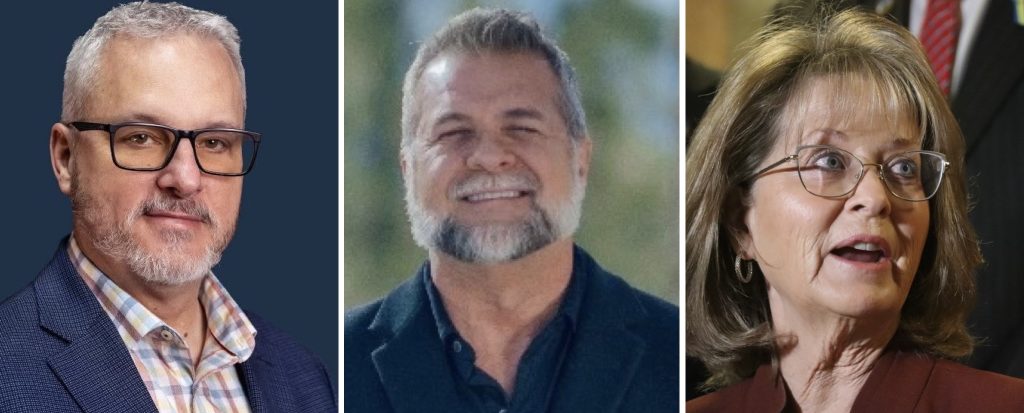
Bottoms and Marx photos courtesy of campaigns, Kirkmeyer photo by Robert Tann/Post Independent
The three Republican candidates for Colorado governor all say they know how to bridge the state’s urban-rural divide.
Their ideas include staffing agencies with more people with backgrounds and experiences in industries like agriculture and ranching, ensuring rural communities receive adequate state funding and better prioritizing rural needs, such as road conditions.
While all three candidates share similar goals, they differ widely in their experiences and leadership styles. Scott Bottoms, Victor Marx and Barbara Kirkmeyer are all running in the June 30 Republican primary to be their party’s nominee for governor to succeed outgoing Democratic Gov. Jared Polis, who cannot run for re-election because of term limits.
Bottoms is a longtime pastor from Colorado Springs and current representative in the Colorado House, who was first elected in 2022. He has positioned himself as one of the legislature’s most conservative voices, often sparring with Democrats over issues of abortion access, transgender rights and illegal immigration.
“I have a very strong biblical worldview,” Bottoms said. “When I look at the Declaration of Independence and the Constitution, those were written from the Bible by men of faith, by godly men. It’s woven throughout everything we are as a society, our Judeo-Christian values.”
As governor, Bottoms said he wants to bring “solid, good moral values,” adding that “whether you like Jesus or not is not important — his teachings are for everybody.”
Marx is a Marine Corps veteran who runs a faith-based nonprofit called All Things Possible Ministries, based in Colorado Springs. His group focuses on international humanitarian aid and freeing women and children from sex trafficking in high-risk, war-torn countries, primarily in the Middle East and South Asia.
Marx, who has never held public office, said his lack of political experience is what appeals to voters.
“People ask me, ‘What about your experience? You don’t have experience as a politician,'” Marx said. “And I don’t know whether to say, ‘You’re welcome,’ but it is what’s resonating with people right now — a true outsider, someone who has proven leadership in the real world.”
Kirkmeyer is a state senator with decades of experience in local and state government. Kirkmeyer worked for former Gov. Bill Owens — the last Republican governor of Colorado — from 2001 to 2006; served several terms as a Weld County commissioner, and is currently in her first term as a state senator after winning the election in 2020.
Kirkmeyer is one of just two Republicans in the legislature who serve with four Democrats on the Joint Budget Committee, which writes the state’s annual multibillion-dollar budget. Kirkmeyer has made her deep bench of fiduciary experience and pragmatism a hallmark of her campaign.
“I am the only candidate in this race who is actually qualified and has governing experience about balancing budgets,” Kirkmeyer said.
Candidates want more rural representation, funding
All three candidates said they feel rural Colorado, including the Western Slope, is often ignored by the state government, which they say stems from a lack of understanding of rural issues and needs.
Marx said he wants to staff his administration with more people who have backgrounds in industries like ranching and agriculture, and plans to appoint a liaison for the state to work with those industries and communities. He pointed to the Colorado Parks and Wildlife Commission as a body that he would overhaul as governor by replacing Polis’ appointees. He said the commission has made wildlife decisions that are not grounded in science but on “preservation and weird ideology.”
He used the wolf reintroduction program, which was mandated by Colorado voters in 2020 and has been implemented by Parks and Wildlife, as an example.
“They’ll be resigning before Day One,” Marx said of the Parks and Wildlife commission’s members.
Marx said the lack of affordable housing for working residents is one of the Western Slope’s top issues. As governor, Marx said he would speed up housing development by requiring that permits for projects be approved or denied within 120 days. He said he wants to move communities that have an interest in building housing to the front of the line for state funding.
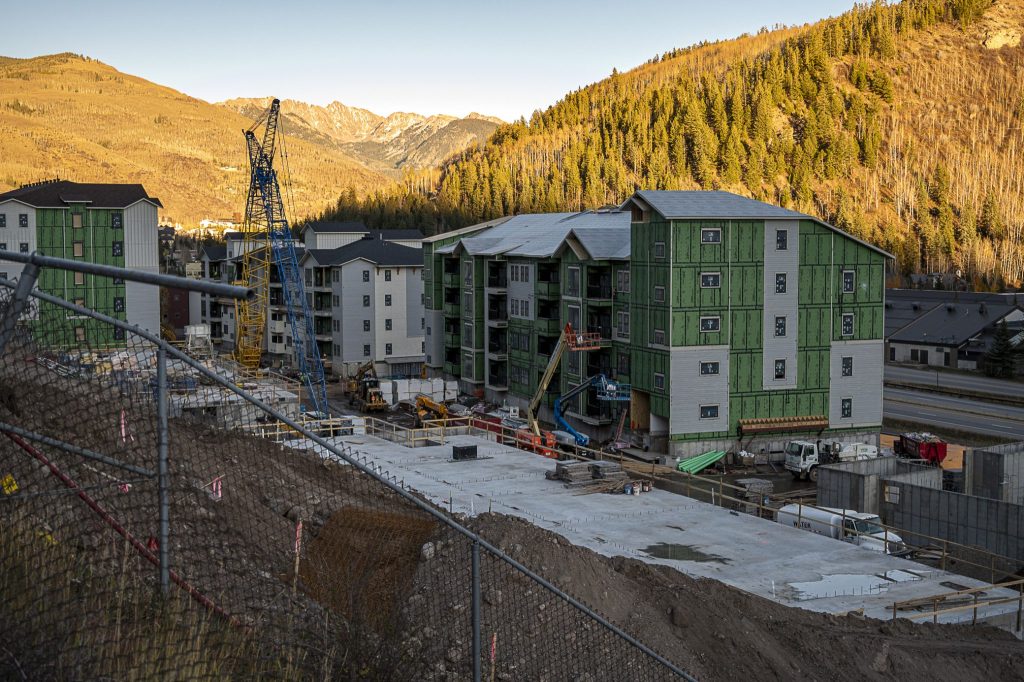
Marx added that he respects local control and opposes many of the housing policies that have been a key legislative priority for Gov. Jared Polis. That includes new state laws that override local land-use codes in a bid to boost housing density, though much of that is focused on Front Range cities. Marx said he wants to focus on incentives and cutting red tape rather than mandates.
Bottoms said he wants to ensure western Colorado receives funding that the state has appropriated, adding that too often dollars that are meant for rural areas aren’t reaching those communities. He claimed that as much as 30% of new funding appropriated for Western Slope communities in recent years is staying in Denver.
Bottoms did not provide any specific examples, saying that much of the funding is buried in spending bills, but that he began looking into the issue recently as a member of the House Appropriations Committee.
“The Western Slope is just not getting the money they’re supposed to be getting,” he said.
As governor, Bottoms said he will force investigations and audits into state agencies to ensure money that is appropriated to communities is actually going to those communities. Bottoms said he would also protect smaller, rural communities that have often been on the front lines of state spending cuts.
He gave the example of revenue from severance taxes, which are imposed on extractive industries like oil and gas. While those dollars are primarily meant to fund water and road projects, legislators have tapped that revenue in recent years to plug budget holes.
Kirkmeyer said one of her top priorities as governor would be investing more money into roads, which she said have been chronically neglected, particularly in western parts of the state.
Colorado ranks among the worst states for road infrastructure, placing 42nd in the nation for overall road conditions, and 46th in rural interstate pavement conditions, according to the 2026 Annual Highway Report by Reason Foundation, a libertarian think tank that tracks the health of the country’s road systems.
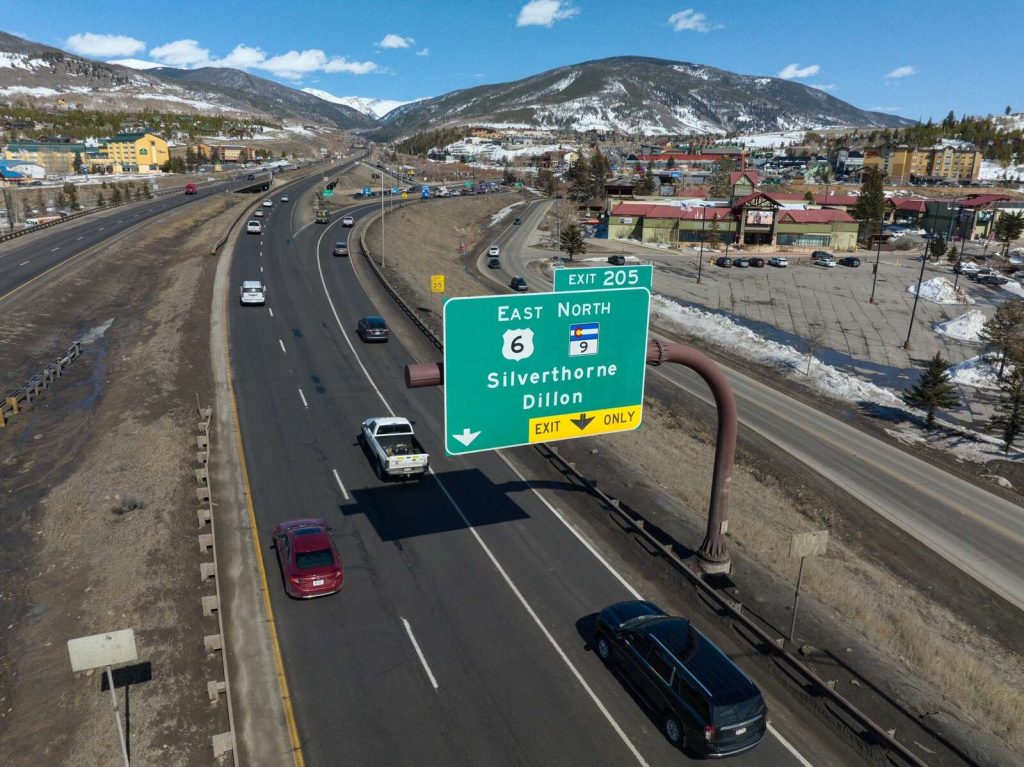
Kirkmeyer said the state can increase funding for roads and bridges without raising fees or taxes by prioritizing funds for road surface maintenance and engaging in more public-private partnerships.
“It’s really about using the funds that we do have in a more effective way,” Kirkmeyer said, adding that rural Colorado “deserves to have a transportation system that is appropriately maintained.”
She supports a ballot proposal by the Colorado Contractors Association that would force the legislature to spend hundreds of millions of dollars more on roads without raising taxes. Supporters of the measure are still gathering signatures to place it on the November ballot.
Democrats have claimed that the initiative could force cuts to healthcare and education. They passed a bill — which was signed into law by Polis this month— to effectively neutralize the proposal by reducing revenue for roads and bridges, something Kirkmeyer said undermines voters’ trust in the state.
Controversial claims by Marx and Bottoms
On many of the state’s big issues, the Republican candidates seem to agree.
All three want to cut government spending and make programs like Medicaid — which has seen its budget explode in recent years — more efficient. All say they oppose housing policies that undermine local governments’ decision-making. And all have identified a need for the state to better serve rural communities.
But it is each candidate’s background and experiences that they say show why they’re the best choice to be the Republican nominee to lead Colorado, even as those same experiences have been used against them by their opponents.
Marx said his work helping women and children in high-risk communities is driven by his own childhood trauma. Marx has said he was sexually assaulted and forced by his stepfather to shoot and kill a man at the age of 7. Marx has been pressed by his opponents and reporters about claims made about his life.
He has said he called in an airstrike to kill dozens of ISIS fighters, that he was the first American to enter Gaza after war broke out with Israel and that he has stopped human smuggling at the U.S.-Mexico border. Marx has been critized for not providing direct evidence to back up many of his claims.
Marx has also inferred that he’s killed people in self-defense during his missionary work, but in a recent interview with 9News reporter Kyle Clark, he declined to say how many people he believes he’s killed. In that same interview, Marx did not say how many people his organization has rescued or aided. His ministry’s website documents some of the stories of people it has claimed to have helped.
Kirkmeyer and Bottoms have described Marx as a liar who makes up “tall tales.” Marx said there’s plenty of evidence to support his life’s story and work.
“There’s far more evidence out there of who I am, what I’ve done, decades of it,” Marx said. “But some who don’t want me and know that I’m a threat, all they can do is make accusatory remarks.”
Bottoms, too, has faced scrutiny for claims he’s made about organized pedophile rings within the Colorado legislature and the governor’s office. Bottoms claims he first learned about the allegations of sex crimes about three years ago, when he said Democratic lawmakers told him that other Democrats were “buying children” for sex.
Since then, Bottoms said he’s been working with private investigative companies and the Federal Bureau of Investigation.
“We’re going to expose a lot of people, and some people are going to go to jail,” Bottoms said.
Vikki Migoya, public affairs officer for the FBI’s Denver field office, said in a statement that the FBI cannot confirm or deny whether they’ve been in contact with Bottoms and if they are investigating his claims.
“While individuals are free to speak about interactions they might or might not have had with the FBI, we do not, as a matter of practice, discuss or describe any contact we have or allegedly have with individuals,” Migoya said. “The FBI receives many complaints of criminal activity, and how we handle them is a confidential process. Similarly, to protect the privacy of people who contact the FBI, we cannot confirm or deny any particular contact.”
Migoya added that the FBI will review allegations of criminal misconduct for their merit, but that “review does not necessarily result in the opening of an investigation, an arrest or a referral to the U.S. Attorney’s Office or local district attorney for prosecution.”
Kirkmeyer defends her record
Kirkmeyer has framed herself as a pragmatic, results-driven candidate.
She knocked Marx for his lack of political experience and called out Bottoms for having a legislative record that has been light on wins.
Of the 20 bills that Bottoms has been a main sponsor of since he started serving in the legislature in 2022, one has been passed and signed into law — a bill to create an “In God We Trust” license plate. His other bills, all of which were defeated by Democrats, who outnumber Republicans in the legislature nearly 2-to-1, focused on issues like rolling back abortion access and transgender healthcare for minors.
Bottoms said he doesn’t view his legislative record as disappointing, saying that those bills have helped elevate important issues.
“One of the reasons I’m running those bills is to bring public awareness to what’s going on, because most people don’t know what’s happening,” Bottoms said.
Kirkmeyer, by comparison, has worked with Democrats on several major bills, including efforts to drive more funding to K-12 education and blunt the impact of property tax increases. As a member of the Joint Budget Committee, her work on state spending is also often bipartisan.
But it’s that same track record that has been used by Marx to cast Kirkmeyer as a career politician who has upheld the status quo. Bottoms also criticized Kirkmeyer for too often working with Democrats, saying that she fails to uphold true conservative values.
Kirkmeyer said as governor, she’s willing to work with anybody, regardless of party, to get things done.
“I think my record helps me with every voter in this state — Republican, independent, unaffiliated and Democrat,” Kirkmeyer said, while adding, “I think people are hungry for a common-sense conservative like myself.”
Kirkmeyer has also been challenged for her role in advocating for a 2013 ballot measure that asked voters in 11 northern Colorado counties whether they should pursue secession to form their own state.
The measure, which was placed on the ballot by those counties’ commissioners, including Kirkmeyer in Weld County, failed. Kirkmeyer stressed that the ballot initiative would have been just the first step in a multistep process to secede.
Kirkmeyer said the effort was about listening to her constituents, pointing to comments made by then Gov. John Hickenlooper, a Democrat, who said the secession attempt showed that the state neededto listen to rural Colorado and that the effort ultimately made the state “stronger.”
“Rural Colorado was sending a message to certainly those down at the Capitol down in Denver to ‘stop messing with us, stop screwing us over,'” Kirkmeyer said. “And it worked.”
As of the most recent campaign finance filings on June 1, Marx was leading his opponents in fundraising, with just over $2.6 million raised and nearly $2.3 million in expenditures. Kirkmeyer had raised over $565,000 with $10,000 in loans and nearly $480,000 in expenditures. Bottoms had raised over $210,000, with $15,000 in loans and a starting balance of $5,900. He had spent over $215,000.
Ballots began being sent in the mail to registered voters on Monday, June 8. Voters will have until June 22 to return their ballot by mail to ensure it is counted, or until 7 p.m. on June 30 to drop their ballot off at a drop box or to vote in person.
Information on how to register to vote or update voter information can be found at GoVoteColorado.com.




Support Local Journalism
Support Local Journalism
Readers around Glenwood Springs and Garfield County make the Post Independent’s work possible. Your financial contribution supports our efforts to deliver quality, locally relevant journalism.
Now more than ever, your support is critical to help us keep our community informed about the evolving coronavirus pandemic and the impact it is having locally. Every contribution, however large or small, will make a difference.
Each donation will be used exclusively for the development and creation of increased news coverage.