Mountain bookstores share recommendations to dive into 150 years of Colorado history

Courtesy photo
One hundred and fifty years ago, and after four failed attempts, Colorado entered the Union as the 38th state.
The sesquicentennial is the perfect time to brush up on the state’s history, so The Post Independent asked six independent bookstores in the High Country to give their top book recommendations to satiate a variety of reading preferences.
Go-to historical fiction
For readers looking for a less daunting way to learn about Colorado history, booksellers gave their top selections for historical fiction that takes you back in time.
One book stood out among the rest, with four sellers recommending it: “Go as a River” by Gunnison resident Shelley Read.
Clare Pearson, manager and bookbuyer at Explore Bestsellers in Aspen, recommended it as a “gorgeous and harrowing coming of age story that includes so many beautiful descriptions of the Colorado landscape.” The book echoes the real history of Iola, a town flooded by the reservoir’s creation, in the 1940s and 1950s.
Miriam Roskam, owner of Mountain Shire in Winter Park, recommended “This Isn’t New” by Denver-based author Cynthia Swanson, describing it as an “incredibly compelling” anthology of stories that span from the 1870s to early 2000s.
The book “is an excellent collection of women-focused historical fiction stories, some of which are set in Colorado and have to deal with the history of the state,” Roskam said.
“Wandering Stars” by Tommy Orange was the recommendation from Alix Teague with the Bookworm of Edwards. Teague said it follows Orange’s typical style and explores a “gruesome and relatively lesser known part of Colorado history.”
The book is described on its jacket as a “constellation of narratives into the past and future, that trace the legacies of the Sand Creek Massacre of 1864 and the Carlisle Indian Industrial School through three generations of a family in a story that is by turns shattering and wondrous.”
Nonfiction reads for the history lover

For a more traditional nonfiction book on Colorado history, the booksellers gave a range of recommendations that dig into key historical people and industries across the state.
Teague from the Bookworm of Edwards recommended “Utes” by Jan Pettit, which spans the tribes’ history from “from the archaeological features of prehistoric Ute cultures to elements of present-day Ute culture,” according to its description.
“It’s so important to understand and acknowledge the people who’ve been on this land longer than Colorado has been a state,” Teague said.
Jacque Benson, owner of Next Page Books, went broad with her recommendation, suggesting any of the books from the “Images of America” series, which she said “cover diverse topics, ranging from Colorado in the Civil War to specific local histories of Summit County towns.”
For readers looking for a little bit of everything, Roskam with Mountain Shire suggested readers dive into “The Colorado Book,” a literary anthology edited by Sandra Dallas, Thomas J. Noel and Pan Sandlian Smith. A new edition was released for the sesquicentennial, and pulls together poems, fiction, narrative history, biography and essays on the state’s literary, historical and cultural landscape.
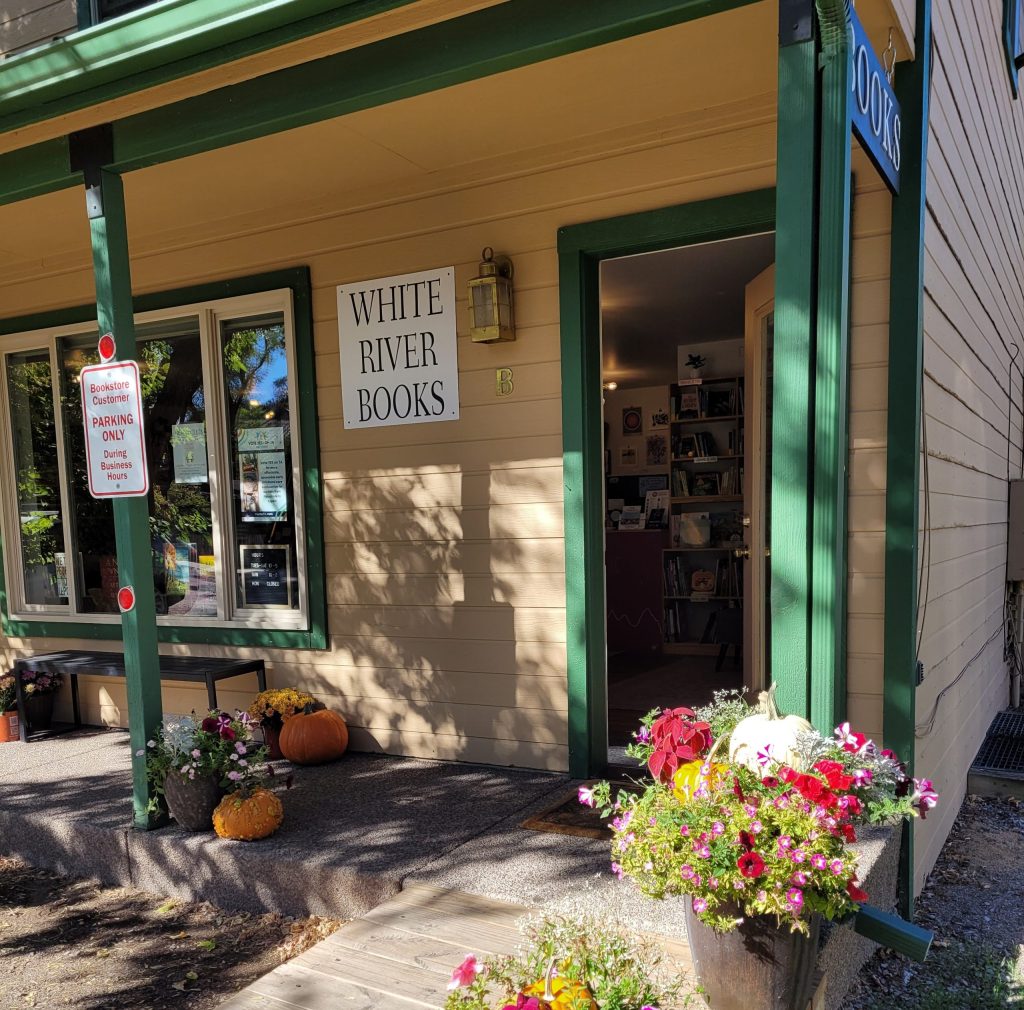
“Skiing in Colorado,” released by the Colorado Snowsports Museum and Hall of Fame, was a recommendation of Izzy Stringham, owner of White River Books in Carbondale. Stringham described it as a slim book chock full of pictures as well as great tidbits, facts and anecdotes about the sport’s history in the state.
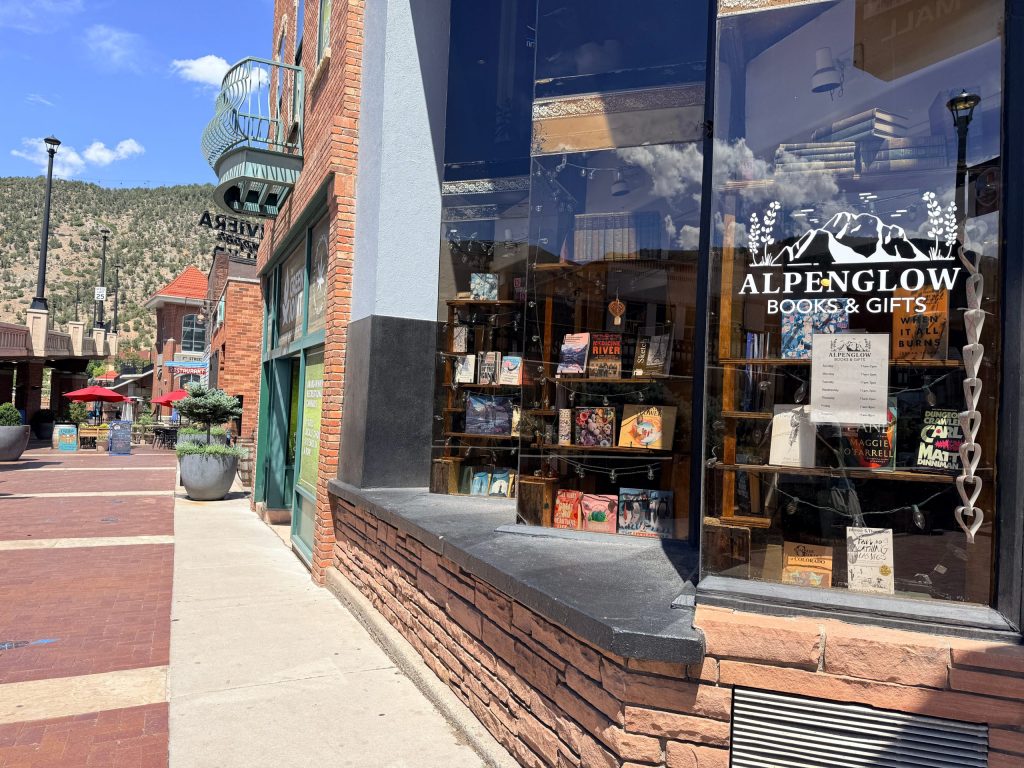
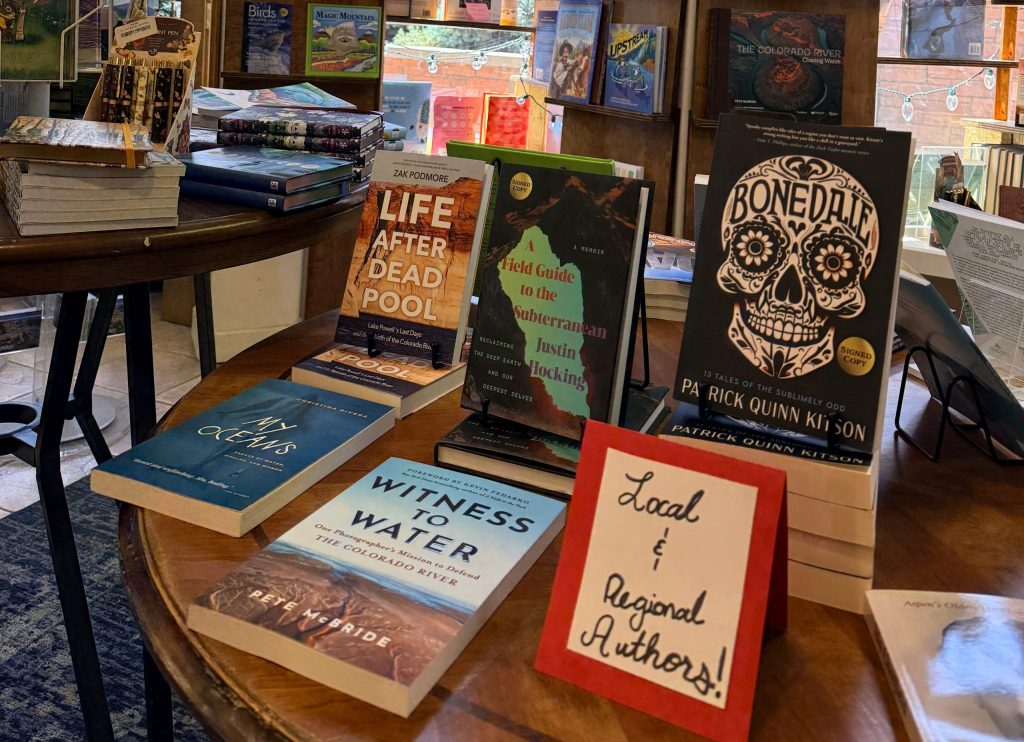
Katie Hake, co-owner of Alpenglow in Glenwood Springs, recommended “Witness to Water: One Photographer’s Mission to Defend the Colorado River” by Colorado author Pete McBride. The book pulls together stories, observations and insights on the Colorado River’s history and plight, pulling from McBride’s personal experiences and professional coverage of the river as a National Geographic photographer.
For a memoir suggestion, Pearson recommended “To Aspen and Back” by journalist and Aspen resident Peggy Clifford, which she said is an “excellent sociocultural portrait” of the city.
“This memoir of a changing Aspen is as relevant today as it was in 1980, when it was first published,” Pearson said. “The idea of Aspen is far bigger than the town’s geometry, and Clifford captures the town’s elusive spirit with depth and clarity.”
Books about local, regional history
Booksellers also had a wide variety of books for those looking to delve into the specific histories of the communities where they are located on the Western Slope, including many written by local historians and authors.
Roskam recommended one of the “Images of America” books that explores Grand County history and was written by Granby resident and Colorado Women’s Hall of Fame winner Penny Rafferty Hamilton and the Grand County Historical Society.
For Eagle County, Teague recommended “Gypsum Days” by Kathy Heicher, president of the Eagle County Historical Society, which was published by the town of Gypsum and society in 2021 to share the 110-year history of the town.
Benson also looked to a local author for her recommendation — “Summit: A Gold Rush History of Summit County, Colorado” by Mary Ellen Gilliland, which she said offers “a deep dive into the unique histories of Breckenridge, Frisco, Copper Mountain, Dillon, Keystone and Silverthorne.”
A few of the booksellers recommended books that dive into hyperlocal events. Pearson with Explore in Aspen said the store’s top pick was “Ida Chatfield: Aspen’s Oldest Unsolved Mystery” by Colorado resident T.A. Stevens. Eighteen-year old Chatfield disappeared from Aspen in 1886, before her body was found two months later.
“Stevens’ novel does far more than revisit the mystery of Ida’s disappearance, it provides a beautifully-imagined portrait of her life, honoring her memory while providing a lovely and well-researched window into history,” Pearson said.
Hake recommended “Fire on the Mountain: The True Story of the South Canyon Fire” by John N. Maclean, which she said offers a “historical record of the South Canyon Fire in 1994, which claimed the lives of 14 wildland firefighters on Storm King Mountain in Glenwood Springs.”
Stringham recommended a novel that touches on some local lore: “The Dog Stars” by Denver-based author Peter Heller.
“The action starts in Erie and travels to Grand Junction via Carbondale, Cedaredge and Collbran,” Stringham said. “This excellent adventure story is about a man who survived a world ending flu outbreak and is flying a small plane to Junction to look for other survivors. It’s full of nonstop action as well as wonderful writing.”
An introduction to Colorado history
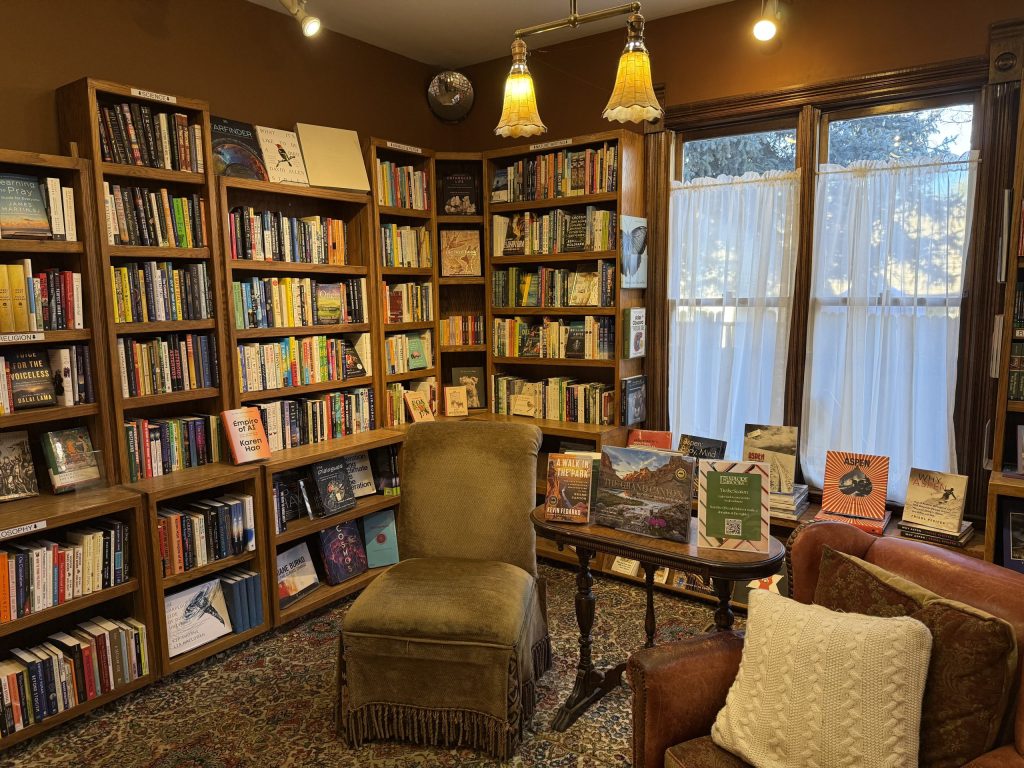
Colorado’s mountain bookstores see a broad array of customers, including first-time visitors to the state or region. For these individuals — or those who want to learn about Colorado history for the first time — booksellers offered quite the selection.
It included “Colorado: A Historical Atlas” by Thomas J. Noe and cartographer Carol Zuber Mallison, which offers a wide-spanning look at the state’s past, as well as Boom and Bust Colorado by Thomas J. Noel and William J. Hansen, which looks at the state’s economics from gold rush to the 2020 pandemic.
Several recommendations were inspired by the bookstore’s community.
Pearson said Explore’s go-to would be “Aspen Journey Past to Present,” which was written by Colorado-based Susan Dalton, in collaboration with Aspen resident Judy Haas as the editor. Pearson said “this beautifully-made coffee table book is rich with Aspen history and delights with many interactive elements including a detailed timeline of Aspen, vintage postcards and gorgeous archival photographs.”
Teague said Bookworm recommends the “Images of America” book on the 10th Mountain Division at Camp Hale by Flint Whitlock and Eric Miller, which offers “a great introduction to the 10th Mountain Division from World War II who trained at Camp Hale, just a few miles south of our bookstore.”
Another of Pete McBride’s books — this one a collection of photography and essays — “The Colorado River: Chasing Water” was the recommendation from Stringham for a first-time visitor as it “helps anyone trying to understand Colorado better.”
“This book tells the story of the entire Colorado River in all its complicated treaties and water rights, from the Never Summer Range to where it dries up in Mexico,” Stringham said.
Unique or obscure history books

For true history buffs who are well-versed on the state’s history, the booksellers offered books that explore some of the more obscure or unique elements of the state’s history from beer and trails to ghosts and folklore.
Two offered books on the spooky side of Colorado’s history: Teague recommending “Eerie Colorado: Mountain Folklore, Monsters and Tales of the Supernatural” by Jack Daly — described as a an “odyssey though the uncanny” on the cover — and “Haunted Hotels of Northern Colorado” by Nancy K. Williams, which was recommended by Hake as it includes a look into the ghostly past of Hotel Colorado in Glenwood Springs.
Spirits, of the liquid variety, are among the topics explored by Benson’s recommendation of “Tales, Trails, and Tommyknockers” by Miriam Ackley. Next Page’s Benson described it as “a fun exploration of Colorado legends and lore.”
“It blends real history, such as early ski culture and gold mining, with Colorado myths like the legendary Tommyknocker spirits,” she added.
Teague also recommended “Brewed at Altitude: A Beer Lover’s History of Colorado” by Sam Bock and Jason L Hanson, which follows the history of beer from the gold rush through Prohibition into the 1970s beer boom and modern era of brewing.
For the book and history lovers, Mountain Shire’s Roskam suggested “Reading Colorado: A Literary Road Guide” by Peter Anderson. The publisher describes it as a “high-octane road trip” through the state’s landscape touched by authors such as Kent Haruf, Mark Twain, Anne Waldman, Allen Ginsbery, Jack Keroauc, Isabella Bird and Enos Mills.
 As Colorado celebrates its sesquicentennial in August, our reporters are looking back at the people and stories that shaped our mountain communities.
This series traces the region’s history from before statehood, beginning with the Ute people, whose creation story is rooted in the Rocky Mountains, and the Hispano families who established some of Colorado’s earliest settlements. From there, it follows the miners and homesteaders who transformed the landscape, and the visionaries who helped build the recreation- and tourism-driven communities that define the region today.





Support Local Journalism
Support Local Journalism
Readers around Glenwood Springs and Garfield County make the Post Independent’s work possible. Your financial contribution supports our efforts to deliver quality, locally relevant journalism.
Now more than ever, your support is critical to help us keep our community informed about the evolving coronavirus pandemic and the impact it is having locally. Every contribution, however large or small, will make a difference.
Each donation will be used exclusively for the development and creation of increased news coverage.