Western Slope lawmakers push more mobile home park legislation targeting sale disclosures, water quality
Bills build on existing laws aimed at keeping mobile home parks affordable and improving residents’ water quality

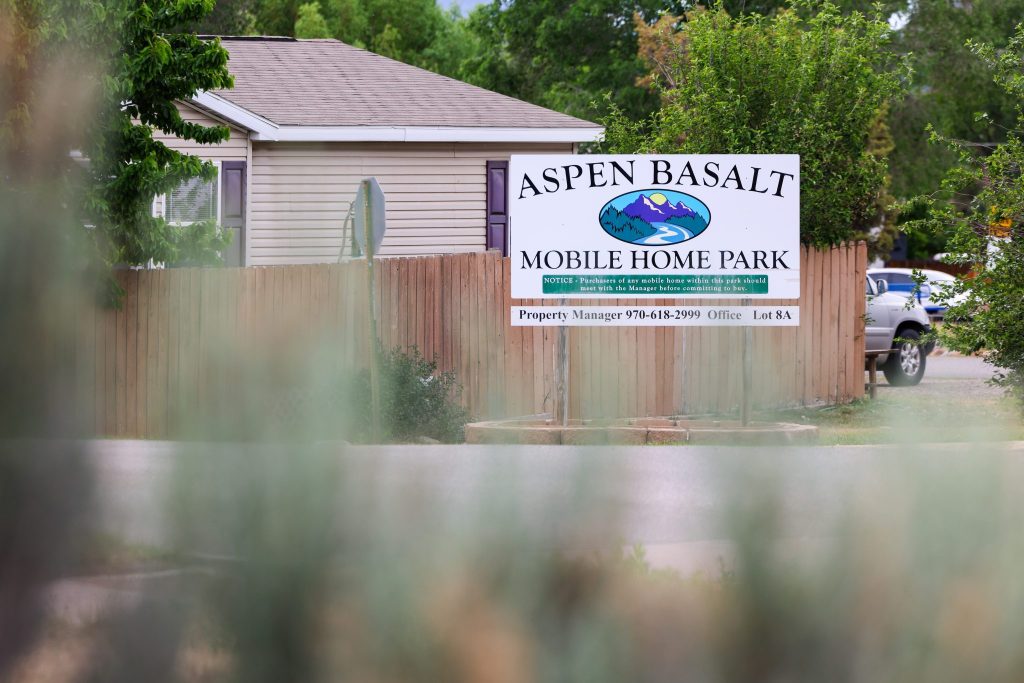
Austin Colbert/The Aspen Times
Colorado lawmakers are continuing to double down on efforts to bolster protections for mobile home residents, with legislation this year that addresses disclosure requirements in park sales and water quality issues.
Much of the legislation tweaks existing state laws that have been passed in recent years to preserve mobile home communities, which lawmakers say have become some of the last bastions of naturally occurring affordable housing.
Since 2019, lawmakers have created a dispute resolution process for alleged violations of homeowners’ rights, provided homeowners with a “right of first refusal” to buy their park if their owner chooses to sell the land, and required the state’s health department to test drinking water at all Colorado mobile home parks.
Bills proposed this year, led in part by Western Slope lawmakers, would build on much of that legislation, including a measure, House Bill 1224, that requires more transparency from park landlords who sell their land.
“In rural resort communities, many of our working families live in mobile home parks, because they are the only affordable housing that is not subsidized,” bill sponsor Rep. Elizabeth Velasco, D-Glenwood Springs, said Thursday during a bill hearing in the House Finance Committee. “Mobile home parks are not a temporary housing option. They are a home, community and one of the last remaining forms of naturally occurring affordable housing.”
Other sponsors of HB 1224 are Rep. Andrew Boesenecker, D-Fort Collins, and Sens. Dylan Roberts, D-Frisco, and Lisa Cutter, D-Littleton.
Transparency in park sales
Under the bill, landlords would be required to provide certain information, if requested by a tenant, when issuing a notice of their intent to sell. That includes an explanation of the park’s purchase price, the age of the park’s infrastructure, inspection reports, rent data with redacted personal information and the park’s operating expenses.
Additionally, if a mobile home park is being sold as part of a packaged portfolio sale with other real estate, landlords must disclose any changes or discounts for the sale of the park.
“At the end of the day, this bill is about dignity and fairness,” said Velasco, who herself grew up in a mobile home park in Eagle County. “If residents are willing to do the hard work to try to save their community, the law should not leave them one step behind before the process even begins.”

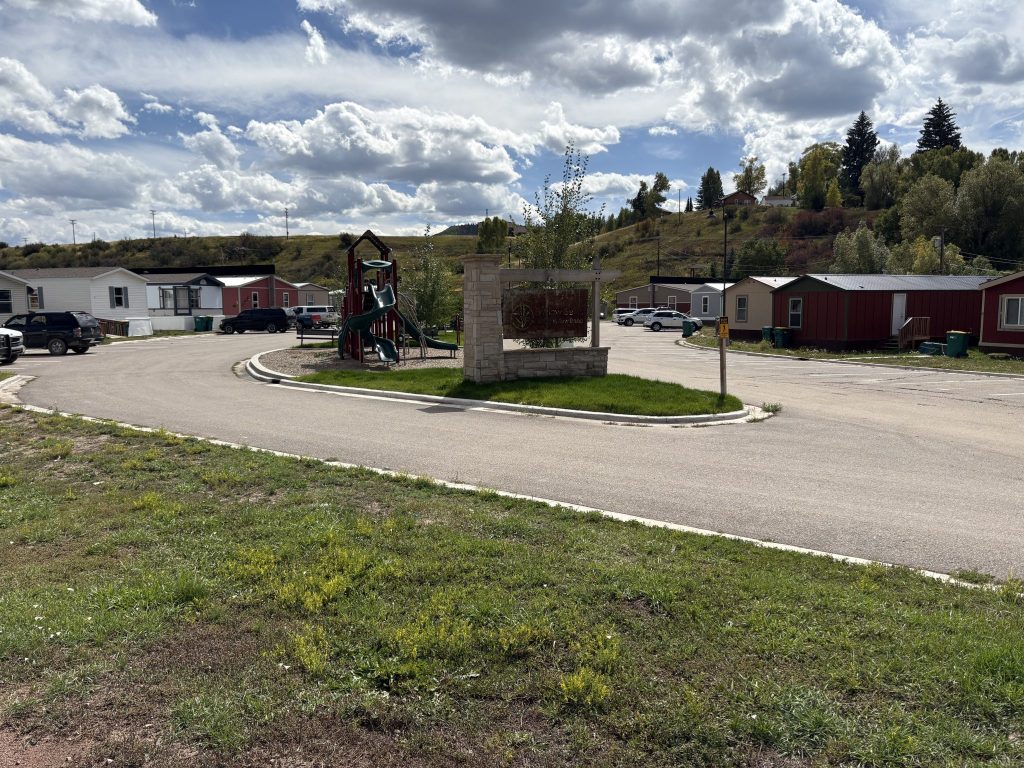
Mobile home residents in several Western Slope communities, including the Glenwood Springs and Aspen areas and Oak Creek, located south of Steamboat Springs, have recently rallied to purchase their parks, with some sales successful and others still going through the process. Those park sales have climbed into the millions, with two mobile home communities being sold to residents last year for a combined $42 million.
More commonly, mobile home parks have been priced above their appraised value, said Christina Postolowski, director for the state’s Mobile Home Park Oversight program.
“Mobile home park sales in Colorado have been surging and so have the sale prices,” Postolowski told lawmakers during Thursday’s bill hearing.
Proponents of HB 1224 say the measure is aimed at ensuring park residents who want to buy the land have the information they need to do so, and that sales by owners are being made in a good-faith attempt.
Some of the disclosure provisions in the bill sparked concern from the mobile home industry.
Tawny Peyton, executive director for Rocky Mountain Home Association, an industry trade group for mobile home park owners, said Thursday that she worried some of the requirements would compromise seller confidentiality, such as the provision on portfolio discounts.
Bill sponsors amended the legislation to address some of those concerns, including shielding landowners from having to disclose sale information for non-related properties. Lawmakers also moved up the implementation date for the legislation from this year to Jan. 1, 2027.
HB 1224 already passed its first committee hearing in March and cleared the Finance Committee on Thursday. Both committees advanced the legislation on a party-line vote, with Democrats in favor and Republicans opposed. The bill now heads to the House floor for a full chamber vote before moving to the Senate.
Enforcement for water quality issues
Another measure, House Bill 1145, would further empower the Colorado Department of Public Health and Environment to force mobile home park owners to fix water-related issues.
The bill gives the department the authority to require mobile home park owners to remediate water issues when the water quality is not suitable for drinking, cooking, bathing, washing, or using with home appliances.
HB 1145 gives state officials several tools for forcing compliance, including the ability to issue cease-and-desist orders, impose penalties and require park owners to perform additional water testing and implement remediation plans.
Under current law, park owners can face civil penalties of up to $10,000 per violation. HB 1145 allows for an additional $5,000 penalty for every 30 days that the violation continues. A park owner may seek judicial review, but is not entitled to an administrative hearing to contest a penalty. Owners are also prohibited from passing the costs of remediation on to park residents.
The bill is sponsored by Velasco and Cutter as well as Rep. Jacque Phillips, D-Thornton, and Sen. Kyle Mullica, D-Thornton.
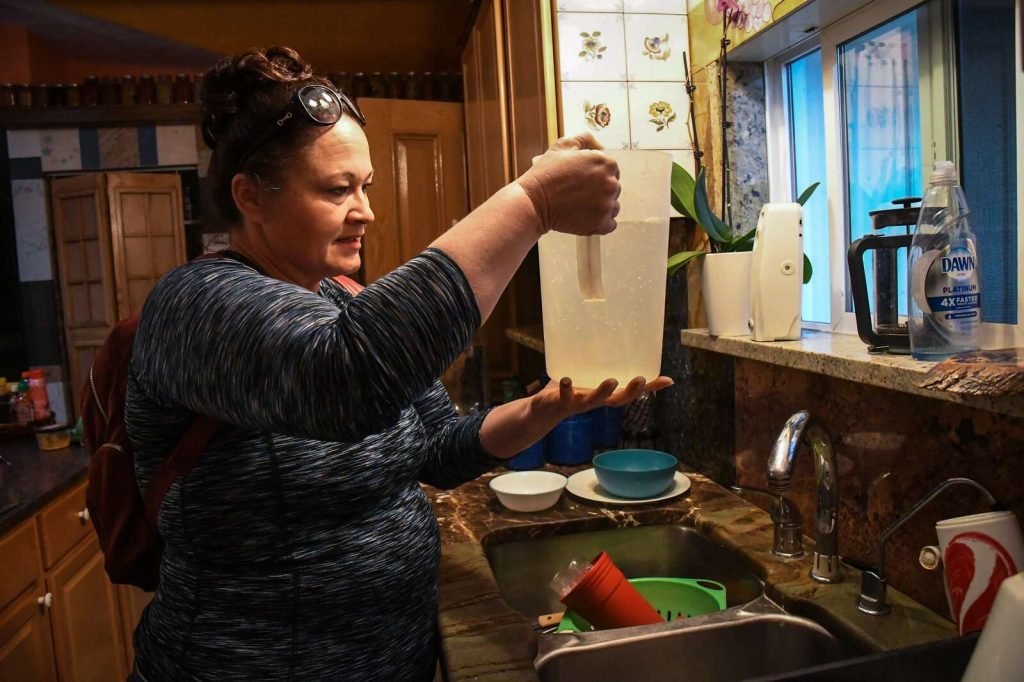
Sonia Sarabia, an organizer for the economic justice advocacy group 9to5 Colorado, said she regularly talks to families in mobile home parks who have consistently raised concerns about their water.
“Some families describe water that smells metallic or like chemicals,” Sarabia said during the bill’s first House committee hearing on Feb. 24. “Some have seen changes of color. Others avoid drinking water from the tap and instead buy bottled water or water filters because they do not feel safe consuming the tap water.”
Nicole Rowan, director for the Colorado Department of Public Health and Environment’s Water Quality Control Division, said so far, the department has tested tap water at 355 mobile home parks and is halfway to its goal of testing every park by July 2028.
Of those tests, the department has found contaminants such as E. coli and arsenic in water at 33 parks, and has also identified 49 parks where water quality poses a risk to welfare, meaning the water may not be suitable for drinking, bathing or other household uses. Mobile home owners are required to notify residents within five days of receiving those test results.
Rowan said the provisions in HB 1145 are important because, while previous legislation gave the health department the authority to regulate and enforce water quality standards for issues like E. coli, it did not give explicit authority to force remediation of “welfare” issues.
Peyton, the executive director of the mobile home trade group, voiced concern during February’s hearing that some of the provisions being pushed by lawmakers could overregulate the industry. She said the sheer number of mobile home park laws that have been enacted in the past few years has hurt the creation and investment of mobile park homes and has led to more parks going up for sale.
“Unfortunately, we’ve seen a significant rise in for-sale properties in Colorado,” Peyton said.
Republican lawmakers voiced similar concerns. Rep. Max Brooks, R-Castle Rock, said he worried about the bill adding to what he called an already overregulated business environment that could, in turn, lead to less affordable housing.
While Brooks voted for the bill in the House Transportation, Housing & Local Government in February, he voted against it when it came to the House floor in March. Brooks said he wanted to see more safeguards for mobile home park owners who may face high fines.
“A lot of these folks are operating on very fine, very thin margins to begin with anyway,” Brooks said during a preliminary vote on the bill on March 4. “I think that if we’re trying to ensure that we’re supplying affordable housing, why would we do something that could then in turn risk the very nature, the very existence of affordable housing.”
HB 1145 ultimately passed the House in a party-line vote of 42-22, with Democrats in favor and Republicans opposed. It clearedthe Senate Thursday in a bipartisan vote of 25-8. Sens. Marc Catlin, R-Montrose, Larry Liston, R-Colorado Springs and Janice Rich, R-Grand Junction, voted with Democrats to pass the bill.
The measure will now go to Gov. Jared Polis for his signature.
Lawmakers are also advancing another bill, House Bill 1120, which would improve notifications and communication of delinquent property taxes for mobile home parks, and provide more ways for parks to pay delinquent taxes and avoid having their property seized or sold by a county government.
That bill is based on recommendations from a mobile home task force established in 2024. The bill is one vote away from being sent to Polis’ desk.







Support Local Journalism
Support Local Journalism
Readers around Glenwood Springs and Garfield County make the Post Independent’s work possible. Your financial contribution supports our efforts to deliver quality, locally relevant journalism.
Now more than ever, your support is critical to help us keep our community informed about the evolving coronavirus pandemic and the impact it is having locally. Every contribution, however large or small, will make a difference.
Each donation will be used exclusively for the development and creation of increased news coverage.