Rails to Vail? Competing visions collide in debate over Colorado passenger rail revival
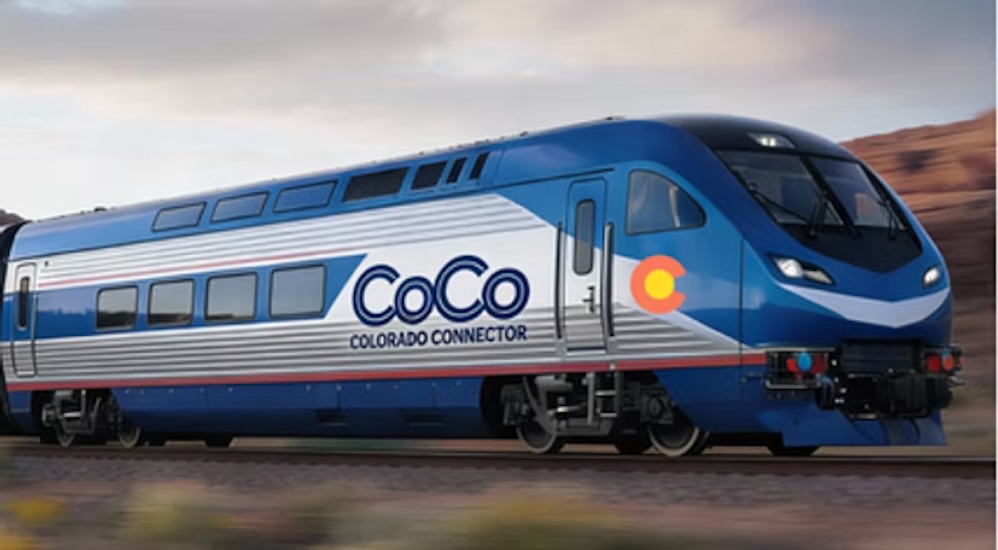
Front Range Passenger Rail (CoCo) rendering.
Editor’s note: This is a recurring series on the possibility of expanding Colorado’s minimal passenger and ski-train rail network to perhaps one day include Vail and Beaver Creek. Read part one.
Colorado passenger rail advocacy groups are on very different sides of the tracks when it comes reviving passenger rail service through Eagle County, even as the rest of the state’s rail community was extremely focused on big news from the Front Range on Monday.
The Front Range Passenger Rail District, comprised of all or parts of 13 counties along the Interstate 25 corridor, announced on Monday that nearly 26,000 people voted and 36% of them decided the proposed passenger rail line between Fort Collins and Pueblo, with stops in Boulder, Denver and Colorado Springs, should be called “CoCo” – short for “Colorado Connector”.
It’s still unclear if a 0.5% sales tax to pay for the service will be on this year’s ballot, but now we at least know the name, and CoCo is definitely better than Front Range Passenger Rail. But residents of Eagle County and the rest of the state along the east-west I-70 corridor into the mountains are left wondering what it all means for the Western Slope.
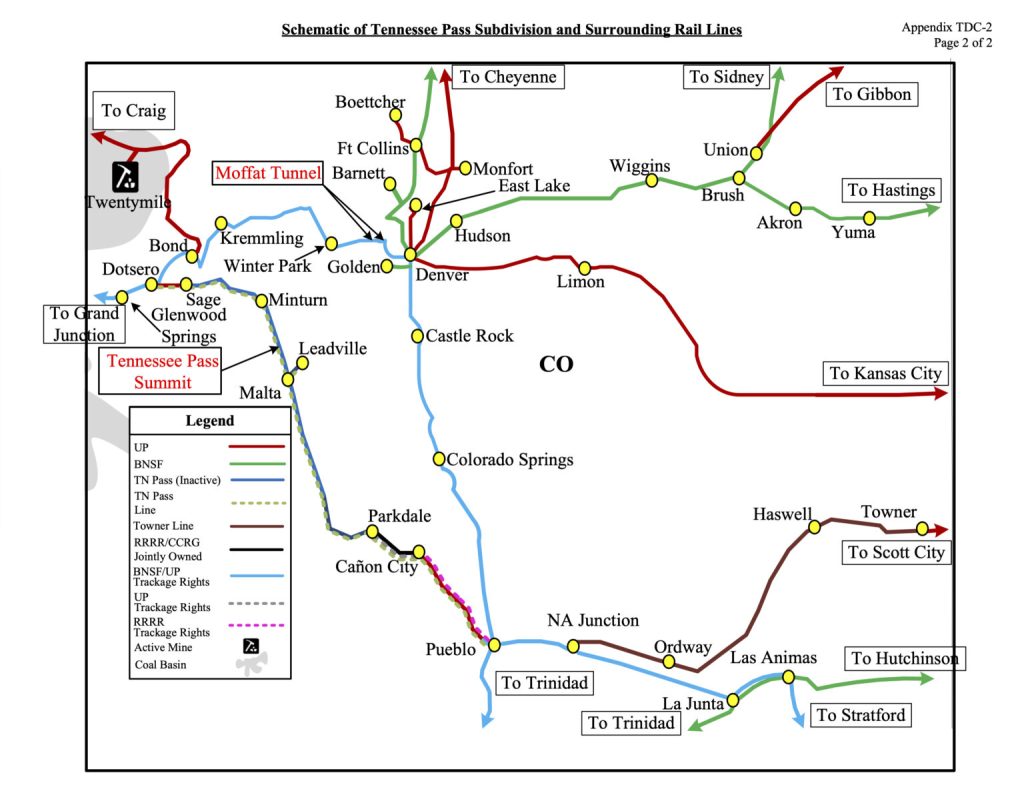
One rail advocacy group associated with a local rail steering committee, the Western Rail Coalition, continues to push for the state to at least study revival of the long-dormant Tennessee Pass Rail Line that bisect Eagle County. Their concept? A light-weight, Euro-style train between Leadville and Glenwood Springs. The problem with that route is no trains have run on the Union Pacific-owned tracks since 1997, and it would cost a bundle just to revive the line for everyday use.
Another statewide advocacy group, ColoRail, wants to build on the active tracks that cut through the northwest corner of Eagle County, the Moffat Line, and already service Amtrak’s daily California Zephyr and the seasonal Rocky Mountaineer trains that do not stop locally. ColoRail is pushing for a daily train along that line between Denver and Grand Junction, with local stops.
The argument there is the line, which connects with the dormant Tennessee Pass Line at Dotsero, is already active and there would be synergy with Mountain Rail – a funded passenger-rail partnership that’s expanding the popular Winter Park Express Ski Train to Granby next season and ultimately aims to connect Denver to Steamboat Springs, Hayden and Craig, while passing through northern Eagle County in Bond. ColoRail is not an advocate of reviving Tennessee Pass.
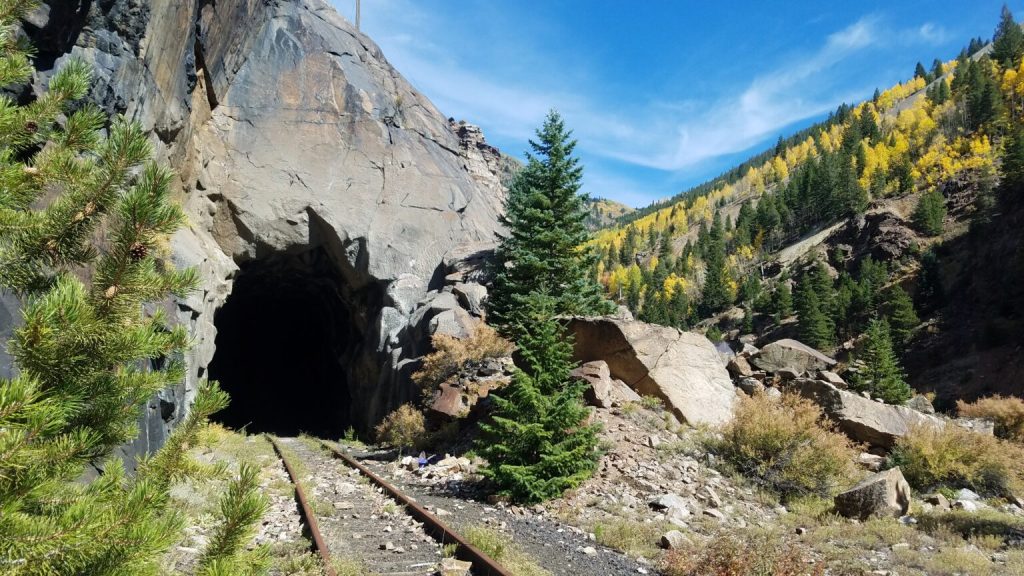
“That line is flat. It’s OK,” ColoRail President Jack Wheeler said of the Dotsero to Avon segment of the Tennessee Pass Line (TPL), or even on to Minturn. “But beyond that the turn up to Leadville is a non-starter because it’s so much money. And we have dedicated funding streams now for passenger rail and a Denver-to Grand-Junction train could be operating tomorrow because it has positive train control.” That’s a mandated, high-tech, collision-prevention system.
Wheeler also said the active Moffat Line has the benefit of conductors, engineers and service crews already based in Grand Junction and Denver for Amtrak. All that would be needed for a daily, east-west Denver-to-GJ train is the equipment and dedicated funding for operations. Meanwhile, Grand Junction is working toward relocating its Amtrak station back to the former glory of a remodeled downtown station, and Glenwood already welcomes trains every day.
“A huge knock I hear on a Leadville-to-Glenwood train is it doesn’t alleviate the I-70 problem,” Wheeler added. “It doesn’t take people directly from Denver to the ski areas of Summit County and Eagle County. An advanced guideway system would.” That’s a reference to high-tech train solutions that have been studied for years directly linking Denver and Vail.
Brad Schwartzwelter, a retired Amtrak conductor who led the charge to revive the Winter Park ski train, doesn’t disagree with the push for a Denver-to-Grand Junction train and the Mountain Rail project from Denver to Craig, but he says Wheeler is parroting Gov. Jared Polis, who is focused primarily on Mountain Rail and what is now called “CoCo”, and doesn’t want any other proposals, such as the local Tennessee Pass Line project, to distract from those two goals.
“Gov. Polis has staked his legacy in large part on Mountain Rail, which is very good, but also Front Range Rail, which is very weak,” said Schwartzwelter, who also advocates for a truck-by-train system to get semis off I-70 and recently spoke in Vail. “In order to win politically, you have to have the Front Range of Colorado on board because that’s where all the political power is.”
Schwartzwelter said he used to be a big proponent of Front Range Passenger Rail and ColoRail, but just as Wheeler favors a direct, high-tech rail solution between Denver and Vail, Schwartzwelter said there’s better technology than 19th-century train lines for moving many more people on Colorado’s flatlands.
What convinced Schwartzwelter the state should go in an entirely different direction was a trip to Bastrop, Texas, near Austin, where Elon Musk’s The Boring Company is transforming underground tunneling for transit at a rapid rate that’s already panning out with the Las Vegas Loop and is now shifting to Nashville and nearby Austin. Autonomous electric cars can travel the tunnels at speeds up to 120 mph, while CoCo will chug along at 50 mph with much less volume.
Colorado could move far more people at a cost that’s likely only about 30% higher than traditional trains by using Musk’s Prufrock-3 tunneling machines along the Front Range, where the soil is ideal, Schwartzwelter said.
“So why in the world would we want to invest so heavily into 19th-century technology on a cow trail that was covered with rail in the 1890s?” Schwartzwelter said of CoCo. “Ten years ago, I was all for Front Range Rail because there was no capability of building tunnels anywhere near a financially reasonable price.”
Now that is not the case, he said, but the same technology won’t work into the mountains, where the soil is laden with heavy boulders. That’s why existing rail infrastructure, he says, should be preserved and utilized on the surface, including reviving the Tennessee Pass Line and extending it from Dowd Junction to Vail.
“Redoing Tennessee Pass up to Vail is the most important project for rail in the state because it’ll have the biggest impact for the least amount of dollars in the fastest amount of time as far as passengers riding and then truck by train to accelerate the benefit to the ski resorts,” Schwartzwelter said.
James Flattum of Greater Denver Transit and the Western Rail Coalition said it’s simply a matter of looking comprehensively at the state’s existing rail network and envisioning how those rail lines can help ease the pressure on overburdened mountain roads.
“There’s a shared agreement that we need to use the infrastructure we already have, and we need to use it smarter,” Flattum said. “We have to get more out of it because the money is not going to be there to significantly increase capacity on I-70. We need to look at the rails more carefully as to how we can meet more of our existing and future mobility needs with this infrastructure.”
Original reporting from vaildaily.com







Support Local Journalism
Support Local Journalism
Readers around Glenwood Springs and Garfield County make the Post Independent’s work possible. Your financial contribution supports our efforts to deliver quality, locally relevant journalism.
Now more than ever, your support is critical to help us keep our community informed about the evolving coronavirus pandemic and the impact it is having locally. Every contribution, however large or small, will make a difference.
Each donation will be used exclusively for the development and creation of increased news coverage.