Female gray wolf dies in northwest Colorado, the first mortality in 2026
The wolf is the seventh to die from the 15 that Colorado Parks and Wildlife brought from British Columbia in January 2025

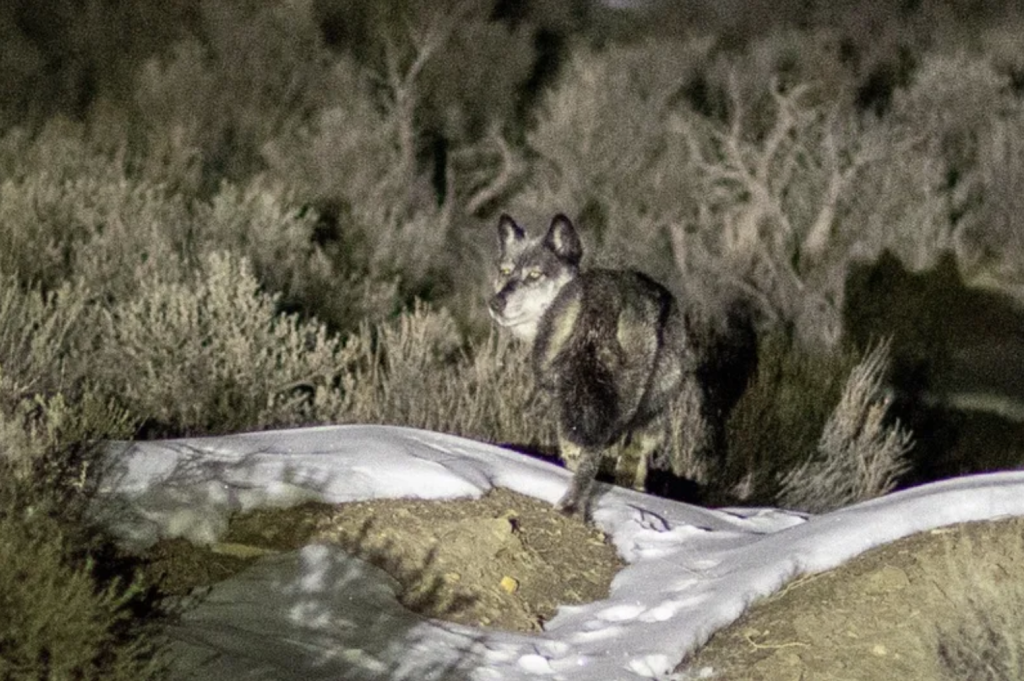
Colorado Parks and Wildlife/Courtesy Photo
A female gray wolf died in northwest Colorado on Friday, Jan. 16, marking the 12th death since Colorado Parks and Wildlife began its wolf reintroduction in December 2023.
It is the seventh wolf to die from the 15 wolves that Parks and Wildlife released from British Columbia in January 2025.
Parks and Wildlife announced the death of the wolf tagged 2504 on Tuesday, Jan. 20, and did not release any additional information. Gray wolves are currently listed as endangered under the federal Endangered Species Act, so all Colorado mortalities of the animals are investigated by the U.S. Fish and Wildlife Service. The federal agency will release the cause of death after it completes a necropsy and investigation.
While a few of the wolf deaths that have occurred since reintroduction began in December 2023 have been from natural causes — including fights with mountain lions and other wolves — the majority have been related to human activity. In 2025, this included three that were killed in Wyoming, where protections and laws differ for gray wolves, a vehicle collision and a legal coyote trap. A Copper Creek yearling was killed by Parks and Wildlife in May after it was tied to repeated livestock attacks in Pitkin County.
The latest mortality — which was the first in 2026 — comes as Parks and Wildlife faces a shortening window to find and release additional wolves in its third year of reintroduction.
A third release would bring Colorado’s reintroduction in line with the wolf plan‘s recommendation to release 30-50 wolves in three to five years. Colorado has released 25 wolves in two years. Parks and Wildlife had planned to return to British Columbia to source wolves this winter. However, new leadership and direction from the Fish and Wildlife Service have forced the state wildlife agency to look to Northern Rockies states instead.
Laura Clellan, acting director of Parks and Wildlife, told the agency’s commission last week that the agency was still evaluating all options to source wolves this winter. She added that if the agency is unable to release more wolves this winter, each mortality will have a greater impact on the program’s overall success in creating a self-sustaining population of wolves.
“When populations are small, each individual becomes increasingly important,” Clellan said. “Not knowing what the mortality rate will be over the next year, it’s going to be difficult to predict with certainty the overall impact of not completing a third year of translocations. If we have a high level of mortality, as we observed in 2025, we run a higher risk of not meeting the goal of establishing a self-sustaining population of wolves in Colorado and having to spend resources to do so.”






Support Local Journalism
Support Local Journalism
Readers around Glenwood Springs and Garfield County make the Post Independent’s work possible. Your financial contribution supports our efforts to deliver quality, locally relevant journalism.
Now more than ever, your support is critical to help us keep our community informed about the evolving coronavirus pandemic and the impact it is having locally. Every contribution, however large or small, will make a difference.
Each donation will be used exclusively for the development and creation of increased news coverage.