Glenwood Springs resumes discussions for new on-demand, app-based transit system

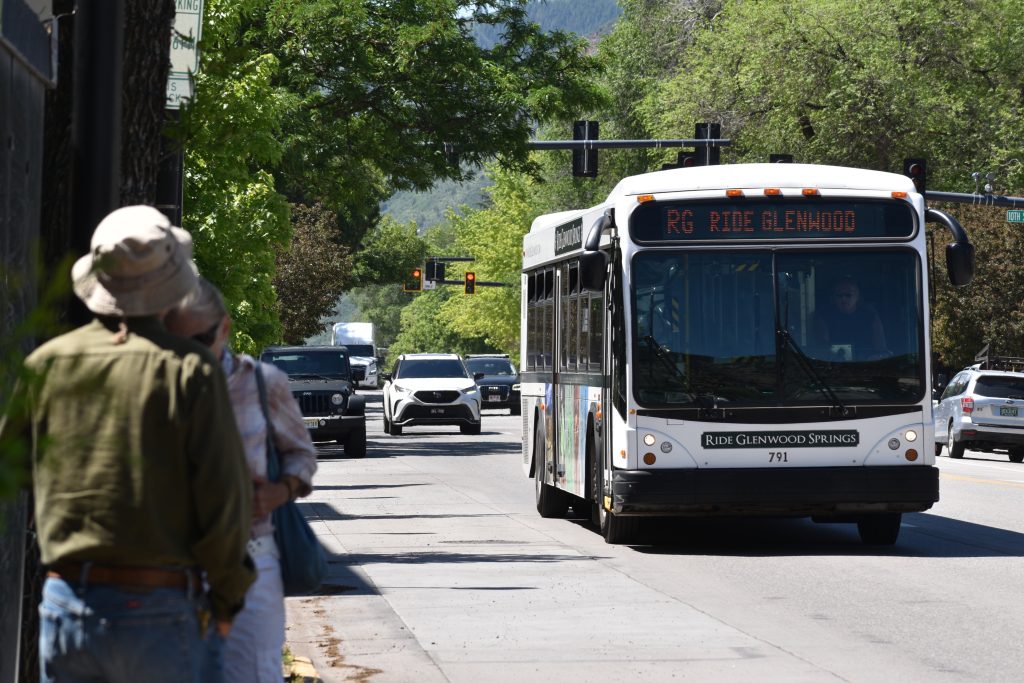
Andrea Teres-Martinez/Post Independent
For the past few years, the city of Glenwood Springs has considered a potential pilot transit system to move passengers throughout downtown. The city has recently resumed these discussions, with changes to the function and service area of the project.
The Downtown Circulator Pilot Project is an attempt to expand the transportation system in the city. Similar to existing transit systems in Aspen, Snowmass Village, Basalt and Carbondale, the vehicles would function as free, on-demand micro transit options.
“It’s like an Uber, but you’re going to have possibly some friends on there,” City Transportation Engineer Lee Barger said during a May 2 work session.
Initially, the project was only intended to serve the “downtown core,” though Glenwood Springs City Council expressed interest in expanding the project to the entire city.
“Right now, the downtown is served by both Ride Glenwood, BRT, and to add a third form of public transportation when a huge chunk of our population in South Glenwood has not had any public transportation for 15 years feels really inequitable to me,” Councilor Jonathan Godes said during the May 2 work session.
“We need not just South, but West and Red Mountain,” Councilor Sumner Schachter added.
The city-wide on-demand micro transit system would not replace the existing Ride Glenwood bus system, but rather complement it, according to City Engineer Ryan Gordon.
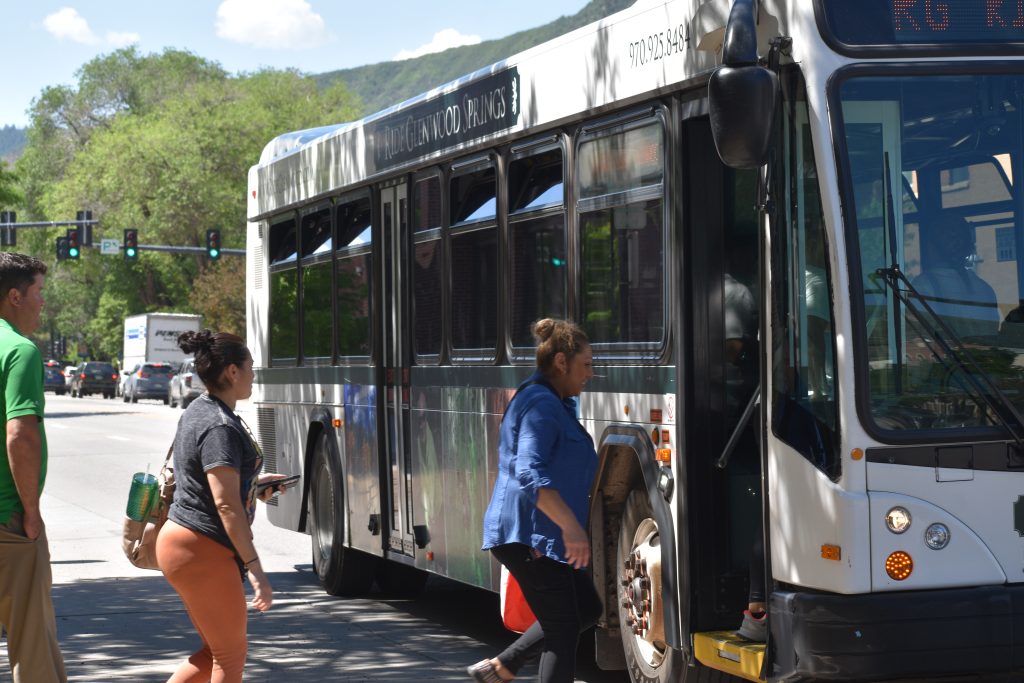
Ride Glenwood operates daily from roughly 7 a.m. to 7:30 p.m. at 30 minute intervals and is completely free to riders. Ride Glenwood is quickly returning to its pre-pandemic peak ridership numbers, with around 300,000 riders per year in 2024, compared with 250,000 in 2023. The Roaring Fork Transportation Authority’s (RFTA) numbers show an increase of around 20-30% per year in the last three years.
Despite the growth, some areas of Glenwood Springs remain underserviced when it comes to public transportation.
“There’s not really flexibility with these routes,” Barger said. “They just move back and forth and back and forth … all these areas that are underserved and far from existing transit could be picked up, potentially, by an on-demand service.”
How it works
Barger said during the May 2 city council work session that the service’s on-demand element would function as a mobile app, through which residents can request a pick-up and drop-off from a specific address (like a house or business) or a nearby location; though the details would depend on the project’s selected contractor.
The preliminary plan for the project would enlist three vehicles — one 11-passenger wheelchair-accessible vehicle, and two 14-passenger standard vehicles — to operate on-demand throughout the city, extending down through South Glenwood and out to the far end of West Glenwood and North Glenwood.
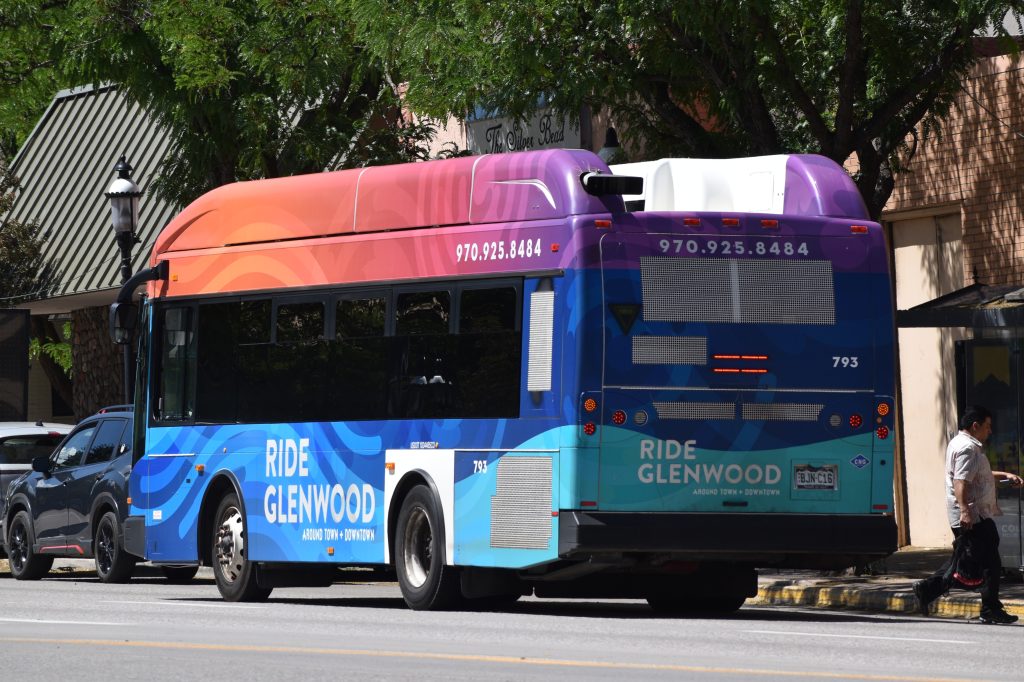
In regards to the type of vehicle used, the Transportation Commission passed a unanimous recommendation to the city of Glenwood Springs on June 4 to “promptly transition to electric-powered vehicles for Ride Glenwood Springs and for other municipal transit services, and that the city refrain from new long-term investment in fossil-fuel powered vehicles.”
“Another reason we felt this was a really good step, is we’ve seen success in the valley,” Barger said about the on-demand service. “We talked with all of our neighbors up-valley, and a number of them are operating. They’ve been operating for up to six years with this service, and they love it.”
The town of Basalt launched their on-demand transit service, Basalt Connect, in 2022 in partnership with RFTA. While its operations began with limited hours nine months out of the year, the service now runs every day of the week from 7-10 a.m. and again from 3-10 p.m. The service runs from and to downtown Basalt, Willits, and nearby neighborhoods in the service area, costing the town around $540,000 according to Barger.
Aspen’s service began in 2017 and currently operates from 8 a.m. to 11 p.m. daily at $630,000 annually.
Gordon said that while some elements of Glenwood’s transit system would likely be modeled after Basalt’s, the engineering department is currently considering a system that would run transit throughout the day, rather than only during peak hours, so that neighborhoods without public transportation could utilize the on-demand service when needed.
Carbondale and Snowmass Village are expected to launch their own on-demand transit systems within the next month, according to Barger. Carbondale’s on-demand transit system will begin with a six-month service trial starting July 1.
Barger also brought up the possibility of the mobile app using artificial intelligence to detect rider trends and popular routes.
“This is one of those great tools that shows you, ‘This is where riders are getting on in the morning and getting off on a daily basis,'” Barger said. “(These) trends can predict future behaviors.”
During the June 6 work session, Gordon said the AI could also determine whether a passenger is picked up and dropped off at their exact destination, or whether the technology determines it’s too busy, and the passenger would need to walk to a nearby pick-up spot.
“Why on-demand versus fixed route? First, it’s adaptable,” Barger said. He added that it gives residents and visitors more options for travel and eliminates the need for parking and taking personal vehicles everywhere, especially for tourists arriving by train.
Project funding
The city estimates the program will cost approximately $800,000 per year to operate (though the project would require a competitive request for proposal). In comparison, Barger had stated during the May 2 work session that a downtown-only transit route spanning roughly one mile (as opposed to operating city-wide) would have had an estimated cost of $350,000. Gordon said the city is already in discussions with a potential contractor.
Currently, the city’s engineering department is pursuing the Roaring Fork Transit Authority (RFTA) First/Last Mile grant to fund 50% of the program, or $400,000 a year. According to the June 6 staff report, the city would cover the other $400,000 from the Bus Tax fund, which holds $2 million.
Were the city to successfully acquire the grant this summer, the funds would become available in 2025.
Both Basalt and Carbondale used funding from RFTA’s First/Last Mile grant to start their on-demand transit systems. The grant provides funding to each program for a maximum of three years, after which, if the program is successful enough to continue, a new funding source will be necessary.
“The available fund balance at the end of 2023 is approximately $2.6 million, and the forecast at the end of 2024 is $2.1 million (including the $400,000 expenditure contemplated here),” the report states.
“Very comparable to what Carbondale is doing,” Barger said.
The current price estimate is based on the program’s geographic service area, number of vehicles, fuel costs, among other parameters.
The pilot program is still in the planning stages. Once launched, it would undergo a trial period of one year or more in order to assess its success and next steps.






Support Local Journalism
Support Local Journalism
Readers around Glenwood Springs and Garfield County make the Post Independent’s work possible. Your financial contribution supports our efforts to deliver quality, locally relevant journalism.
Now more than ever, your support is critical to help us keep our community informed about the evolving coronavirus pandemic and the impact it is having locally. Every contribution, however large or small, will make a difference.
Each donation will be used exclusively for the development and creation of increased news coverage.