Ski industry innovator and former Vail owner George Gillett dies after battle with Alzheimer’s
Gillett on Vail: 'We love the valley and we love the people'
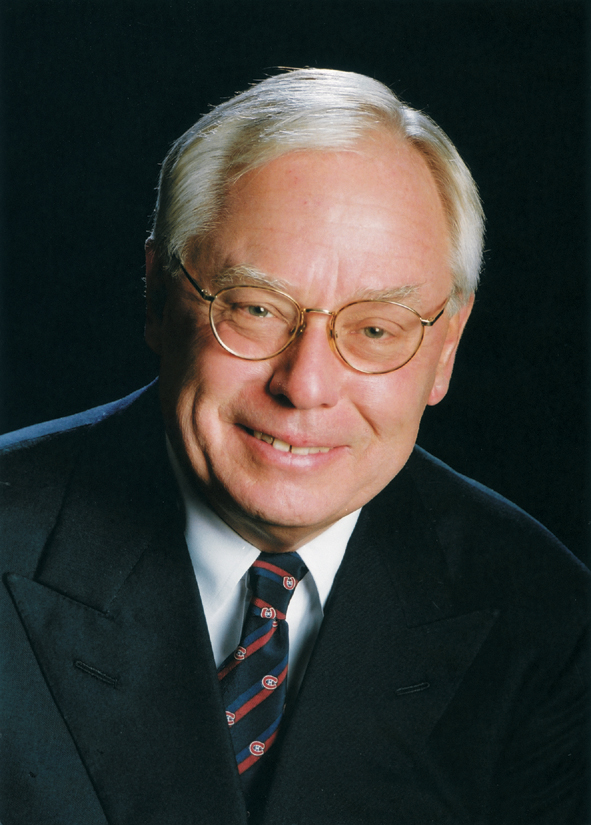
Courtesy photo
George Gillett Jr., the charismatic former owner of Vail Associates who opened up global markets to one of the nation’s most popular ski resorts during his tenure in the late 1980s, died Tuesday at a memory care facility in Denver after a battle with Alzheimer’s disease.
Gillett, born Oct. 22, 1938, in Wisconsin, was 87 years old when he died around 2 p.m. on Tuesday, Sept. 22.
A meat-packing and media mogul with various sports team interests — managing the Harlem Globetrotters, a bid to buy the Miami Dolphins and ownership of the legendary Montreal Canadiens of the NHL — Gillett first bought Vail in 1985 before being forced into bankruptcy by too much debt and skyrocketing interest rates in 1991.
He is widely credited with modernizing Vail and taking it to the next level with expansions and high-speed-quad chairlifts during his brief tenure as owner, as well as spearheading Vail’s international destination growth by hosting the 1989 World Alpine Ski Championships. That was when the Eurocentric ski world truly put Vail on the global ski-industry map.
Perhaps Gillett’s most lasting legacy was his focus on customer service and treating employees with respect — a quaint notion in today’s consolidated season ski-pass era that’s focused on quantity over quality and delivering shareholder value.
Gillett told the Vail Trail newspaper, when he first bought Vail in 1985, that he wanted to “hold up a mirror, and remind ourselves that we are primarily in business for the customers. We have a rigorous budgeting process, and our notion of emphasizing quality and service doesn’t mean we’re not cost conscious, because we are. But I think that once we establish a budget, then we’re gone. We’ve left our heritage. Our heritage is that ‘I have a vision.'”
Gillett’s shares of Vail Associates were acquired by Leon Black’s Apollo in 1992, with the new company then going public in 1997. It is now a 42-resort global conglomerate based in Broomfield, Colorado, that’s embroiled in a shareholder proxy battle with Oasis Management, which recently acquired more stock and now holds a 7.4% share.
Oasis and several wealthy ski-town residents are accusing the modern Vail Resorts of taking its corporate eye off Gillett’s customer-service vision, which has prompted the activist company’s bid to land four new members on the board of directors.
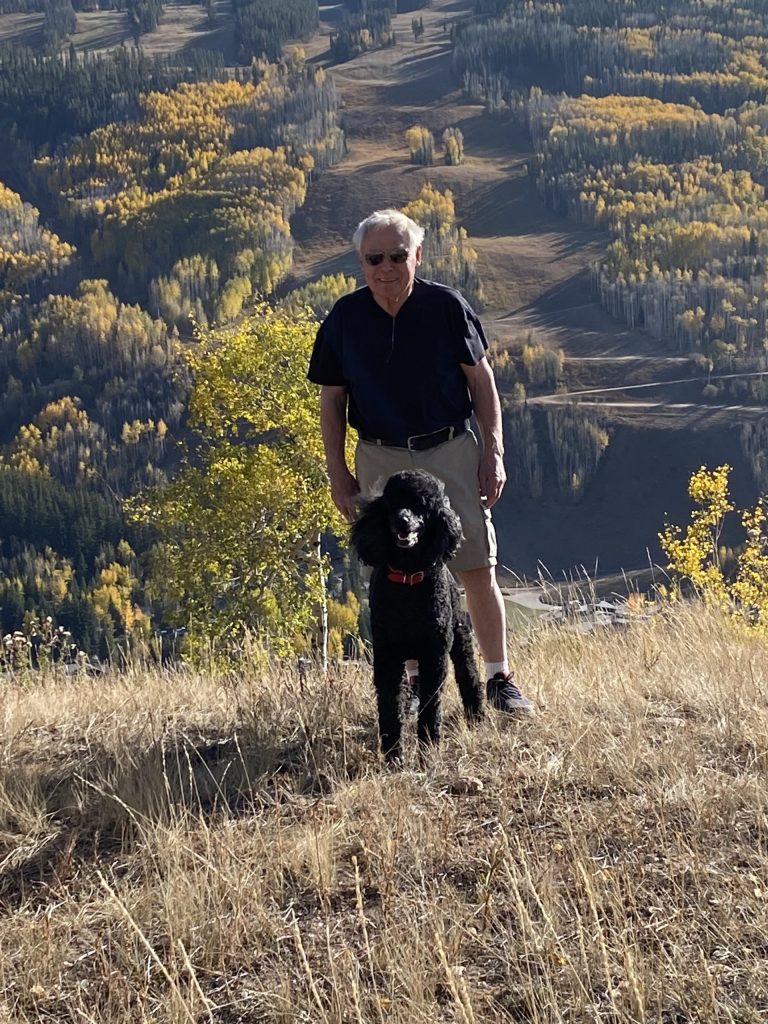
Somewhat media shy and humble to the end, Gillett and his wife Rose continued to live in Vail after his ownership tenure ended. Rose Bowl in Beaver Creek was named for Rose, and Chopsticks in Vail’s China Bowl was renamed “Gillett’s Dream” just last season.
When Gillett was inducted into the Colorado Snow Sports Museum Hall of Fame as a sport builder in 2005, he was asked by Vail Beaver Creek Magazine what that honor meant to him.
“Frankly, it was not anything I’d ever thought of. It was just one of those things where you don’t even compare yourself to Dave Gorsuch or Pete Seibert or Sarge Brown or Warren Miller. Those are people I’d put on a pedestal. I’m just a kid; I’m just a skier,” Gillett said at the time.
During his ownership tenure, Gillett brought Vail founder Seibert back into the company fold, hiring him away from Arrowhead, which was a separate ski area then and is now connected to Beaver Creek.
Asked why he and Rose stayed in Vail and raised their four boys (Alex, Foster, Andrew and Geordie) here, Gillett said they maintained an undying love for the place.
“We loved Vail in ’85 when we had a chance to acquire Vail Associates,” Gillett said. “That wasn’t hollow or insincere; we really did love it, and so we’re here because we love the valley and we love the people.”
And because George knew enough to listen to Rose.
“I am where I am because of Mrs. Gillett. If she changes her mind, then I guess I’d follow,” Gillett said of their decision to stay in Vail. “I live where Mrs. Gillett wants to live, and she loves this valley. She’s a big-time hiker. She’s in the national forest or the wilderness almost every day, or climbing mountain peaks, and we’ve just got a lot of great friends here.”
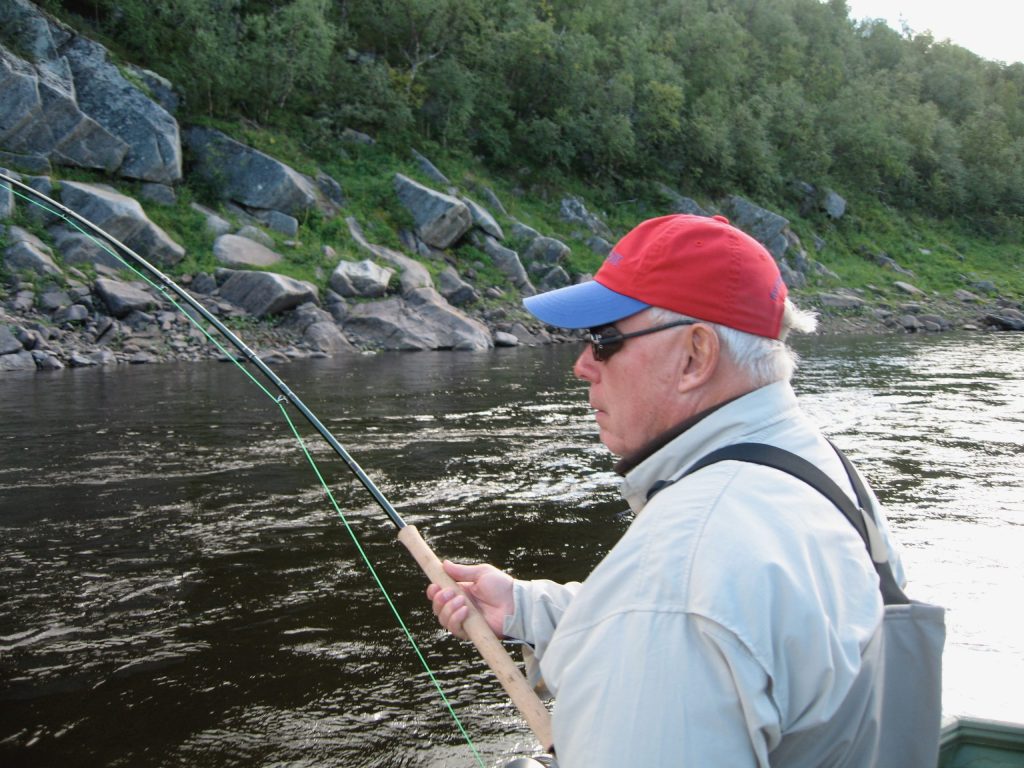
The Gilletts have been deeply entwined in local philanthropy for decades, including the efforts of the Vail Valley Foundation to provide for early childhood education throughout Eagle County.
“Rose and I sat down many times to say, ‘What really makes a great community?’ And certainly the sporting aspects, both winter and summer, were an important part of that, but you couldn’t diminish the importance of medicine, culture and education,” Gillett said.
The medicine part took the form of bringing in renowned orthopedist Dr. Richard Steadman from Lake Tahoe, where he had twice worked on Gillett’s knees in the ’80s and was doing cutting-edge work in the field of sports medicine, rehabilitating the careers of major pro athletes and Olympians.
“George and I went to recruit Dr. Steadman together, thanks to the advice of (Olympic bronze medalist and Vail-area resident) Cindy Nelson, who used to work with Dr. Steadman when she wasn’t training,” Alterra Mountain Co. co-founder Mike Shannon said by phone from England on Wednesday. Shannon was Gillett’s 26-year-old lieutenant when he bought Vail.
“It was George’s and Cindy’s vision to bring sports medicine to Vail, and so we went out and recruited Dr. Steadman, and that’s how Steadman got here,” remembers Shannon, who also hailed from Wisconsin and got to know Gillett through banking transactions in the Midwest. Shannon, who still lives in Vail, is now an innovative giant in the ski industry in his own right.
“George was a unique ski area owner and operator,” said Nelson, who served as his director of skiing. “He changed the culture of Vail and helped to make it into the fantastic resort it is today. His infectious enthusiasm, his genuine joy for skiing and his pride in being a part of something greater than oneself, this was the backbone of this new Vail culture.”
Shannon said his legacy lives on in the ski industry.
“George’s legacy is that he combined a passion for the sport along with a vision to grow both Vail and Beaver Creek into internationally known, world-renowned ski resorts,” Shannon said. “And he did that with a masterful, positive marketing approach and a vibrant personality.”
Pete Seibert Jr., the son of Vail founder Pete Seibert, thinks it will be hard to recapture what the Gillett era was like in Vail.
“I don’t want it to be a big dig at anybody else, but I think you’ve got to say that the Gillett era was a golden era for Vail. He opened China Bowl, he got Blue Sky Basin — it was in the permit in ’57 — but George kept it moving because without China and Siberia bowls you don’t get to Blue Sky,” Seibert Jr. said in a phone interview Wednesday. “The high-speed lifts, he kept adding them, and the added capacity, but more importantly, the experience changed.
“You didn’t spend half your day in the lift line and on the lift; you were skiing,” Seibert Jr. added. “And George just invested in everything. Vail was his baby. He wanted Vail to be, from what I could see and what my dad liked about him, they both wanted Vail to be the best in the world.”
Languishing in the 20s in the Snow Country Magazine reader surveys when Gillett took over, Shannon said they got it to No. 1 in just three years, focusing on the guest experience and the employees.
“There’s a story about him showing up at a snowmaking pumphouse at midnight to thank those guys,” Seibert Jr. said. “He did a lot of really cool stuff because he knew how to motivate people.”
The most famous story of Gillett’s marketing chops and interaction with guests is well-known.
“George did this several times over his career, but he got on the Santa suit pre-Christmas, got on the lifts at Gold Peak, and started dropping down dollar bills for all the little kids,” Shannon said. “It was raining dollar bills. George loved Vail, and he really wanted to bring back the glory of Vail.”
And Gillett understood the connection between recreational skiing and the fame and fortune of Olympic ski racing, which he gave a major boost with the 1989 World Championships, which were then hosted by Vail and Beaver Creek twice more 1999 and 2015.
“George Gillett was an innovative ski industry leader who saw the value in ski racing and was a strong advocate of the U.S. Ski Team,” said Bill Marolt, U.S. Ski Team president during the ’89 World Championships. “He greatly influenced our sport through World Cup and World Championships at Vail and Beaver Creek, and helped the team usher in a period of great success.”
The Vail Valley Foundation continues to bring World Cup ski racing to Vail and Beaver Creek every season, and the sport can trace much of its success in the United States — from Bode Miller to Lindsey Vonn to Mikaela Shiffrin — to the time and energy Gillett put into the sport in the ’80s.
“George Gillett was a friend, advocate, donor, partner and ally of the Vail Valley Foundation, across each area of our arts, athletics, education and community support mission for 40-plus years,” said Mike Imhof, president and CEO of the Vail Valley Foundation. “We will be forever grateful to Mr. Gillett for his contributions to our organization and to this entire community. We extend our sincere condolences to the Gillett family and wish them and the many friends and associates of Mr. Gillett peace of heart and mind during this difficult time.”
Original reporting from vaildaily.com








Support Local Journalism
Support Local Journalism
Readers around Glenwood Springs and Garfield County make the Post Independent’s work possible. Your financial contribution supports our efforts to deliver quality, locally relevant journalism.
Now more than ever, your support is critical to help us keep our community informed about the evolving coronavirus pandemic and the impact it is having locally. Every contribution, however large or small, will make a difference.
Each donation will be used exclusively for the development and creation of increased news coverage.