Western Slope communities’ efforts to reduce landfill waste lauded in 2025 statewide report
Takeaways from Eco-Cycle and CoPIRG Foundation’s 2025 State of Recycling of Composting in Colorado report

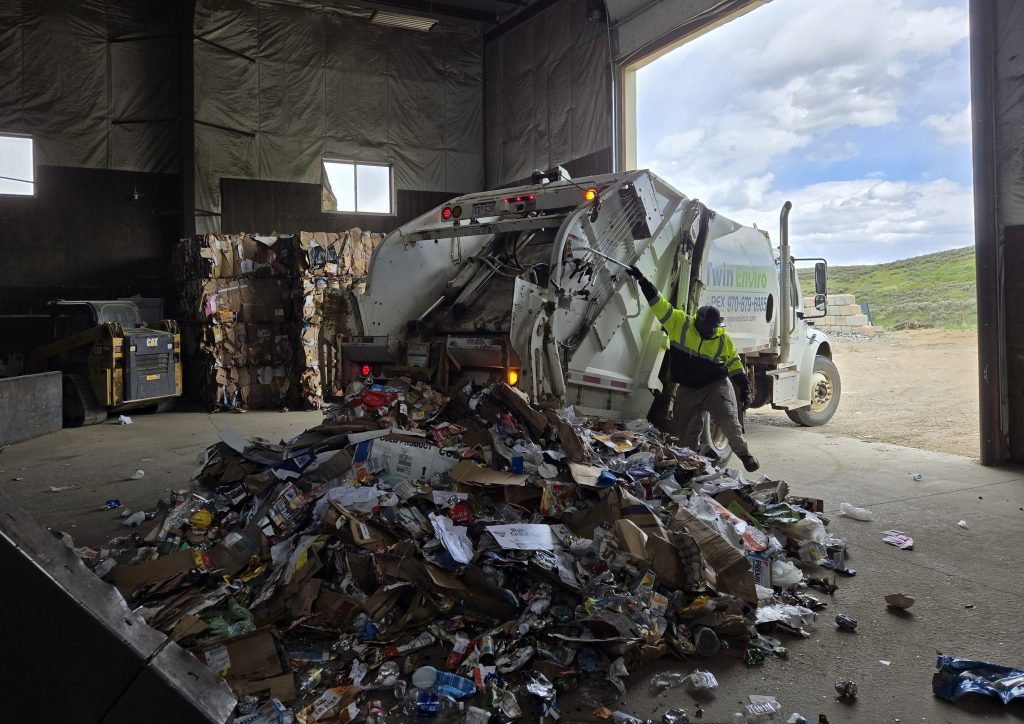
Suzie Romig/Steamboat Pilot & Today archive
As Colorado aims to hit ambitious climate action goals, local communities, including those along the Western Slope, are helping build momentum. Eco-Cycle and CoPIRG Foundation’s annual State of Recycling and Composting report highlights some of the statewide and local policies, actions and individuals that drive change around composting, recycling and reuse.
The annual report’s ninth iteration was published by the zero waste advocacy nonprofits in November 2025.
“It makes no sense to keep extracting natural resources only to bury them in landfills instead of recycling them into new products, or to discard organic material that could be made into compost to restore soils and strengthen local agriculture,” said Suzanne Jones, executive director of Eco-Cycle, in a news release.
“Across Colorado, communities, businesses and local leaders are proving there’s a better way,” Jones added. “Together, we’re taking collective action to build systems that do make sense — a statewide recycling program that will provide free access for all Coloradans and create local jobs, composting that supports farmers and builds climate resilience, and state policies and local programs that are laying the foundation for a truly circular materials management system in Colorado.”
Among those making changes are communities and people on the Western Slope. The report highlights Vail students who are encouraging the town to reduce single-use plastics, the positive impacts of Aspen’s commercial composting program, how Steamboat Springs is incentivizing waste diversion and more.
The report shares how organics diversion, expanded recycling systems and new reuse opportunities are rolling out in Colorado. It also offers state and local policy recommendations to build toward a more circular model when it comes to waste.
“A circular Colorado is one that uses resources wisely, restores soils through regenerative agriculture, reduces emissions and energy use, and invests in local jobs, supply chains, and communities, creating a more resilient and connected state,” the report states.
This model offers an alternative for waste that does not include it being buried, incinerated or littered in the environment through what the report calls “The Rs.” This includes reducing the need for products and packaging, redesigning products, reusing materials and resources, refilling rather than grabbing single-use items, repairing items, recycling, regenerating soils and building resilience.
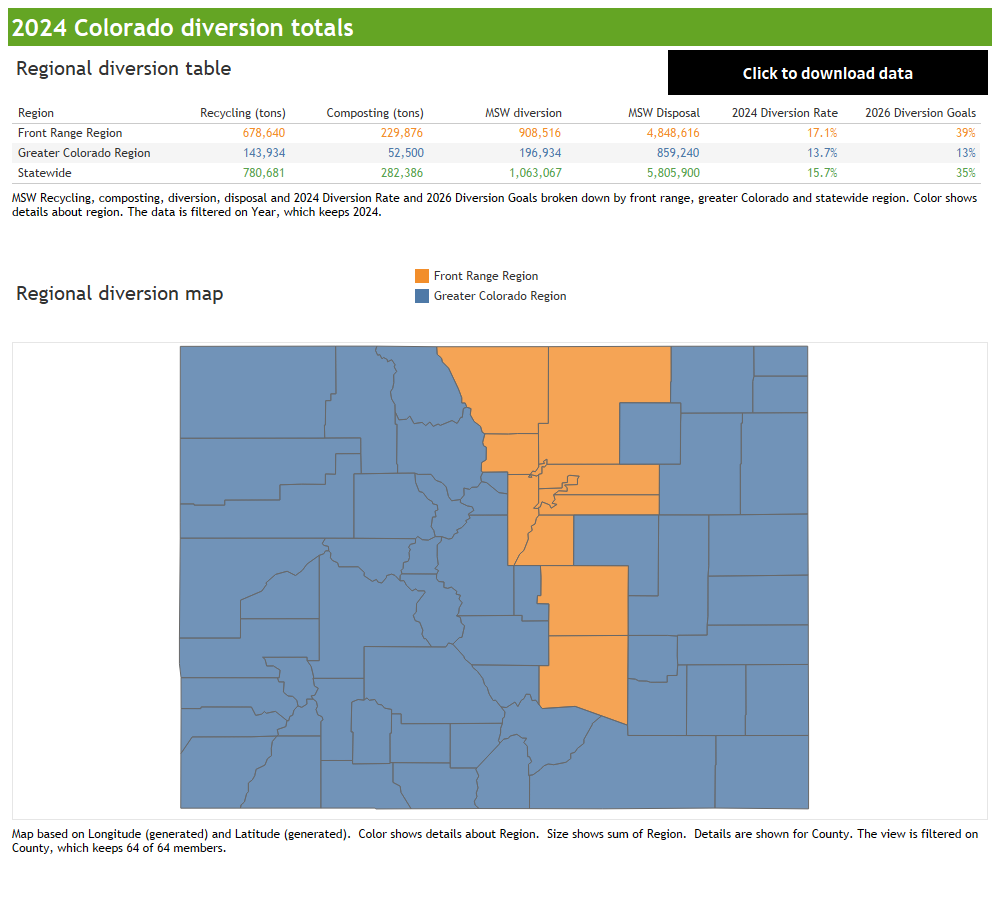
As part of its broader climate action goals, the state of Colorado set targets in 2017 to reduce the amount of waste going to landfills by 35% by 2026 and 45% by 2036.
The policies and programs that support diverting waste from the landfill not only help climate goals by reducing greenhouse gas emissions and pollution, but they also help conserve natural resources and prevent waste from being created in the first place.
According to the state, hitting the 2026 target would see methane emissions decline in line with removing over 1.1 million cars from the road for a single year.
The 2017 goals included different targets for the Front Range (39% by 2026) and the rest of Colorado (13%). As of Dec. 31, 2024, the Colorado Department of Public Health & Environment reported 17.1% diversion in the 11 Front Range counties and 13.7% in the remaining 53 counties.
The statewide diversion rate was 15.7% at the end of 2024, a number that has remained relatively flat since 2019.
While this rate is around half of the national average, the 2025 State of Recycling and Composting report claims that “there is good news to report on the amount of organic material diverted from landfills.”
Composting
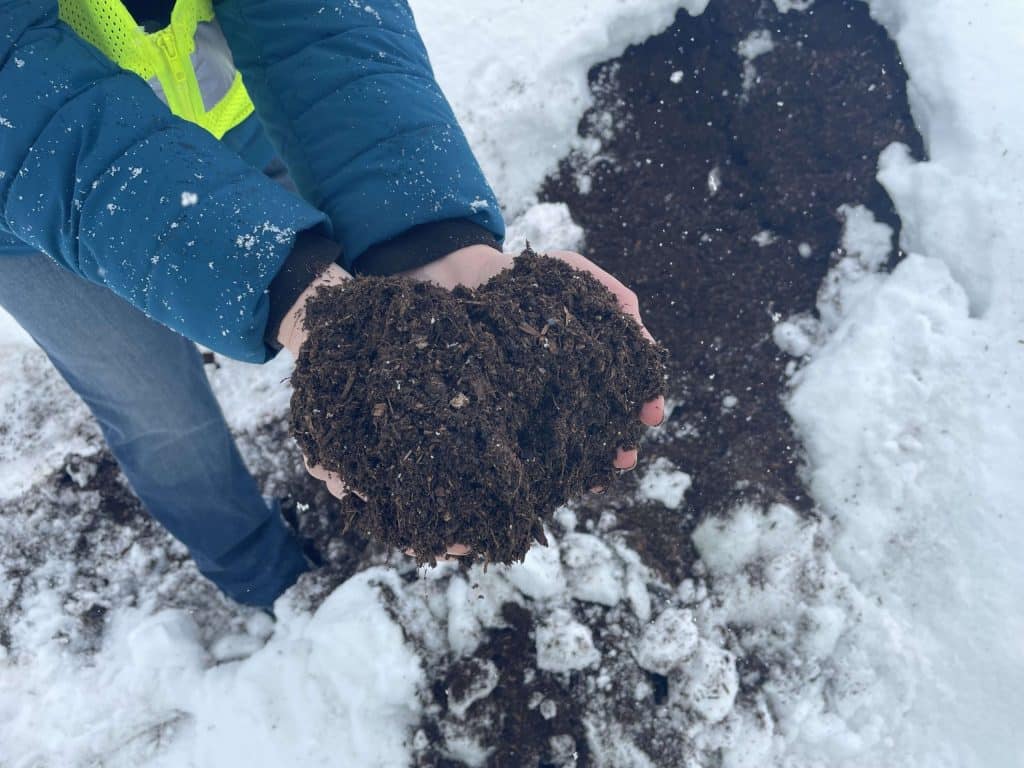
Organic materials comprise about 37% of Colorado’s statewide waste stream. Diverting organics — everything from food scraps and yard trimmings to cardboard and other paper and fiber-based products — from landfills is “one of the most environmentally beneficial actions Coloradans can take,” according to the 2025 report. This is because when organic materials break down in landfills without oxygen, they generate methane, an incredibly potent greenhouse gas.
When composted, the organic waste can be transformed into nutrient-rich soil that holds more water, is more drought- and heat-resistant, stores carbon and supports local food systems, according to the report.
At a statewide level, the report’s “good news” includes a 50% increase from 2023 to 2024 in the diversion of “woody materials.” This includes yard trimmings, clear lumber from construction sites, wildfire mitigation materials and more.
At a more local level, the report highlighted that the city of Aspen experienced a nearly 350% increase in food scraps being composted between 2023 and 2024. The increase follows an organic waste ordinance that required food businesses to compost organic materials. In 2026, the ordinance will require all multifamily buildings and commercial properties to offer access to organics diversion. By 2028, organics diversion will be required across the city.
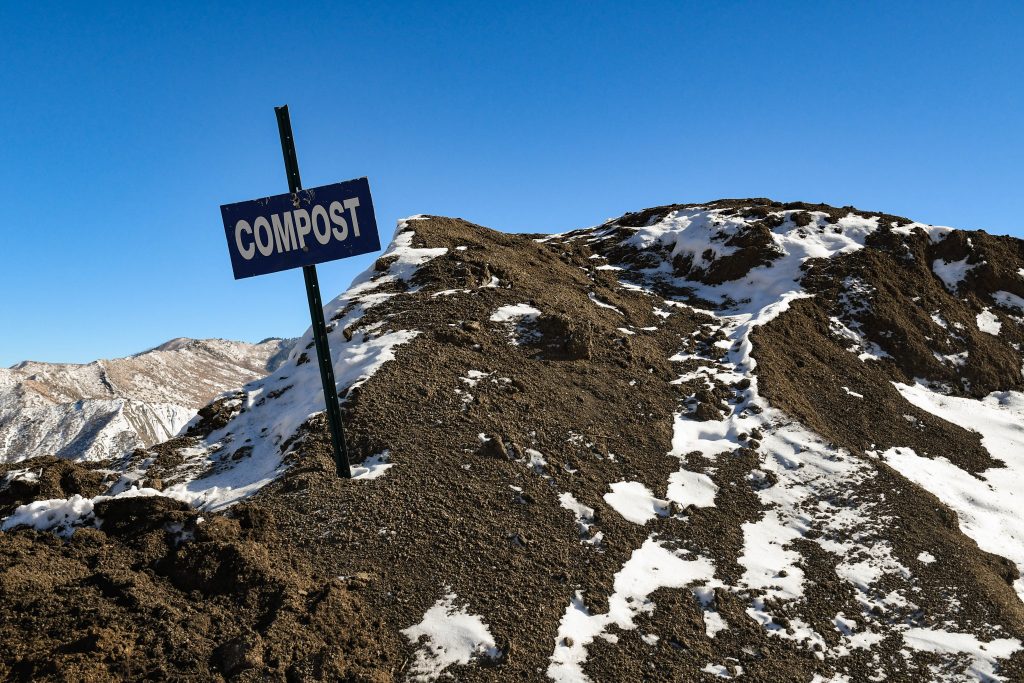
The report also points to Glenwood Springs, where the city council banned residents and businesses from taking yard trimmings to the South Canyon Landfill starting in summer 2025. The report applauds the landfill’s diversion requirement as a success for the city, but it also highlights the need for more coordinated and statewide policies.
“While many local residents and businesses are complying by diverting yard trimmings to the composting program, some are taking yard clippings to nearby landfills where they will be buried rather than separating them from trash to be mulched or composted,” according to the report.
Recycling
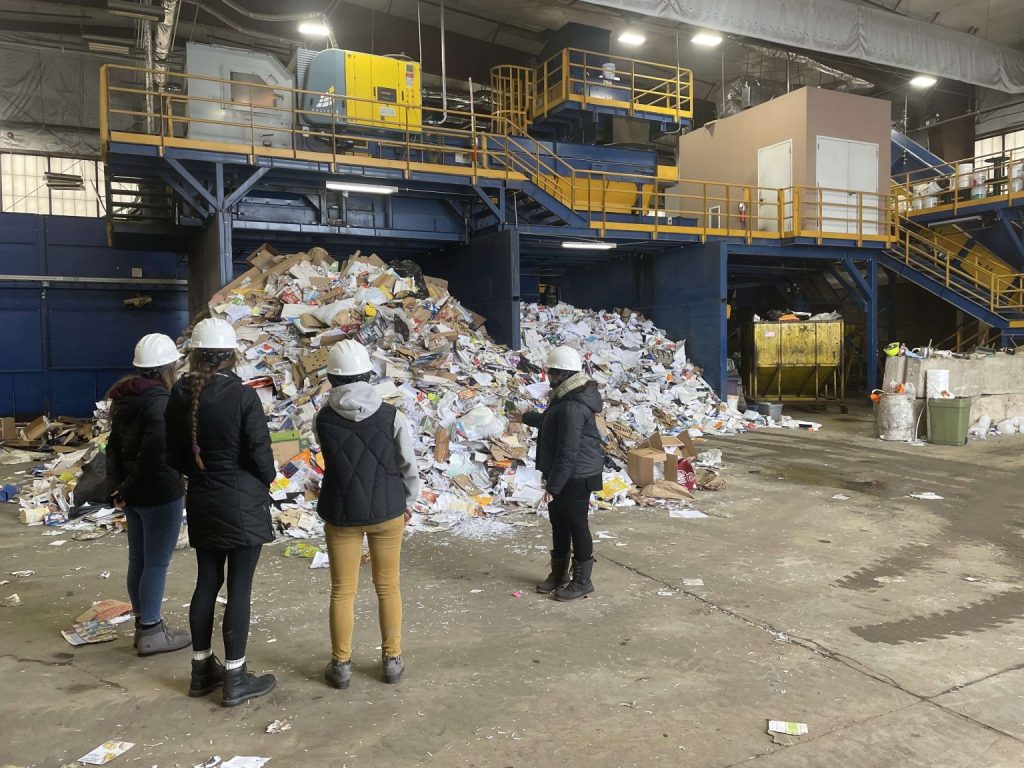
Recycling is a key component of a circular system as it transforms materials into new products. However, the report argues it must be “robust, transparent and trustworthy,” and part of a larger process that starts at the product creation itself.
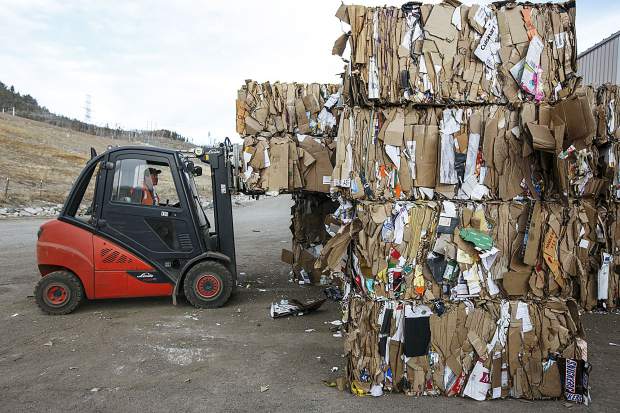
“Strategies to reduce resource extraction must come first, and products must be designed for reuse, repair, and recycling into new products,” it states. “Colorado currently throws away an estimated $100 million worth of recyclable materials each year. By recycling, we can benefit local economies by creating jobs and preventing materials from being buried in landfills.”
In a step toward addressing the producer side of the recycling equation, Colorado is rolling out a new producer responsibility program in 2026. The program will shift costs onto companies that sell packaged goods, produce free recycling to all Colorado households and, ultimately, incentivize the creation of more sustainable and recyclable packaging. It is expected to expand recycling to 500,000 additional households and double the amount of packaging recycled by 2030.
Alongside state changes, the report highlights other local policies and programs that increase access to recycling and improve the system.
As an example of successful recycling systems in rural communities, the report points to a program launched in January 2025 by the Colorado Circular Economy Development Center. The Colorado Transportation picks up recycled materials, including plastic film, that would otherwise go to the landfill from areas outside of the Front Range. Several Western Slope communities utilize this program, including Mountain Village, Breckenridge and Steamboat Springs, which set up a collection program in collaboration with the Steamboat Ski & Resort Corporation and the Western Resilience Center.
To incentivize diversion of recyclable materials from the landfill, communities are adopting “pay-as-you-throw” models for trash. This creates a monetary incentive for residents to reduce their landfill waste. The city of Steamboat Springs added this as a requirement to their hauler licensing in 2025. This follows the example of other communities on the Western Slope, including Hayden and Glenwood Springs.
Jennifer Schenk, the executive director of the High Country Conservation Center in Frisco, is quoted in the report sharing how the funding generated by Summit County’s Strong Future mill levy has allowed for expanded recyclable materials and food scrap collection, increased drop-off locations and made recycling accessible for every home and business through pay-as-you-throw and universal recycling ordinances.
Universal recycling ordinances that require multi-family or commercial property owners to provide recycling, or even composting, are a policy recommendation throughout the report. Several Western Slope municipalities, including Avon, Vail, Frisco and Breckenridge, have adopted some type of universal ordinance.
Reusing
Construction and demolition materials comprise 25% of Colorado’s waste stream and represent an opportunity to recapture and reuse materials through recycling programs and policies, according to the report.
Examples of successful programs to sell and reuse deconstructed materials include Pitkin County landfill’s Motherlode Mercantile and Habitat for Humanity Restore, which has locations in Eagle, Pitkin and Summit counties.
Policies around deconstruction are also rising in popularity in Colorado and driving diversion of this waste, according to the report.
“Aspen, Lakewood, Boulder, Denver, and Pitkin County, are shifting the narrative from ‘demolition’ to ‘deconstruction’ by advancing policies and programs that require recycling and reuse of materials in remodels and/or new builds,” it states, adding that Summit County is also using state funding to analyze the potential impacts of a construction and demolition recycling ordinance.
Pitkin County’s program led to a 52% diversion of construction and demolition materials in 2024.
Other programs to redesign products for longevity or supporting repairs are popping up to address this “reuse” portion of the circular economy. Frisco’s Free Repair Fair —which was held in September and offered equipment, gear and clothing repairs — is an example of a hyper-local system to keep products and materials in circulation as long as possible, according to the report.
The report makes the case that progress toward these waste diversion goals requires funding, advocacy and education. The report highlights the efforts of Vail Mountain School student Declan Cunningham, who, alongside Walking Mountains Science Center, pushed the Vail Town Council to consider a single-use plastic ban. It points to nonprofits and groups like Walking Mountains Science Center in Avon, the High Country Conservation Center in Frisco, and the Western Resilience Center in Steamboat Springs that are building community engagement, education and solutions.
Whether on the Western Slope or elsewhere in Colorado, the stories and efforts shared in the 2025 State of Recycling and Composting report highlight how “every action adds up,” it states.








Support Local Journalism
Support Local Journalism
Readers around Glenwood Springs and Garfield County make the Post Independent’s work possible. Your financial contribution supports our efforts to deliver quality, locally relevant journalism.
Now more than ever, your support is critical to help us keep our community informed about the evolving coronavirus pandemic and the impact it is having locally. Every contribution, however large or small, will make a difference.
Each donation will be used exclusively for the development and creation of increased news coverage.