Poll: Western voters are backing protections for public lands, wildlife and water as threats mount
The 2026 Conservation in the West poll from Colorado College identifies voters shifting perspectives ahead of midterm elections

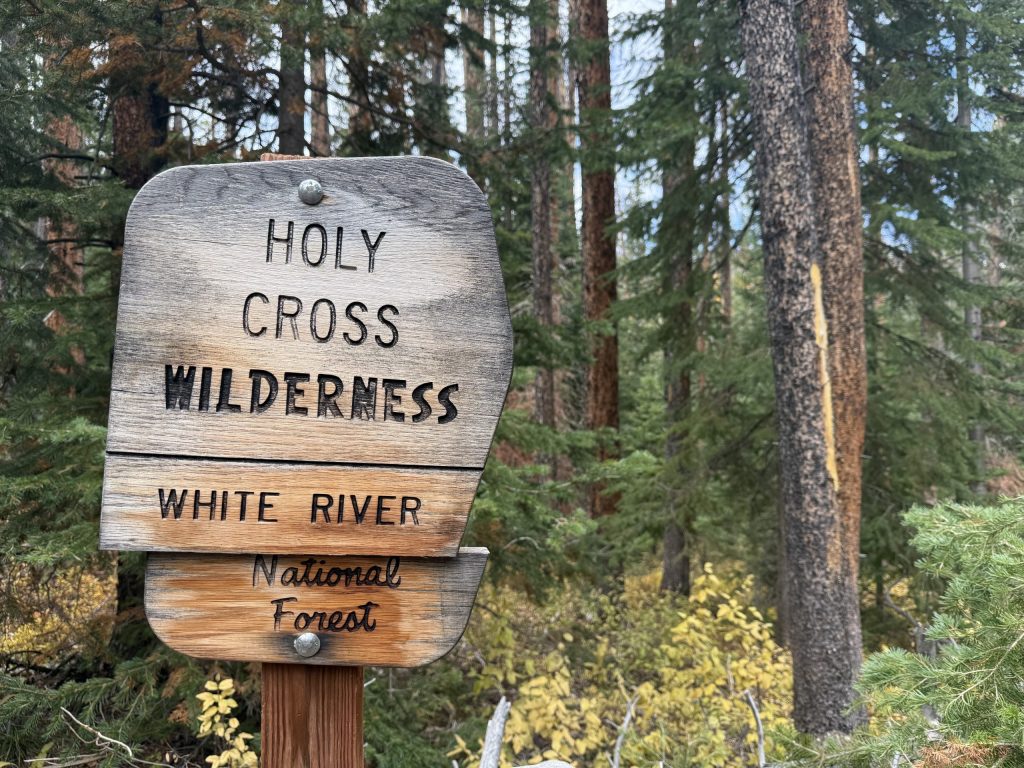
Ali Longwell/Post Independent
Western voters are leaning into issues surrounding public lands conservation, water, recreation and wildlife ahead of the 2026 midterm elections, according to the latest Conservation in the West Poll.
For 16 years, the poll — conducted through Colorado College’s State of the Rockies program — has taken the temperature of voters’ opinions on public land management and protections, energy priorities and more in Colorado and other western states. Since 2018, the poll has included eight states: Colorado, Arizona, Idaho, Montana, Nevada, New Mexico, Utah and Wyoming.
This year’s poll shows that a growing number of voters in these states are prioritizing issues involving public lands, waters, and wildlife when deciding how to vote. Across the West, 85% of voters said this was either very or somewhat important in 2026, compared to 75% in 2016. In Colorado, 89% said it was very or somewhat important this year, growing slightly from 81% in 2020.
“This year’s poll comes at a critical moment,” said Maite Arce, founder and chief executive of the Hispanic Access Foundation, a nonprofit supporting Latino policy and political engagement, at a media briefing for the poll on Wednesday, Feb. 18.
“Across the West, these challenges are intensifying, and communities are paying attention,” Arce added. “What stands out in this year’s findings is the strength and clarity of public support for conservation and for responsible stewardship of public lands and waters. Westerners are making it clear that protecting public lands ensures access to clean water, maintaining wildlife habitat and supporting outdoor recreation.”
The 2026 polling took place in early January, with over 3,400 interviews conducted across the states. The polling included oversamples of Black and Native American voters to ensure their views are reflective of their population numbers in the region. The polling spans age groups, gender, education, ethnicities, geographic location and political party. This year, 36% of those polled identified as Republican, 36% as Independent and 28% as Democrat. Thirty-five percent identified as supporters of the Make America Great Again movement.
The poll asked questions surrounding specific policy changes seen under the second Trump administration, including funding and staffing cuts to national parks, forests and other federal public lands, the proposed removal of Clean Water Act protections from small streams and seasonal wetlands, threats to national monument protections, altering the Endangered Species Act, changes to the National Environmental Protection Act and, proposals to privatize and sell public lands, increasing oil and gas development on federally managed land and more.
From a broad perspective, a growing number of voters expressed concern with the rollback of laws that protect land, water and wildlife. In 2026, 84% of those polled said rollbacks were a serious problem, with nearly 60% identifying it as extremely or very serious. In 2018, only 68% saw it as a serious problem, 40% of which saw it as extremely or very serious.
Those polled were asked to share what they wanted their federal lawmakers to know about why management of public lands matters to them. The largest percentage, 19%, said something about protecting and preserving the lands for future generations. Other sentiments expressed were that it is important to keep public lands public (13%), to protect wildlife and their habitats (13%), maintain and increase funding for land management (9%), to stop and limit development on public lands (5%) and more.
“This year’s poll reflects more than just policy preferences,” Arce said. “It reflects values. A belief that our public lands belong to all of us. A belief that water is too precious to waste. A belief that recreation, access, and conservation can and must coexist with responsible land and energy decisions.”
Many of these issues resonate across party lines throughout the west. This year, 78% of Republican voters polled, 86% of Independents and 93% of Democrats said clean water, clean air, wildlife and public lands were either very or somewhat important in determining whom to vote for.
While the strongest concern for the rollback of environmental laws was reported by Democrats — 94% identifying it as serious, nearly 80% said it was extremely or very serious — 87% of Independents and 74% of Republicans also identified it as a serious problem.
In a forced-choice question, voters were asked whether they want their members of Congress to prioritize protecting land, water and wildlife or maximizing domestic energy production. Miranda Everitt, a partner at one of the two polling companies associated with the poll, Fairbank, Maslin, Maullin, Metz & Associates, said “more voters than ever before” are selecting conservation priorities. Over 76% chose conservation over energy production in 2026, compared to 65% in 2019.
“What’s really key here is that this crosses party lines,” Maullin said. “Sixty-two percent of Republicans say that they would prefer the emphasis on protecting natural resources, 81% of Independents do, and 89% of Democrats do. Broad majorities across party lines want to protect natural resources rather than prioritize energy development.”
With the results showing similar sentiments between parties in many places, there is a growing sentiment that these issues are partisan. Over the last 10 years, the number of voters saying that public land issues are partisan has increased from 10% in 2016 to 34% in 2026. The majority, 64%, believe westerners should be able to find common ground to get things done on issues involving land, water and wildlife — down from 85% in 2016. The sentiment is consistently split regardless of political party.
One area that does show a political divide is how seriously voters view climate change. While 75% of those polled see it as a serious problem, only 55% of Republicans see it this way, compared to 82% of Independents and 93% of Democrats.
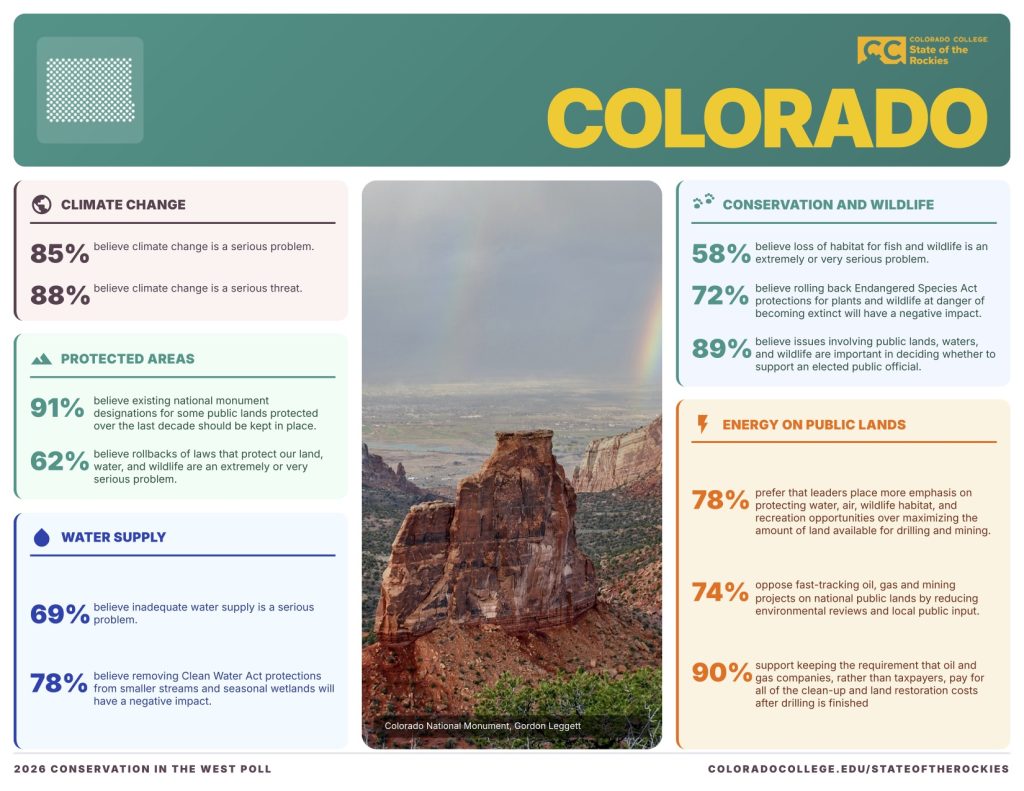
Some additional insights from Colorado’s results include:
- 89% of voters reported funding cuts to public lands were a serious problem, with the state expressing stronger sentiment on this issue than the other states polled
- 93% reported concerns that there are fewer firefighters and support staff to reduce the risk of and fight wildfires
- Approximately 88% are concerned about fewer park rangers and other employees providing visitor services and maintaining public lands
- 87% are concerned about fewer scientists and wildlife biologists
- 89% say issues involving public lands, waters and wildlife are important in deciding whether to support a candidate
- 91% reported that national monument designations should be kept in place
- 76% prefer expanding renewable energy over drilling and mining for more fossil fuels
- Colorado voters consider threats to clean water as a more extreme problem than many other Western states. 90% reported that pollution of rivers, lakes and streams was a serious problem, and 90% specifically reported seeing forever chemicals in these waterways as a serious problem.






Support Local Journalism
Support Local Journalism
Readers around Glenwood Springs and Garfield County make the Post Independent’s work possible. Your financial contribution supports our efforts to deliver quality, locally relevant journalism.
Now more than ever, your support is critical to help us keep our community informed about the evolving coronavirus pandemic and the impact it is having locally. Every contribution, however large or small, will make a difference.
Each donation will be used exclusively for the development and creation of increased news coverage.