Wildfire danger is ‘through the roof’ as Fourth of July travel kicks off busiest time of year for I-70 traffic
Drivers heading to mountain communities should prepare their vehicles to help prevent wildfires, according to the Colorado Department of Transportation

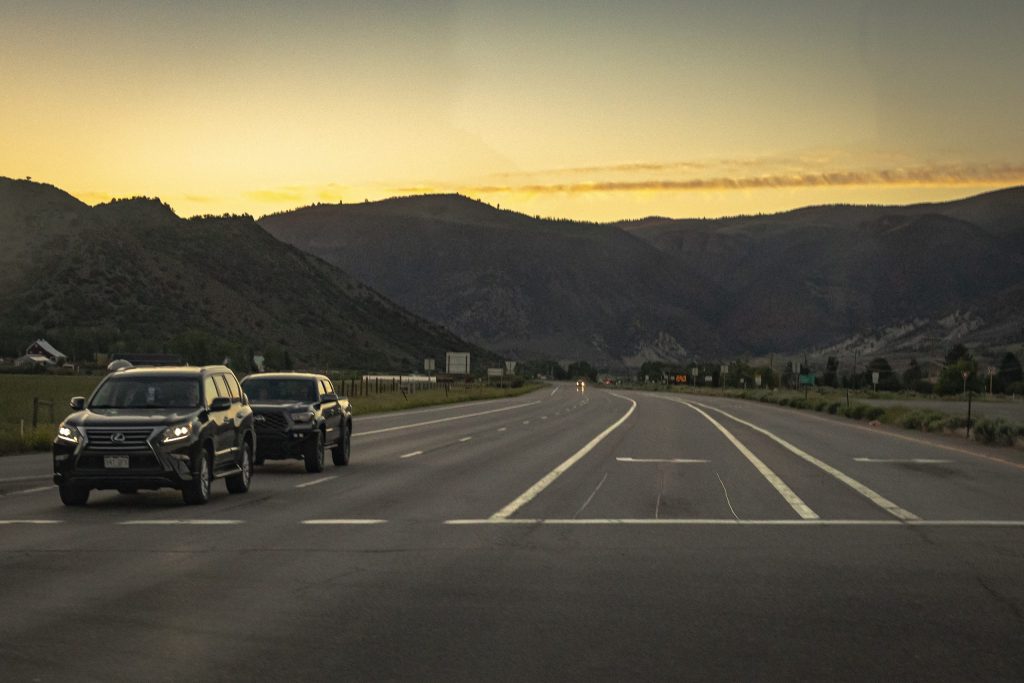
Austin Colbert/The Aspen Times
One of the busiest travel periods of the year is underway on Colorado’s Interstate 70 corridor as tens of thousands of drivers head to the mountains to celebrate the Fourth of July.
With so many people hitting the roads for the holiday, transportation officials are urging travelers to plan ahead — not only to avoid the worst of the congestion but to ensure that their vehicles are prepared for the extreme fire danger in the mountains.
“It’s going to be busy out there,” AAA Public Affairs Director Skyler McKinley said. “Despite high gas prices heading into the holiday, despite some economic uncertainty, we think a record number of Americans will be traveling — 72.2 million Americans traveling overall, 61.4 million by car.”
That trend is reflected in Colorado, with the vast majority of travelers choosing to drive by car to their holiday destinations, McKinley said. He also noted that AAA booking data also shows Denver among the top 10 destinations in the U.S. for air travel this Fourth of July, and many of those who fly into the state will be renting cars to drive up to the mountains.
“It’s great news for the High Country economy after a rough winter,” McKinley said. “What’s unique to Colorado is there is an incredible wildfire risk across the state, and certainly in the High Country and along the Western Slope. What I don’t think most folks consider is that their car can be a major source of sparks that can then burn acreage and can take lives.”
Fourth of July is busiest holiday of the year on I-70
On I-70, the Fourth of July is the busiest holiday of the year, even busier than holiday weekends during the ski season, according to the Colorado Department of Transportation.
Every year since 2019, CDOT has counted more than 200,000 vehicles passing through the Eisenhower-Johnson Memorial Tunnels on I-70 over the Fourth of July holiday weekend, except last year when a fatal crash led to closures.
“It’s actually the Fourth of July weekend that we see the most traffic on the I-70 mountain corridor,” said Emily Wilfong, the communications manager for the GoI70 campaign. “Especially with this summer, it’s the 250th anniversary of the United States. It’s a big celebration weekend, so we’re anticipating that there’s going to be a lot of traffic on the corridor.”
To help ease congestion over the holiday, CDOT has announced plans to suspend state construction and maintenance projects from midday Thursday through Monday morning.
With Friday being a federal holiday, Wilfong said drivers can expect westbound traffic on I-70 to start picking up in the early afternoon on Thursday as people get off work early and head up to the mountains. Westbound traffic will probably remain heavy on Friday morning and afternoon, then ease Saturday, she said.
After the Fourth of July, eastbound traffic on I-70 is expected to peak on Sunday morning and afternoon. Wilfong suggested that those looking to avoid the congestion should look to leave early or stick around to Monday morning.
For those who don’t want to deal with driving on busy roads, Wilfong noted that the state’s Bustang and Pegasus bus services offer travel between cities like Denver and mountain towns, many of which have free buses that tourists can use to get around.
“All of the Bustang and Pegasus buses have Wi-Fi, so you can stream, catch up on work,” Wilfong said. “It’s a really nice relaxing way to get to the mountains, versus that kind of knuckle gripping that you’re doing in the stop-and-go traffic along the corridor.”
The “saving grace” for the Fourth of July weekend is that travel is spread out over two weeks, from about Saturday, June 27, to Sunday, July 5, and is already underway, McKinley said. The extended holiday travel period should help spread out the traffic on the I-70 corridor over several days, leading to fewer “pinch points,” he said.
One thing that could significantly delay travel over the Fourth of July is if a wildfire were to ignite along a major roadway, McKinley said. He noted that there are several major wildfires burning in Colorado heading into the holiday weekend and a wildfire earlier this year closed I-70 for several hours, leading to lengthy detours.
“In addition to making sure that your vehicle is well-maintained and not sparking a fire, know that wildfires might spark and there could be lengthy detours,” McKinley said. “Plan for that as you’re budgeting your time. The worst thing you can be is in a rush during one of these holiday travel periods, and the easiest way to avoid the rush is to plan ahead.”
Drivers can stay up to date on road closures and traffic conditions by visiting COTrip.org or downloading the COTrip mobile app.
How to prepare your car for extreme fire danger
As Colorado faces widespread drought and extreme fire danger, visitors will find that most mountain communities have instituted Stage 2 fire restrictions that ban all campfires and fireworks.
In addition to respecting fire restrictions, visitors to the mountains are also being urged to inspect their vehicles before hitting the roads to ensure there is nothing that could spark or potentially ignite a wildfire.
“With Colorado, especially the High Country, so dry right now, this summer is different and the risk of starting a wildfire is through the roof,” said Austyn Dineen, the state transportation department’s communication manager for the I-70 mountain corridor. “Safe driving this summer is about preventing sparks before they cause a disaster.”
Drivers should never pull off the roadway where dry grass could touch the hot undercarriage of their vehicle and should always make sure to secure trailer chains so that they cannot drag and spark, according to the transportation department.
In the mountains, Dineen said it is important not to overheat brakes on steep descents since the friction can ignite a vehicle’s tires. Drivers can use a low gear while going downhill to reduce the need to brake.
Cigarettes should never be tossed out the window, where they could land on dry ground and spark a fire.
With the risk of wildfires in the mountains over the Fourth of July holiday, the Colorado State Patrol said in a news release that travelers should do their best to avoid driving in or near an active wildfire.
However, if travelers do have to drive near an active wildfire “it is important to remain calm, check for road closures and promptly leave,” the release states. Drivers should keep windows and doors closed to prevent toxic smoke from entering the vehicle, use their headlights but not their high beams, drive slower than the posted limit and leave extra space between the vehicle in front of them.
When safely out of the range of the fire, drivers should pull over and check their vehicle for mechanical issues, such as a clogged air filter, tire damage and ash buildup, according to the release. The State Patrol also said a vehicle fire extinguisher could prove helpful in an emergency.
“Driving during a brushfire or wildfire is extremely dangerous,” State Patrol Chief Col. Matthew Packard said in a statement. “If you feel unsafe, you don’t have to wait for an evacuation order. Pack up and leave.”






Support Local Journalism
Support Local Journalism
Readers around Glenwood Springs and Garfield County make the Post Independent’s work possible. Your financial contribution supports our efforts to deliver quality, locally relevant journalism.
Now more than ever, your support is critical to help us keep our community informed about the evolving coronavirus pandemic and the impact it is having locally. Every contribution, however large or small, will make a difference.
Each donation will be used exclusively for the development and creation of increased news coverage.