Guest column: Adressing the ‘missing middle’ — the urgent need for workforce housing in our valleys
Habitat for Humanity of the Roaring Fork Valley
If you are working in the Roaring Fork Valley, you know how difficult it is to live in the Roaring Fork Valley. But today’s housing challenges may be even worse than you realize.
We have shared that Habitat for Humanity RFV is building a state-of-the-art Modular Production and Workforce Training facility in Rifle. In order to finance the project we commissioned Gruen Gruen + Associates, a team of urban economists and housing consultants, to conduct a market study estimating the demand for deed-restricted affordable housing for income-eligible households in our region. The results were very clear: our region is facing both an unprecedented shortage and an unprecedented demand for affordable housing, especially for what we call the “missing middle” in our workforce — those earning between 80-160% of Area Median Income (AMI).
These are the households who earn too much to qualify for housing assistance, but not enough to afford the skyrocketing housing costs in our area. They are the backbone of our communities — teachers, nurses, first responders, small business owners, and local government workers. These are the individuals we rely on every day to educate our children, care for us in emergencies, and maintain the services that keep our communities running.
According to the Gruen & Gruen study, our existing workforce needs up to 2,500 new homes each year just to meet the existing housing needs of these “missing middle” households. These are not new people moving to our community, they are currently employed here and are under housed. Over the next decade to support our economy, the total demand for affordable units is anticipated to rise to over 25,000 homes if left unaddressed. With the current sky-high construction costs in our valley, it is no longer feasible to rely on traditional “stick-built” construction to address our regional affordable housing needs.
It’s important to understand: Habitat for Humanity is not working every day to bring new people into the valley — these families are already here. Many are living in overcrowding rentals subject to frequent rent increases, often doubling up in tight spaces just to pay the rent, and yet vacancy rates are staggeringly low. Earlier this year, the vacancy rate across Garfield, Eagle, and Summit counties was below 2%, with only 30 vacant apartment units available across all three counties. Also the commuting burden on our workforce is quite evident to all of us with the daily traffic streaming up and down on Colorado Highway 82. Standard commutes can be upwards to five hours a day, leaving their children and their communities behind.
Habitat’s goal is to help in a small way to demonstrate how we keep the hardworking people who are already here—the people who want to live in the communities they serve for the well- being of their families. If we fail to address this crisis, we risk continuing to lose the very workforce that keeps our local economies and institutions functioning.
Together, we can work to ensure that everyone has a place to call home — and that our communities will continue to thrive. Everyone can make a difference. We ask you to encourage your local government officials to support affordable housing initiatives, also consider making a partner or donating to Habitat for Humanity RFV, or volunteer alongside our Habitat for Humanity RFV’s construction team and homeowners.
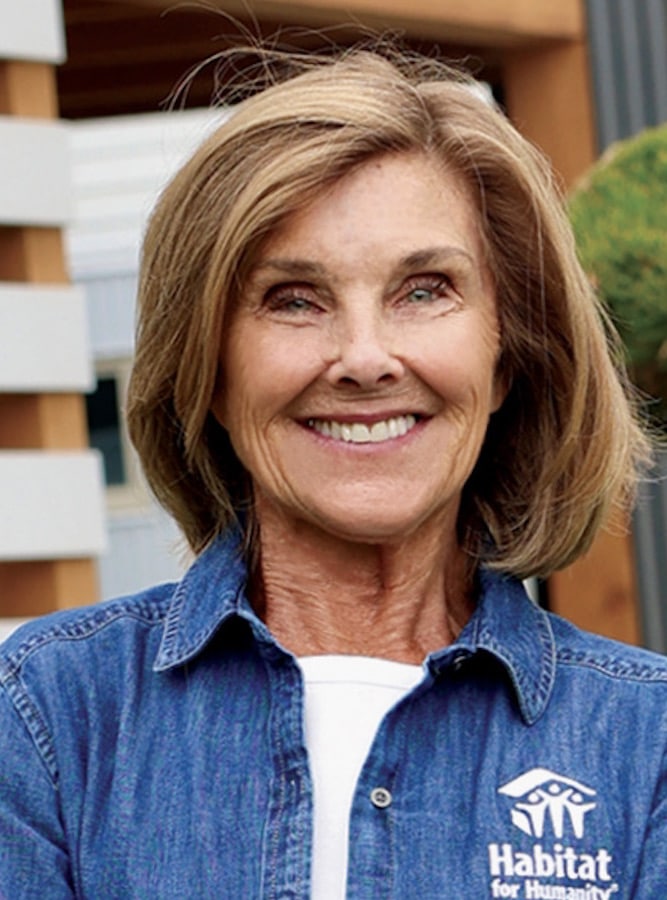
Gail Schwartz is the President of Habitat for Humanity of the Roaring Fork Valley. As a former Colorado State Senator, business owner and community planner, she has a unique understanding of the affordable housing crisis on the Western Slope and in the greater Roaring Fork Valley and is committed to being part of the solution.




Support Local Journalism
Support Local Journalism
Readers around Glenwood Springs and Garfield County make the Post Independent’s work possible. Your financial contribution supports our efforts to deliver quality, locally relevant journalism.
Now more than ever, your support is critical to help us keep our community informed about the evolving coronavirus pandemic and the impact it is having locally. Every contribution, however large or small, will make a difference.
Each donation will be used exclusively for the development and creation of increased news coverage.