Mulhall column: Green River reverie

Courtesy Photo
For the last few weeks, I have been preparing for a few days’ float trip on the Green River, so last week I stopped into Roaring Fork Anglers to pick up a few necessities.
While there I learned Roy Palm had passed. Not recently, but a few years ago.
This news, along with the time it has taken to ready myself for the trip, underscores the unpleasant truth that I have over the years grown away from what in angling once seemed as much a part of me as my right hand.
Things change.
Roy Palm owned Frying Pan Anglers. I first met him in the late ’80s, when his store was the little shack at the corner in Basalt where Homestead Drive ends, and Midland turns into Frying Pan Road.
Back then, I kept a tin fly box about the size of a credit card full of renegades, and what I knew about angling was an amalgam of some adult guidance but mostly experience fishing with kids my own age.
Roy changed all that.
To my box of renegades, Roy added several small green and pink flies, which I learned later were blue wing olives and pale morning duns.
“Try these,” he said, and in that moment sparked my interest in the specific aquatic insects of the Fryingpan River.
Little did I know then how large Roy would feature in my future.
In the late ’80s I moved to a small rental on Garfield Street in Carbondale. With little but a couch and a few computer tables for furniture, the main feature of my living room was a fly tying table in view of a hand-me-down Zenith TV.
One night while tying flies and watching the ten o’clock news, I heard a knock at my back door, which was highly unusual in that I rarely had reason to open it. I turned on the light and opened the door to find a young man wearing wet waders and boots, and carrying a still-strung fly rod.
“My name is John Talbot,” he said, “I’m a fishing guide in Basalt.”
From that night on John and I spent a lot of our spare time fishing and tying flies, and I learned a lot from him in both areas. I became something of a fixture at Fryingpan Anglers, and eventually Roy asked if I would consider guiding.
I said I would.
By then I had read all of John Geirach’s books. At the time, Geirach had published three: Trout Bum, The View from Rat Lake, and Sex, Death, and Fly Fishing, so I knew Roy enjoyed more than a passing rapport with John Geirach and his angling posse: A K Best and Ed Engle. Hence, the chance to guide for Roy I regarded as a big deal.
And so began a period in my life focused mostly on angling, fly tying, and guiding for Roy Palm.
To be fair, there were numerous anglers in the valley who were far better guides than me. A lot better. Frankly, as a guide I was probably barely passable. What I lacked in social skills and the ability to catch trout in inconceivable quantities, I made up for in patient instruction, and maybe Roy saw this.
Of course, that all seems like a lifetime ago, and in some ways it actually is. Nowadays I prepare for a day of fishing not mainly by checking fly supplies, inspecting leaders, or cleaning fly line, but first and foremost by assembling eyewear accoutrements: contact lenses, cheaters, magnifiers, polarized sunglasses, and a pair of prescription sunglasses as a backup in case something really goes wrong.
As it pertains to angling, my aging eye sight reminds me of Gene Hackman’s cameo as the blind man in Young Frankenstein: I probably stand a better chance lighting Peter Boyle’s thumb on fire than I do spotting trout in a river.
One piece of advice Roy never offered was how to deal with aging vision, though if he had, I’m certain his advice would have been worth following.
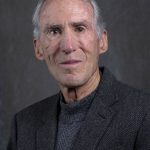
Mitch Mulhall is a husband, father, and longtime Roaring Fork Valley resident. His column appears monthly in the Post Independent and at PostIndependent.com.





Support Local Journalism
Support Local Journalism
Readers around Glenwood Springs and Garfield County make the Post Independent’s work possible. Your financial contribution supports our efforts to deliver quality, locally relevant journalism.
Now more than ever, your support is critical to help us keep our community informed about the evolving coronavirus pandemic and the impact it is having locally. Every contribution, however large or small, will make a difference.
Each donation will be used exclusively for the development and creation of increased news coverage.