Catching up with … Marco Cunningham
ALL |
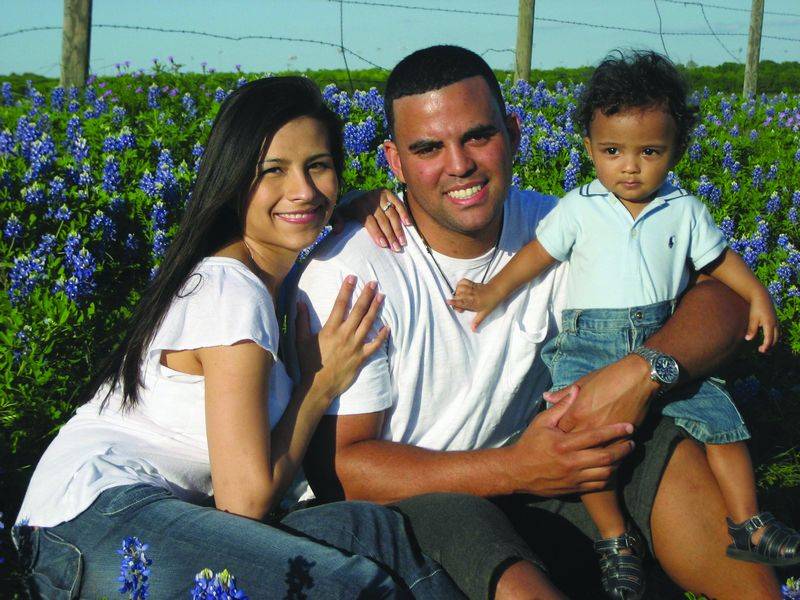
David Dejesus mans center field for the Royals. Norris Hopper is an outfielder for the Reds. Chris Sampson is an integral part of the Houston Astros’ starting rotation.None of the above are what you’d call household names, but all three are where Marco Cunningham once strove to be: in the big leagues. Though he sounds a tad wistful in recalling those he once shared a dugout with, Cunningham couldn’t be happier with his life the way it is now. After all, he has a good job, a loving wife and a 1-year-old son.”I look at my buddies in pro ball and a I look at my son, and I wouldn’t give that up for anything in the world,” said Cunningham, a 1996 Rifle High School graduate who reached athletic heights few Western Slopers as much as flirt with. Cunningham, who played ball at Trinidad State and Texas Tech before spending four seasons as a minor leaguer in the Kansas City Royals organization, keeps his distance from the baseball diamond these days. He tabled his major-league aspirations after spending the 2003 season with the Wichita Wranglers of the Double-A Texas League. And he was no slouch there, playing outfield and hitting .276 with six home runs, 35 RBIs and 13 stolen bases.
But back problems plagued Cunningham, and the writing on the wall grew ever clearer. He could trudge forward, battle through the pain and still maybe never set foot on a big-league diamond, or he could use his education and land a swell real-world gig. “The biggest reason (I left) was because I got hurt,” said the 29-year-old Cunningham, now an orthopedic equipment salesman in San Antonio, Texas. “A lot of people don’t realize this, but I played a whole year injured. My last full season, I played injured. The bad thing about that was having to show up at the ballpark three hours earlier than everyone else.”
A strict physical therapy regimen followed that fateful 2003 season, but knowing they had an injured player in Cunningham, the Royals only protected him on their Double-A roster, not on the Triple-A or major-league 40-man rosters. He subsequently requested his release. “I just figured I’d throw my resume out there,” he recalled. “I had my degree, so if I could land a good job, I’d hang it up. I got a job with Pfizer Pharmaceuticals. It was a lucrative offer, so I hung ’em up. Nothing’s guaranteed in pro ball, and then I had a job with Pfizer. It was pretty good money, and it had to be pretty good money to quit the game of baseball.” Cunningham says he harbors not a shred of regret.”Now, I’m doing great things,” he insisted. “It’s worked out pretty good. I can’t complain at all. I do miss the game a lot. I have a lot of friends in pro ball, in the big leagues.”
Cunningham fondly recalls his days as a student at Rifle. He and his family moved to the Western Slope from Northern California when he was in the fifth or sixth grade.His athletic ability shone brightly on the Slope. He played baseball, basketball and soccer. Even a little football. A gifted basketball player, Cunningham was in his element in the gym. He was obviously pretty good at baseball, too. Former Rifle boys basketball coach Roger Walters remembers Cunningham’s fluid moves on the court.”He was unguardable,” said Walters, now the boys hoops coach at Roaring Fork. “He made everyone else around him better. He was so quick, and he could handle the ball like it was part of his body.”
Further, Walters said, Cunningham – even as a teen – was a solid citizen.”For being as good an athlete as he was – all-state in all sports – he was really humble, a great teammate,” said the veteran coach. “He always put his teammates ahead of himself. I thought that was really special.”Cunningham had a knack for turning potential negatives into a source of motivation. He grew up in a single-parent Silt household, with his father out of the picture since very early childhood. An African-American in a predominantly white region, he endured a fair share of razzing outside of Rifle.”That was tough,” he said. “I was one of the only African-Americans growing up in the area. Of course, I heard the N word in all those hick little cities, towns. I’d go there and play well and they’d call me names. … But through high school, I earned a name for myself, fueled the fire. I was able to rise above everything else.”Never really letting those things become debilitating issue, Cunningham parlayed his athletic prowess to collegiate success. First at Trinidad, and then at Texas Tech. He played just a semester of basketball at Trinidad before dropping the sport and focusing on baseball.”I didn’t really enjoy (basketball),” he said. “I was much better at baseball. It kind of hit me that I’d have more of a career in baseball than in basketball.”
Family and a career in sales have taken the place of baseball in Cunningham’s life. He, his wife, Olivia, and young son, Kayson, moved to San Antonio from Tucson, Ariz., about four months ago after Marco left his sales job at Pfizer. He now sells for a company called DJO Orthopedics. The Cunningham family’s migration to San Antonio puts them closer to Olivia’s family.Cunningham’s life is much simpler now. Gone from his life is the dog-eat-dog world that is the minor leagues. No more traveling from city to city. No more long stretches without his family.”Playing pro baseball is really a job,” he said. “It’s not all the glitz and glamour people think it is. The seasons are long and when you’re in it, you think about how nice it’d be to be at home, barbecuing and hanging out with the family. You can’t go on family vacations, unless it’s the winter when it’s cold. “I have a lot of friends in the big, still playing pro ball and they’re not wishing they would quit pro ball but you look on the other side of the fence and the grass is always greener. They think that’d be nice to have.”Barbecues are now an option for Cunningham. He also puts in plenty of time on the golf course. “I’ve picked up other things,” he said. “It used to be baseball, baseball, baseball. Bleed baseball. Now I’m a family guy, hanging out with buddies. It’s a lot more laid back.”Marco’s mother, Mary Cunningham, is happy to see her son content. It wasn’t easy watching her flesh and blood immersed in the cutthroat world of professional baseball.”People have no idea how competitive and how hard on the mind (baseball) is,” she said from her home in Silt. “They make them into these machines. That change was the hardest part for me, to see that in Marco. The seriousness, the lack of a sense of humor.”She knew her son could have made the majors had he stuck with it, but she seems as at peace with Marco’s decision as Marco is.”I feel he could have made it all the way,” she said, “and so did he. So did his coaches. Part of that also made him as strong as he is now. He has the skills to get through the hard times. Overall, he’s a powerhouse. He’s just beautiful, and so is his family. I’m very proud of him and his choices and achievements.”
He may not have made the big leagues, but baseball was good to Cunningham. The game opened the door to meeting an abundance of quality people – ordinary folks and big names alike.”The exposure, the traveling, the people that he met were all so amazing,” Mary Cunningham said. “The host families he stayed with are still like parents and family to him.”Marco also had the chance to meet a childhood hero or two.Bo Jackson, George Brett, Dave Stewart, late Negro League’s legend Buck O’Neill.And don’t forget the countless future big names he played alongside or against.Not everyone gets the chance to play baseball for a living, and Cunningham treasured every minute.”I look back at it and I had great times everywhere,” he said. “I was doing something a lot of people wish they could have done. Coming from where I came from and what it meant, it’s all good times, and fun.”


Support Local Journalism
Support Local Journalism
Readers around Glenwood Springs and Garfield County make the Post Independent’s work possible. Your financial contribution supports our efforts to deliver quality, locally relevant journalism.
Now more than ever, your support is critical to help us keep our community informed about the evolving coronavirus pandemic and the impact it is having locally. Every contribution, however large or small, will make a difference.
Each donation will be used exclusively for the development and creation of increased news coverage.