Bureau of Land Management offers options for expanding e-bike access on trails in Eagle, Pitkin and Garfield counties
The federal agency could start allowing Class 1 e-bikes on up to 187 new miles of mountain bike trails managed by its Colorado River office

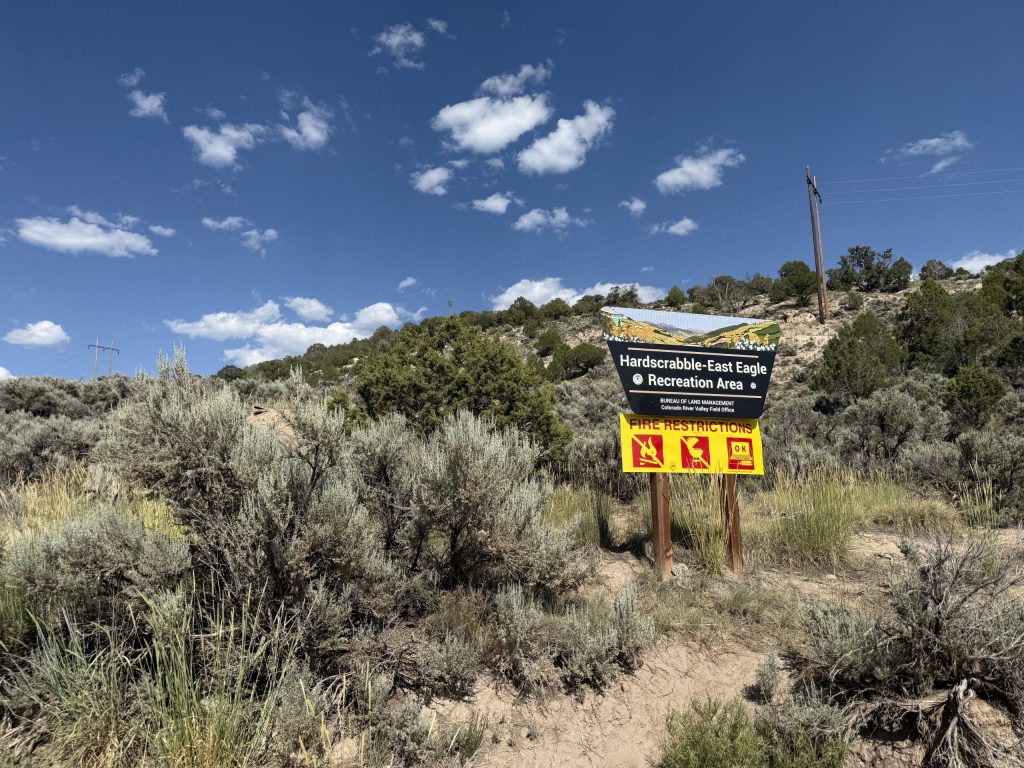
Ali Longwell/Post Independent
The Bureau of Land Management is moving forward with a proposal to expand e-bike access on up to 187 additional miles of mountain bike trails in Eagle, Pitkin and Garfield counties.
The federal agency has opened a 30-day public comment period on its draft environmental impact statement, which offers three options for trails managed by its Colorado River Valley Field Office. Individuals have until Dec. 13 to submit comments through the BLM National Register.
There are three classes of e-bikes, with Class 1 being the most limited in speed and power. Class 1 e-bikes have pedal assist only and are capped at 20 mph.
The Colorado River Valley Field Office currently allows all classes of e-bikes on motorized trails. Class 1 e-bikes are allowed on 18 miles of single-track mountain bike trails within the Grand Hogback Trails north of Rifle. All classes of e-bikes are banned from the remaining 200 miles of singletrack mountain bike trails in systems across the field office in Glenwood Springs, Rifle, New Castle, Eagle, Gypsum and Carbondale.
BLM Colorado has been working with local communities and stakeholders to decide where it might expand access to Class 1 e-bikes on more single-track since receivng a proposal in early 2024. While some individuals and groups have supported opening access on all trails, others have pushed the agency to consider site-specific reviews of potential user, enforcement and environmental impacts.
“Public feedback played an important role in shaping the alternatives we’re now evaluating,” said Lisa Dawson, Colorado River Valley field manager, in a Nov. 13 press release. “This next comment period gives people an opportunity to review the analysis, weigh in on the different options and help us determine how best to balance recreation opportunities with trail safety and resource protection.”
What does the draft EIS propose?
The draft environmental impact statement offers three potential options, including one no-action alternative as required by the National Environmental Policy Act.
The first option, which is the “proposed action” by the BLM, would allow Class 1 e-bikes on 118 additional miles of existing mountain bike trails and systems in Pitkin, Eagle and Garfield counties. This includes allowing the e-bikes on:
- 46 miles at The Crown Special Recreation Management Area outside of Carbondale
- 38 miles at the Hardscrabble-East Eagle Special Recreation Management Area in Eagle
- Four miles of trails — including Third Gulch, Pipeline, Bailey, Riddle and Boneyard — in Eagle near the Hardscrabble-East Eagle recreation area
- 23 miles at the New Castle Extensive Recreation Management Area in New Castle
- Seven miles at the Thompson Creek Extensive Recreation Management Area near Carbondale
This option excludes 20 miles of trails within the Red Hill management area outside of Carbondale. In the draft, the BLM states that it wants to consider alternative ways to manage this area when it comes to e-bikes because the area is closed to off-highway vehicles like ATVs, dirt bikes and side-by-sides.
The other management areas where the federal agency is considering expanding access to e-bikes allow some motorized use in designated areas.
The Red Hill trails were also a point of contention among Pitkin County Commissioners early in the BLM’s scoping process, with some expressing concerns that it could exacerbate crowding and safety issues in the area. The BLM’s draft environmental impact statement reports that the system sees over 75,000 users a year, which is more than double some of its other management areas, including the Hardscrabble trail system in Eagle.
The BLM’s second alternative would include the same 118 miles of trails proposed above but would also allow access to e-bikes on 69 additional miles of trails.
This includes allowing them on the 20 miles of mountain bike trails at the Red Hill management area as well as trails outside of specific management areas, including at Catamount Creek, Dry Rifle Creek, East Glenwood Canyon, Fisher Creek, Gypsum Red Hill, Horse Mountain, Sheep Creek, Sutey Ranch and Windy Point.
“Every trail system is different, and what works in one area may not work in another,” said Alan Czepinski, BLM Colorado’s outdoor recreation planner, in a statement. “Comments about specific trails, user experiences and conditions on the ground are especially helpful as we evaluate where expanded access may be appropriate.”
Does this address early concerns with the e-biking proposal?
In early proposals, many stakeholders in all three counties cautioned the BLM against taking a one-size-fits-all approach to expanding access, advocating instead for trail-specific considerations.
Wilderness Workshop, a Carbondale-based conservation nonprofit, was among those with this concern. Juli Slivka, the organization’s senior director of policy and programs, said on Thursday the draft represents a “thoughtful plan” that enables new access while preventing new disturbance to backcountry landscapes and reflects “multiple use management and local community input.”
“The draft (environmental assessment) presents options for e-bike designations that reflect a case-by-case analysis of trails and impacts and seeks to balance recreation uses, wildlife habitat and backcountry values,” Slivka said in a statement. “We support BLM’s proposed approach to focus e-bike use in areas designated for mountain biking and recreation management, where trails are built for that purpose and infrastructure exists to support a new recreation use.”
While the Vail Valley Mountain Trails Alliance said in a blog post it was still reviewing the draft statement, its comment submitted to the BLM earlier this year supporting expanding e-bike access in Eagle and Gypsum as e-bikes use surges.
“The reality is that e-bikes are not going away and will likely continue to grow in popularity,” the comment states. “We believe the best long term outcome for all trail users is a proactive approach that creates opportunities for management, education, and adaptive decision making, while protecting trail experiences and resource values.”
The organization made specific recommendations for trail-specific analysis, directional management, user education, cross-jurisdiction coordination, monitoring and adaptive management.
Roaring Fork Mountain Bike Alliance was among the groups that proposed expanding access to the BLM in 2024 as e-bike use and attention grew. A survey of its membership — which drew over 1,300 responses — found that over 60% were supportive or neutral on allowing e-bike access on mountain bike trails, while 20% to 30% were opposed in some way, according to a March interview with Rich Grange, a board member for the alliance.
In reaching out to other areas that allow Class 1 e-bikes, Grange added that land managers did not report increases in trail damage, maintenance or user conflicts as a result of allowing e-bikes on trails.
Comments and more details on the proposals are available at EPlanining.BLM.gov, under DOI-BLM-CO-G020-2026-0020-EA.








Support Local Journalism
Support Local Journalism
Readers around Glenwood Springs and Garfield County make the Post Independent’s work possible. Your financial contribution supports our efforts to deliver quality, locally relevant journalism.
Now more than ever, your support is critical to help us keep our community informed about the evolving coronavirus pandemic and the impact it is having locally. Every contribution, however large or small, will make a difference.
Each donation will be used exclusively for the development and creation of increased news coverage.