The Bureau of Land Management kills 2-year-old conservation rule for public lands
The Trump administration is revoking the Biden-era rule that placed conservation on equal footing with other uses on the federally-managed land

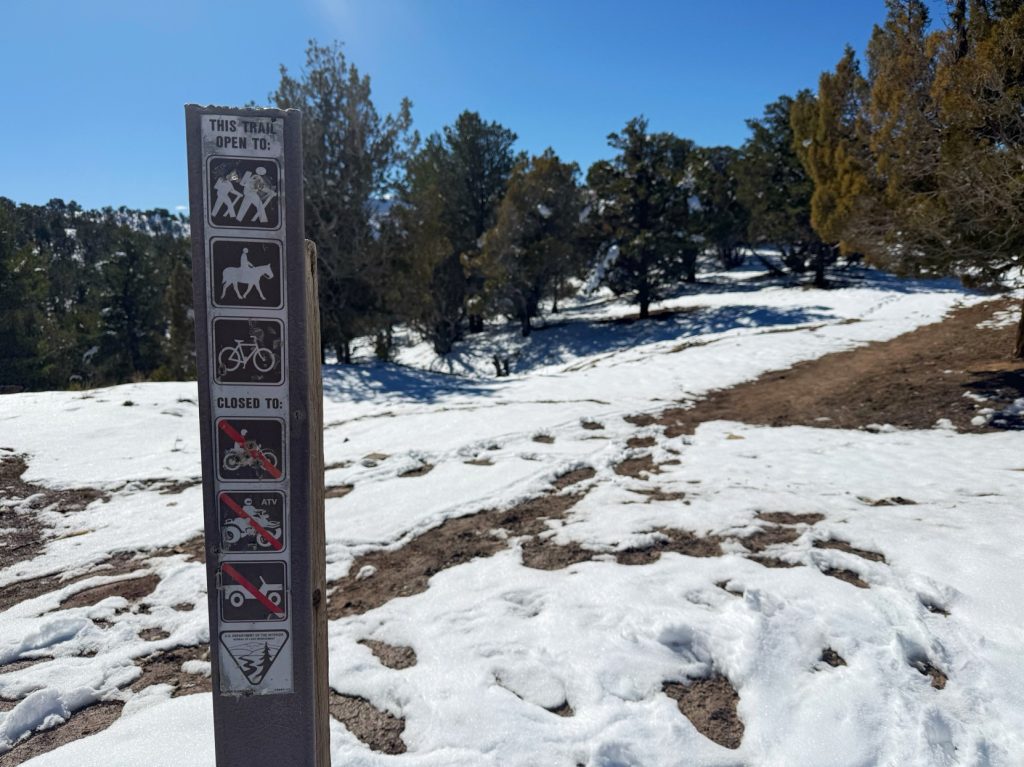
Ali Longwell/Post Independent
The U.S. Department of the Interior has officially killed a two-year-old Bureau of Land Management rule that gave conservation the same priority as energy development, grazing, timber production, recreation and other uses on the federally managed land.
The BLM’s Conservation and Landscape Health Rule, also known as the Public Lands Rule, was implemented in 2024 under former President Joe Biden. At the time, environmental advocacy groups and communities claimed the BLM’s multiple-use mandate lacked direction and had led to a focus on extractive uses like mining and grazing on public land. Today, around 81% of BLM lands are open to oil and gas drilling.
In September, the Trump administration announced its intent to revoke the rule, claiming that it placed “an outsized priority on conservation or no-use” at the expense of other uses.
The BLM manages around 245 million acres of public lands in the United States, including 8.3 million acres in Colorado. It also manages 700 million acres of subsurface mineral estate across the country and around 27 million subsurface acres in Colorado.
The Interior Department posted its final decision rescinding the Public Lands Rule on Tuesday, May 12, sparking support from agriculture, mining and oil and gas industry groups and outcry from conservation, environmental and recreation stakeholders.
While those in support of the revocation claimed the rule was overly restrictive, economically harmful and inconsistent with the BML’s guiding principle, others warn that killing the rule will negatively impact cultural, biological and recreational resources and could threaten the agency’s ability to reduce risks associated with climate change.
According to the post on the Federal Register, the decision “restores balance to federal land management under the Federal Land Policy and Management Act of 1976,” which established the BLM’s multiple-use mandate.
The 1976 law tasked the BLM with managing the following “principal or major” uses: recreation, range, timber, minerals, watershed, wildlife and fish and natural scenic, scientific and historical values. While it required the agency to balance these uses in a way that avoids permanently impacting land productivity and the quality of the environment, it did not explicitly list conservation as an official use to be considered until the Public Land Rule was implemented.
The rule also formalized regulatory tools and frameworks for restoring degraded public lands and water; supporting decisions with science, data, Indigenous knowledge and public input; and maintaining land that supports wildlife, habitat connectivity, old-growth forests and ecosystem functions.
The rule, according to the Interior Department, “introduced unnecessary complexity and placed operational constraints on the BLM’s planning and permitting processes.”
Interior Secretary Doug Burgum said in a September news release that this rule “had the potential to block access to hundreds of thousands of acres of multiple-use land — preventing energy and mineral production, timber management, grazing and recreation across the West.”
Burgum said that rescinding the rule aligns with President Donald Trump’s executive orders to increase domestic energy development and production and the department’s broader efforts to return authority to states, counties and tribes impacted by public land management.
“This deregulatory action does not alter the BLM’s authority under (Federal Land Policy and Management Act) to take management actions to conserve public lands and resources, as appropriate,” according to the Interior Department’s decision. “The BLM will continue to responsibly manage under principles of multiple use and sustained yield while using existing tools to provide for resource conservation, as appropriate, notwithstanding the rescission of the 2024 Rule effected by this final rule.”
Will its repeal restore or disrupt balance on BLM land?
Before Tuesday’s decision, the BLM received over 138,000 comments — over 9,000 of which it reported were unique rather than duplicative.
Over 180 elected officials from Western states — including Colorado Sen. Dylan Roberts, D-Frisco, and leaders from Aspen, Breckenridge, Frisco, Vail, Winter Park and other communities on the Western Slope — signed a letter in November opposing the change and calling it shortsighted.
“Our communities are asking for a more balanced approach to land management — not a decades-old approach dominated entirely by extractive and polluting industries, but one that reflects the full range of ways people live, work and recreate on these lands,” they wrote. “The (Public Lands) Rule helps ensure that these priorities are given due consideration, and that our public lands can support our economies and our quality of life now and into the future.”
The Routt County Farm Bureau Board submitted a comment in favor of repealing the Public Lands Rule, arguing that it violated the 1976 multiple-use principle, which is “essential for the prosperity of multiple industries, including extractive industries and agricultural businesses, primarily livestock producers who rely extensively on grazing allotments.”
“The Routt County Farm Bureau Board of Directors believes this Public Lands Rule threatens the multiple-use mandate and specifically violates our grassroots policy that supports these multiple uses like livestock grazing,” they wrote, adding that many of its members “rely significantly on grazing allotments and support the proposal to rescind this rule.”
In a statement on Tuesday, Melissa Simpson, president of the Western Energy Alliance, said the trade group supported the Trump administration’s revocation and efforts “embracing” domestic energy development on public lands.
“We’re glad to see the Biden rule overturned. Our nation’s economy and conservation of public lands are both better off,” Simpson said. “Nearly 10% of the oil and natural gas we use is produced on multiple-use public lands. Drivers today certainly understand how important it is we produce oil at home when they go to fill up their vehicles.”
The Wilderness Society, a national conservation nonprofit, said in a press release that the repeal is part of a bid by the presidential administration to make “industrial applications like drilling and mining the default and dominant use of our nation’s public lands forever.”
“Congress directed the BLM to manage public lands in a way that balances uses like outdoor recreation with needs as varied as grazing, energy development and conservation of wildlife habitat,” said Alison Flint, acting vice president for federal policy at The Wilderness Society, in a statement. “The administration’s rescission of the BLM Public Lands Rule flouts both the agency’s legal mandate and the overwhelming wishes of the American people for public lands to be managed in a balanced and sustainable way that conserves special places for future generations.”
Anna Peterson, executive director of Durango-based nonprofit The Mountain Pact, wrote in a statement that the decision threatens the way of life and economies of the Western communities that rely on “well-managed public lands.”
“This critical tool conserves key lands and waters for residents, wildlife, and future generations, and brings much-needed balance to BLM management,” Peterson said. “We’re deeply disappointed in this shortsighted decision, and urge this administration to put our communities’ best interests at heart and protect the public lands we depend on to thrive.”






Support Local Journalism
Support Local Journalism
Readers around Glenwood Springs and Garfield County make the Post Independent’s work possible. Your financial contribution supports our efforts to deliver quality, locally relevant journalism.
Now more than ever, your support is critical to help us keep our community informed about the evolving coronavirus pandemic and the impact it is having locally. Every contribution, however large or small, will make a difference.
Each donation will be used exclusively for the development and creation of increased news coverage.