White River National Forest reports spike in bear activity
Food storage orders and new lockers aim to prevent human-bear conflicts in the country’s most-visited national forest

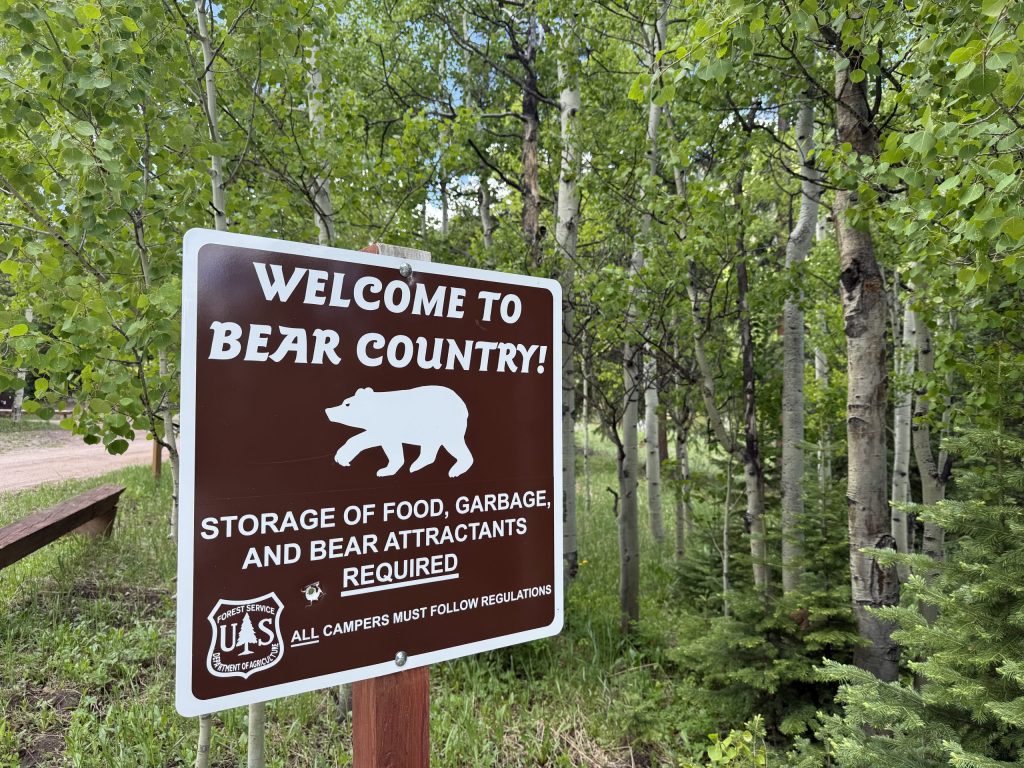
Ali Longwell/Post Independent
White River National Forest is experiencing a rise in black bear incidents as drought conditions impact the species’ natural food sources and reports spike across Colorado.
“Once black bears get a food reward from humans, they associate humans with food and can become aggressive,” said Jessica Ilse, wildlife biologist with the national forest’s Aspen-Sopris and Dillon ranger districts, in a news release. “Don’t underestimate black bears’ ability to get to your food or trash. They are smart and can open car doors, camper hatches and coolers to reach a half-eaten morsel of food.”
The White River National Forest — which is the most visited national forest in the country and spans
2.3 million acres in northwest Colorado — intersects with high populations of black bears in Colorado.
This year, as extreme drought conditions hit the forest, bears’ natural summer forage of fruits and berries has been severely impacted, forcing them toward human-related food sources. Colorado Parks and Wildlife reported a 68% increase in bear reports for the first seven months of 2026, with some northwestern counties experiencing even higher jumps, including Routt County, where reports were up 219%.
In a news release, the White River National Forest reported that bears have been consistently seen in nearly all developed campgrounds, with significant activity near Boreas Pass outside of Breckenridge and in the Aspen area.
In addition to its summer food storage order — which requires all food, drinks, garbage and coolers to be contained in locked, hard-sided vehicles, locked campers or bear-resistant food lockers at certain sites — the national forest has taken additional precautions this year.
Partnering with Rocky Mountain Youth Corps and Parks and Wildlife, the White River National Forest has installed additional bear lockers in dispersed camping areas at Boreas Pass, Officers Gulch and Rock Creek in the Dillon Ranger District, the Piney area in the Eagle-Holy Cross District and Pearl Creek in the Aspen-Sopris Ranger District.
“Use bear-resistant lockers and containers whenever possible because they are specifically designed [to] keep bears out, whereas bears can figure out how to break into hard-sided vehicles and campers,” Ilse said in the release.
Backpackers in the Maroon Bells-Snowmass Wilderness are required to carry bear-resistant food containers. Still, the national forest recommends that backpackers in all backcountry areas utilize them for food storage.
Living and recreating in bear country requires humans to do their part in reducing attractants and conflict with bears. Trash consistently ranks as the No. 1 human attractant for bears and reason for conflict between humans and bears, according to Parks and Wildlife’s bear reports.
As opportunistic eaters, once a bear gets a taste of human-related food, it will return and can quickly become habituated to those sources of food, which can cause conflicts to escalate between humans and bears. For this reason, limiting access to bear attractants — human food, trash, birdfeeders, pet food, grills and more — is critical to reducing the risk of incidents.
As of Aug. 12, Colorado has a new law strengthening enforcement for humans luring bears with food or trash. The law, passed by legislators this session, lowers the bar of proof for law enforcement officers. They no longer have to prove a person intended to lure a bear and instead allows citations to be issued when a person knowingly places food or edible waste in the open under circumstances where there is a reasonable probability it will attract a bear.


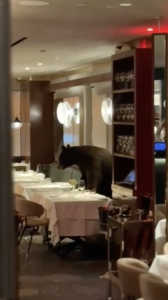
A bear walks into a bar …
On Aug. 10 at 10:45 p.m., a docile black bear was captured on film after entering Sant Ambroeus Aspen and climbing onto tables.



Support Local Journalism
Support Local Journalism
Readers around Glenwood Springs and Garfield County make the Post Independent’s work possible. Your financial contribution supports our efforts to deliver quality, locally relevant journalism.
Now more than ever, your support is critical to help us keep our community informed about the evolving coronavirus pandemic and the impact it is having locally. Every contribution, however large or small, will make a difference.
Each donation will be used exclusively for the development and creation of increased news coverage.