Amid an ‘unprecedented’ bear year, Colorado Parks and Wildlife won’t feed the hungry bruins. Here’s why.
Bears’ natural food sources are depleted this year, but Colorado wildlife officials say supplementing these sources is not a solution and has long-term consequences

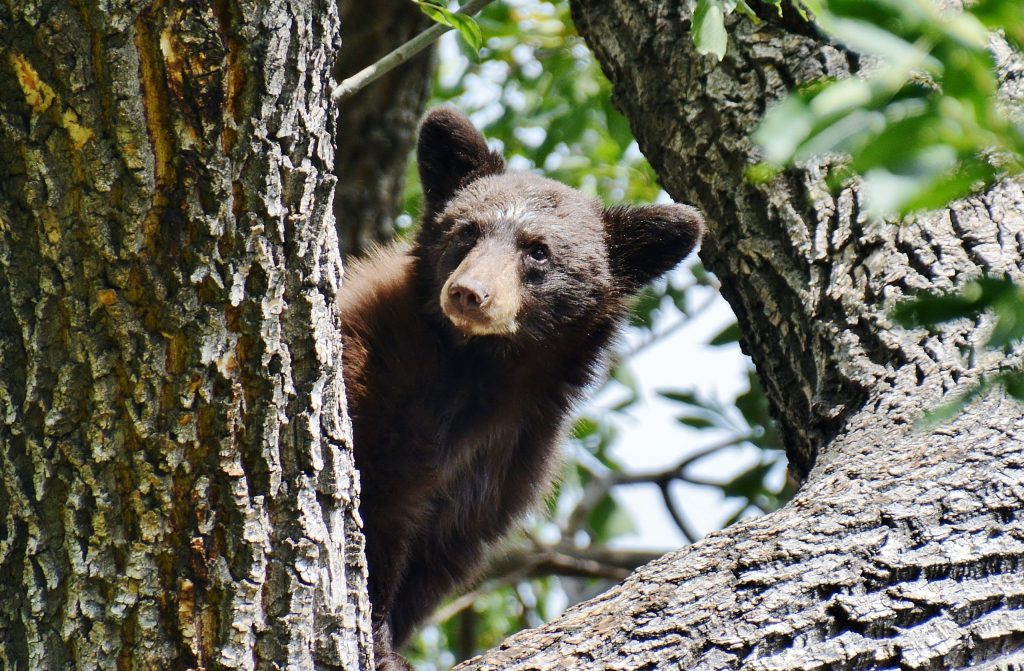
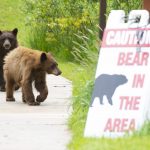
Colorado Parks and Wildlife/Courtesy Photo
This winter’s critically low snowpack, a staggering wildfire season, a late spring frost and widespread drought are leading to a record number of black bear conflicts and reports across Colorado.
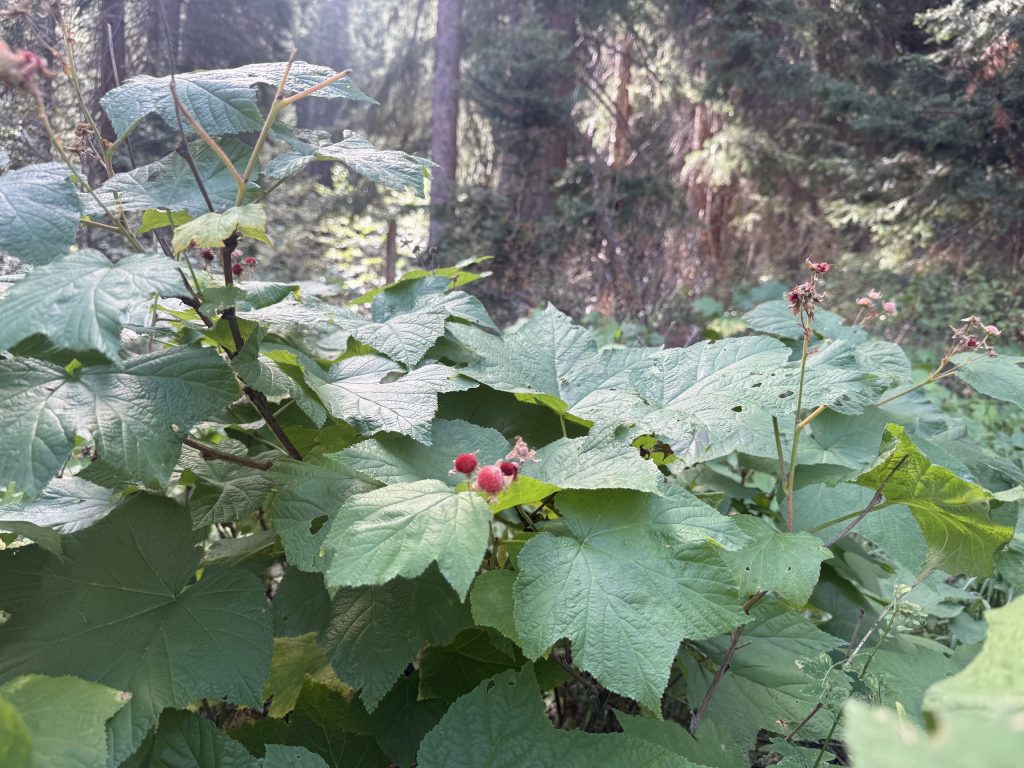
“All of that has reduced the availability of natural foods such as berries, fruits, nuts, plants and grasses in parts of Colorado,” said Colorado Parks and Wildlife Director Laura Clellan at the agency’s Sept. 2 commission meeting. “Consequently, bears are traveling further into residential neighborhoods in search of easy calorie sources such as unsecured trash, bird seed, pet food, barbecue grills.”
The result, Clellan said, is “an unprecedented number of bear conflicts” that the agency’s wildlife officials and public information officers are dealing with “around the clock, 24/7.”
Statewide, as of Aug. 20, Colorado Parks and Wildlife had received over 7,000 reports of bear sightings and activity — surpassing the total number for all 12 months of 2025.
In Parks and Wildlife’s northwest regon — which spans west from Jackson, Grand and Summit counties and north from Eagle, Pitkin and Mesa counties — the agency has received 3,474 reports of bear activity as of Aug. 31, a nearly 173% increase from first eight months of 2025.
Mesa County, which saw 35 reports in the first eight months of 2025, has seen reports rise by nearly 1,066% to 408 this year. These reports have also seen significant spikes in Routt, Moffat and Pitkin counties, with reports up nearly 372%, 243% and 127%, respectively, from 2025.
While usually rare, the state has also seen seven bear attacks this year, six of which took place in August.
These conflicts are only expected to rise as bears enter a period called “hyperphagia” in late summer and fall, when black bears “spend up to 20 hours a day searching for food as they build the fat reserves that they need to survive the winter,” Clellan said.
During this period, bears will seek to eat around 20,000 calories — the same amount found in a fast food order of 20 chicken sandwiches, 10 large orders of French fries, 10 soft drinks and 10 milkshakes.
“We have to work together to deter bears from populated areas,” Clellan said.
As the agency leans into prevention efforts and limiting bears’ access to human-food sources as the top ways to prevent human-bear conflict from worsening, there’s one thing Parks and Wildlife will not be considering: supplemental feeding.
“CPW’s decision not to supplementally feed the bears isn’t based on lack of concern for bears during difficult food years,” Clellan said. “It’s based on the long-term consequences of feeding them. The best outcome for both bears and people is for bears to remain wild, wary of humans and reliant on naturally available foods.”
According to Clellan, the state wildlife agency has received an increasing number of inquiries about why Parks and Wildlife is not dropping food in wilderness areas for black bears. It’s something it will consider for some big game ungulates in emergency situations, she said, but that it does not for bears. In 2013, the commission adopted a policy banning the act.
“Black bear ecology and behavior are fundamentally different from those of the big game ungulates,” Clellan said. “Ungulates are herd animals. They can share food sources with relatively little conflict. Black bears are solitary and territorial. They have large home ranges, and concentrating hungry bears around piles of food causes overcrowding, sparks potentially deadly territorial fights, puts dependent cubs at risk, and can increase the issue of disease transmission.”
Additionally, because black bears are “opportunistic foragers with exceptional sense of smell,” having humans supply them with natural food can teach them to associate humans with “an easy meal,” Clellan said.
“This habituation erodes the natural fear of people, significantly increasing the potential for aggressive encounters,” she added.
Preventing habituation by limiting access to bear attractants — human food, trash, birdfeeders, pet food, grills and more — is critical to reducing the risk of incidents between bears and humans.
The challenge for Parks and Wildlife is that once bears become habituated, its options are typically limited to either relocation or euthanization. Clellan said Wednesday that the agency has “done a lot of relocations this year,” but highlighted that they’re not always an effective means at reducing conflict.
“We have relocated bears this year on multiple occasions, sometimes a distance of 40 or greater miles, and within a matter of days, those bears end up right back in the exact same location, getting themselves in trouble again,” said Travis Black, Parks and Wildlife’s northwest regional manager. “While relocation is an option, with bears often it’s not the best option, especially when you’re having a bad bear year with mass crop and berry failures out there.”
Black added that when food failure and challenges are so widespread, it’s also difficult to find a good place to relocate the bears.
“You’re going to put them in a habitat where there’s likely the resources aren’t any better than where you took them from,” he said. “Plus, you’re putting them potentially in another dominant male’s habitat where he’s then going to potentially kill that bear anyway. So we have to make some tough judgment calls at times.”
In cases where bears are getting into trouble, including cases of killing livestock, Black said, “quite often, the best option, unfortunately, is euthanasia…”
Given the situation this year, Commissioner Tai Jacober, a Carbondale rancher, asked members of the public to do their part in reducing human-bear interactions.
“As people, we have to be aware that these are our co-inhabitants. We have to be respectful of them. We have to do everything that we can to manage what we can manage to reduce this conflict,” he said. “Please, just understand, these animals are out there just trying to make a living, and they’re not a problem, and when we make them a problem, our agency has to deal with them in a manner that is not favorable to the animal, nor toward the staff, nor toward the ecosystem health.”







Support Local Journalism
Support Local Journalism
Readers around Glenwood Springs and Garfield County make the Post Independent’s work possible. Your financial contribution supports our efforts to deliver quality, locally relevant journalism.
Now more than ever, your support is critical to help us keep our community informed about the evolving coronavirus pandemic and the impact it is having locally. Every contribution, however large or small, will make a difference.
Each donation will be used exclusively for the development and creation of increased news coverage.