Glenwood Springs City Council votes to pursue legal action over ICE facility
Glenwood Springs to pursue property owner in state court over ICE facility use

Jaymin Kanzer/Post Independent
The Glenwood Springs City Council voted 6-1 Thursday to pursue legal action against the owner of the Midland Avenue property housing a U.S. Immigration and Customs Enforcement facility, seeking to stop the building from being used to temporarily hold or detain people.
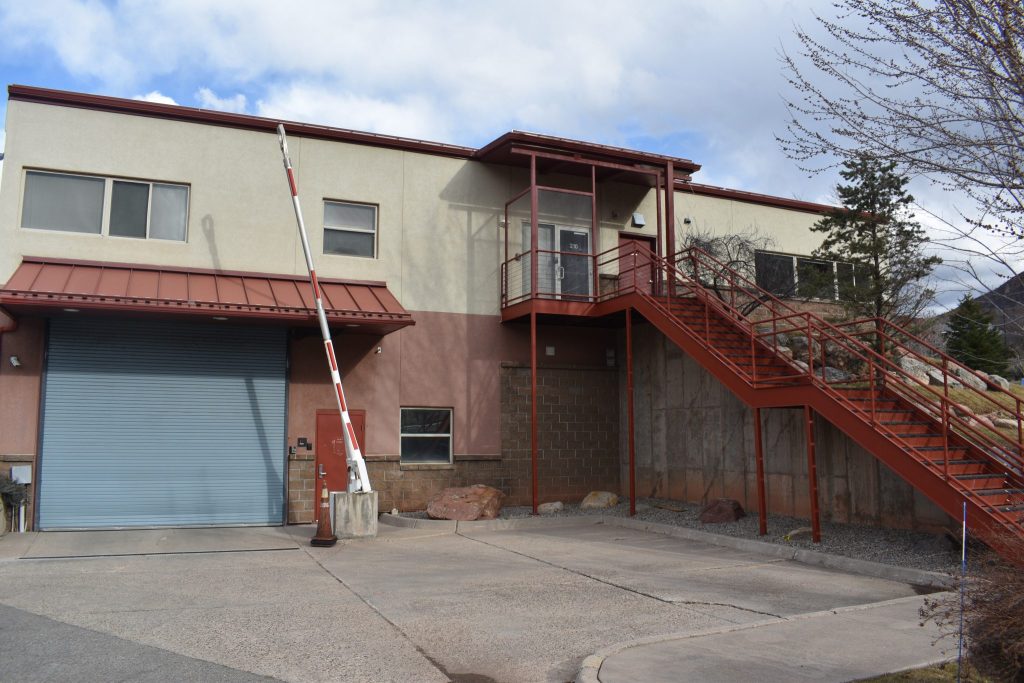
The council directed City Attorney Karl Hanlon to prepare legal enforcement action, sanctions and injunctive relief against JG Housing Solutions LLC, the owner of the property at 100 Midland Ave., including units 110 and 210, for alleged zoning and land use code violations. The city plans to initially pursue the case in state court rather than directly suing ICE or the U.S. General Services Administration.
JG Housing Solutions LLC did not respond to a request for comment from the Post Independent.
Councilor Ray Schmahl was the only council member to vote against the motion.
The decision comes after the city confirmed ICE continued using the property as a temporary hold facility after the Glenwood Springs Planning and Zoning Commission revoked its special use permit earlier this year.
Emergency medical personnel responded to the facility July 24 for a medical call, and information from that response confirmed people were being held there, Hanlon said.
“That, in my mind, gave me the factual basis to say that it is a ripe claim to potentially bring back to you for action on the zoning violation,” Hanlon said.
Hanlon said the July 24 response gave the city evidence it could use in court to show the property was still being used in a way no longer permitted under city zoning.
The Planning and Zoning Commission voted 5-1 on April 28 to revoke a special use permit issued in 2003 that allowed ICE to operate a temporary hold facility at the property.
The permit limited holds to 12 hours. The commission revoked it after reviewing evidence showing people had been held beyond that limit on multiple occasions.
Neither ICE, the property owner nor the General Services Administration appealed the decision, which became final around June 4. Under the city’s current zoning code, a temporary hold or detention facility is not a permitted use at the property.
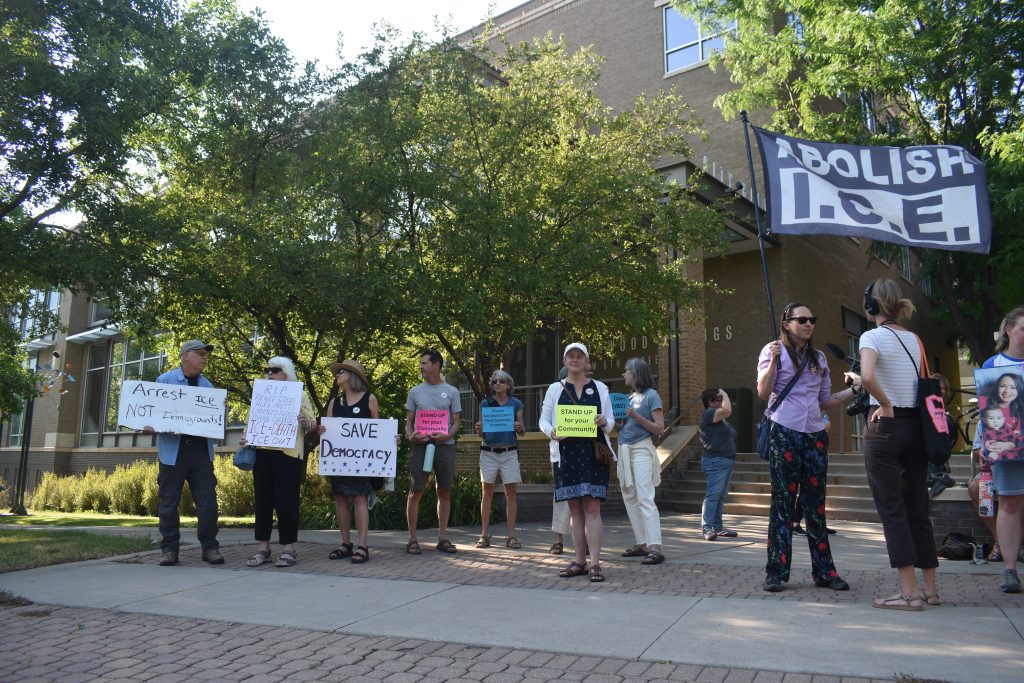
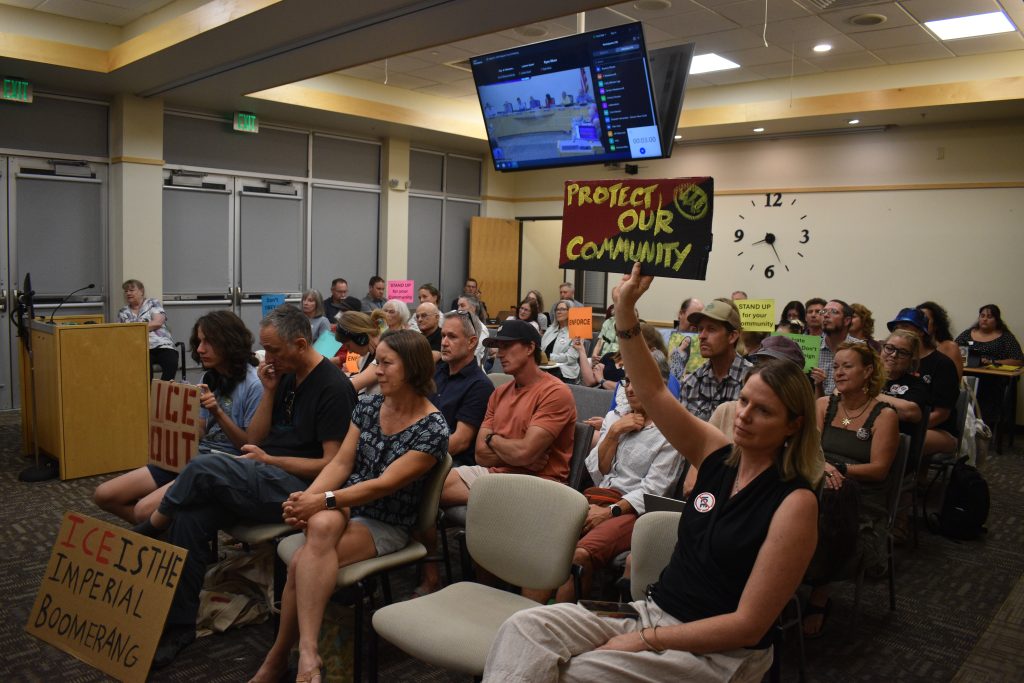
The topic drew a large crowd Thursday, filling the City Council chambers and a second room inside Town Hall used for overflow seating. Many of those in attendance urged the council to enforce the Planning and Zoning Commission’s decision and take action against the property owner.
The revocation does not prevent ICE from continuing to use the property for other purposes allowed under the zoning code, including office or staging space.
Instead, the city would seek preliminary and permanent injunctions preventing the property owner from allowing the site to be used to hold or detain people.
Hanlon recommended going after the property owner rather than directly naming ICE or the General Services Administration because he said that gives the city its best chance of keeping the case in state court.
Even there, he warned the city faces a difficult legal fight.
News you can trust. Straight to your inbox.
Sign up for our morning newsletter: PostIndependent.com/newsletter
Asked to estimate the city’s chances of obtaining an injunction, Hanlon said they were probably less than 25%.
The main issue would likely be the supremacy clause of the U.S. Constitution. The property owner could argue that local zoning enforcement interferes with a core function of the federal government.
Hanlon said the city would argue that prohibiting ICE from holding people at the Glenwood Springs location would not stop the agency from enforcing immigration law.
“If I were the federal government, I would argue that it is immigration enforcement writ large that is the core function that we are impeding,” Hanlon said. “I think my position would be you don’t use the facility that much. You have lots of other opportunities, and nobody is saying you can’t enforce. We’re saying you can’t violate our zoning code by holding people there.”
The potential cost of the case also became a major part of the council’s discussion.
Hanlon estimated the city could spend about $50,000 to reach a preliminary injunction hearing or get through an initial motion to dismiss in state court. A state court case taken through trial could cost between $250,000 and $300,000 and take 18 to 24 months.
A federal case could cost about $100,000 in its early stages and roughly $500,000 through trial, with a trial potentially three years away.
If the city does not obtain a preliminary injunction, the property could continue being used as a hold facility while the case moves forward.
Hanlon also said opposing attorneys could seek sanctions under Rule 11 if they argue the city’s lawsuit is frivolous or groundless. Another law firm has reviewed the issue, and Hanlon said the city believes it has a good-faith basis to bring the case.
Council members generally agreed the city should enforce its land use code but raised concerns about how much money and time should be spent on the case.
Schmahl, who voted against the motion, focused on the financial risk.
“I find my definition of courageous local leadership to be not wasting the taxpayers’ money,” Schmahl said. “I’ve been told over and over again that this is a waste of money.”
Councilor David Townsley also raised concerns about the cost of a long legal battle but said the city should not set a precedent of ignoring violations of its land use code.
Mayor Pro Tem Erin Zalinski said the city had heard months of frustration from residents who believed officials were not acting quickly enough, but said the city needed evidence it could defend in court before taking action.
“We had to wait until we had something that was tangible and actionable and defensible,” Zalinski said.
Public commenters overwhelmingly urged the city to move forward with enforcement. Several specifically encouraged the council to pursue the private property owner in state court rather than directly suing federal agencies.
Glenwood Springs resident Ashley Stahl made that argument during public comment.
“Don’t take this to federal court,” Stahl said. “Don’t name GSA and ICE. The violation in front of you is simple. A private landlord is leasing space for a use our code simply does not permit.”
Hanlon said the city could also pursue a separate municipal court case over the July 24 violation, where city code allows fines of up to $1,000 per day. However, proving continuing daily violations would require the city to show when people were actually being held inside the facility.
He said seeking an injunction in state court offers a more direct path toward stopping the use altogether.
The motion passed 6-1, with Schmahl voting in opposition.



Support Local Journalism
Support Local Journalism
Readers around Glenwood Springs and Garfield County make the Post Independent’s work possible. Your financial contribution supports our efforts to deliver quality, locally relevant journalism.
Now more than ever, your support is critical to help us keep our community informed about the evolving coronavirus pandemic and the impact it is having locally. Every contribution, however large or small, will make a difference.
Each donation will be used exclusively for the development and creation of increased news coverage.