Glenwood Springs to charge new recycling fee for incorrect or contaminated items

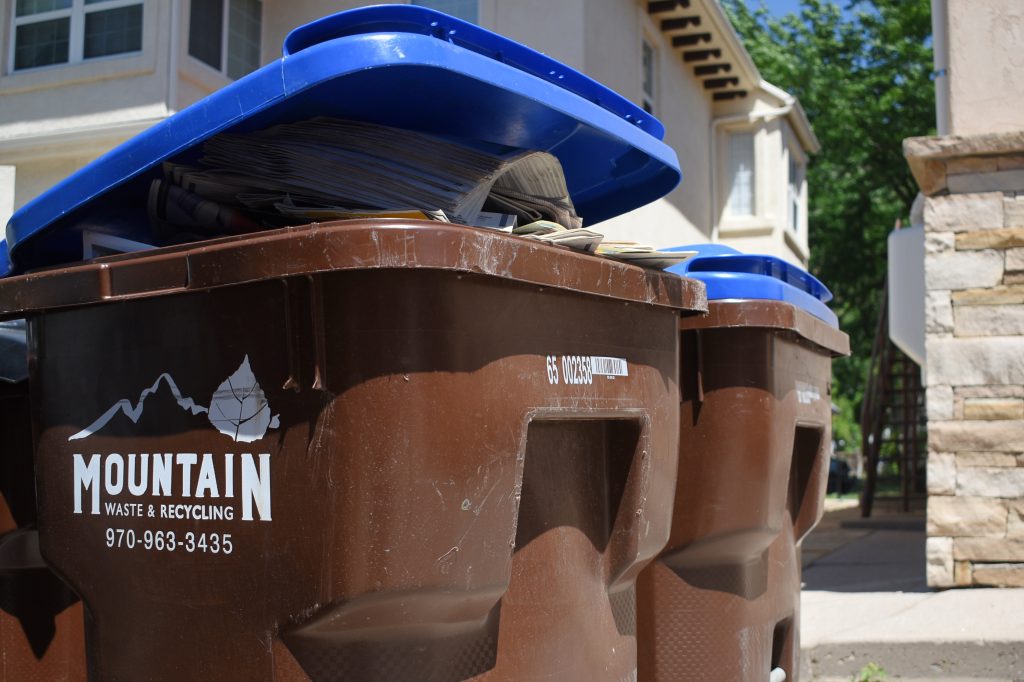
Cassandra Ballard/Post Independent
Beginning Sept. 16, Glenwood Springs residents could see fines for placing unrecyclable items in their recycle bin.
The city’s new Recycling Contamination Fee will charge households $24 per occurrence of contaminated recycle carts. The fee is only applicable to residential recycling bins/dumpsters in the city’s Pay as You Throw (PAYT) program, which was first rolled out in October 2023. In terms of commercial and multifamily recycling, Public Information Officer Bryana Starbuck said Glenwood Springs City Council plans to discuss those ordinances in September.
“Diverting recyclables from the landfill and maximizing correct recycling are core parts of the PAYT program. We’ve shared guidance on how to properly recycle, and now with this most recent round of education we’re implementing the fee to disincentivize improper recycling,” Starbuck wrote in a statement to the Post Independent. “The fee has always been part of the program, but we wanted to understand issue areas and have a couple progress reports before we implemented the fee.”
The reports referenced show that roughly 14.5-16% of PAYT recycling loads shared between Glenwood Springs and Carbondale are non-recyclable (Mountain Waste and Recycling also services Carbondale’s trash and recycling program). The number could be related to one of the issue areas identified by the city, which is inappropriate use of recycling bins to avoid a $12.72 trash overflow fee.
“We are seeing some customers use the recycling bins as an extra location for trash instead of upsizing their trash container,” Starbuck wrote. “If that recycling cart is picked up with trash in it, the whole load can be compromised. This is a small amount of residential customers, but it’s time to implement the fee.”
On pick-up days, any recycling bin found to be contaminated will be marked with a green tag. Marked cans will either not be picked up, or will be picked up by the trash truck and managed as trash to avoid contamination of the whole load.
Any accrued fees received will begin appearing on October bills, according to Starbuck.
According to the city’s Pay as You Throw program, a recycle bin is considered to be contaminated when “the wrong items, or the right items prepared the wrong way, are placed in curbside recycling bins.”
Items are “prepared the wrong way” when they contain food or food residue (like grease stains on cardboard or unrinsed food containers), are wet or contain liquids, or are placed in bags. The three words to simplify these requirements are “Empty, Dry and Loose.”
The “dry” rule can be the easiest to miss. However, liquids can ruin paper, cardboard and other materials in the recycle bin. Mountain Waste & Recycling asks for items to be placed loose in the bin because the recycling carts are single-stream, meaning items don’t need to be separated.
In order to avoid the recycling contamination fee, the city’s website has provided a list guidelines for basic recyclable items:
Plastic
-
- Plastic bottles and containers are empty
-
- Keep lids on
-
- Containers, cups, clamshells (to-go containers)
-
- Tubs (yogurt, butter) and buckets
-
- Unrecyclable items: plastic bags, plastic film/wrap, foam food and drink containers, foam packing peanuts, straws, utensils or compostable plastic
Glass
-
- All colors
-
- Keep lids on
-
- Empty and dry
-
- Unrecyclable items: drinking glasses, Pyrex®, window glass, or lightbulbs
Metal
-
- Aluminum cans and bottles (empty)
-
- Clean foil
-
- Metal containers (i.e. soup, coffee, tuna cans)
-
- Empty aerosol cans
-
- Unrecyclable items: scrap metal (this can be recycled for free at South Canyon landfill)
Items to keep out of recycle bins:
-
- Plastic bags
-
- Items less than the size of a credit card (straws, loose caps, plastic utensils, etc.)
-
- Batteries, lightbulbs or electronics
-
- Organic waste
-
- Clothes/textiles and hangers
-
- Tanglers (hoses, chains, cords or rope)
-
- Sharps/needles
-
- Pet waste
Some of the items marked as unrecyclable by the PAYT program can still be individually brought to the city’s recycling center, such as batteries, electronic waste, textiles and food waste, providing residents an option to cut down on trash.
Starbuck said the city has rolled out efforts to inform residents about the new fee through outreach on the website and city platforms, though a mailer will soon be sent to all residences with educational details.
For more information on how to recycle correctly (and for a full list of recyclable and unrecyclable items), visit Mountain Waste & Recycling’s website: mountainwaste.com/services/residential/residential-recycling. More information about the fee and PAYT recycling guidelines are available on the city’s website at cogs.us/payt.





Support Local Journalism
Support Local Journalism
Readers around Glenwood Springs and Garfield County make the Post Independent’s work possible. Your financial contribution supports our efforts to deliver quality, locally relevant journalism.
Now more than ever, your support is critical to help us keep our community informed about the evolving coronavirus pandemic and the impact it is having locally. Every contribution, however large or small, will make a difference.
Each donation will be used exclusively for the development and creation of increased news coverage.