LaBaw a favorite at the CrossFit World Games
Special to the Post Independent
Glenwood Springs, Colorado CO
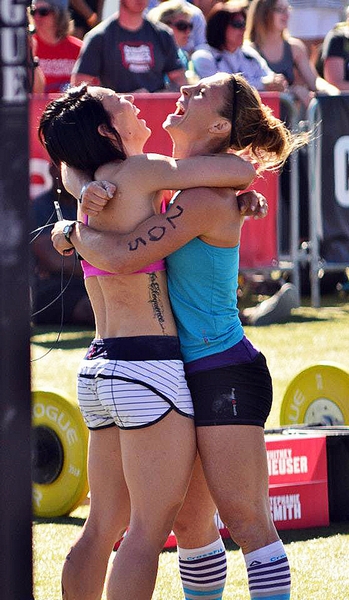
ALL |
Lucky is a word Jenny LaBaw uses frequently to describe herself.
Granted, the 30-year-old Rifle High School graduate has made some luck for herself. She’s considered one of the favorites at this year’s CrossFit World Games, scheduled for today through Sunday at the Home Depot Center in Carson, Calif.
She was an all-Far West League athlete in softball and soccer at Rifle before she graduated in 2000, went on to excel in track and field at the collegiate level, and has maintained a steady, normal lifestyle much like anyone else with a similar background.
Yet LaBaw doesn’t consider herself lucky because of her past athletic accomplishments or what she’s been able to accomplish recently. Instead, she considers herself lucky because of what she’s had to overcome to earn her most recent opportunity.
LaBaw has epilepsy, a brain disorder in which a person has repeated seizures or convulsions over time. Seizures are episodes of disturbed brain activity that cause changes in attention or behavior, and failure to monitor the disorder can lead to a dependent lifestyle as an adult.
And although LaBaw has lived with the disorder since she was diagnosed at age 8, she’s dealt with it enough to excel as an athlete and person.
“I feel lucky. So lucky,” LaBaw said. “Those are the best words I can use to describe it. I don’t live at home with family, and I love the fact that I have good control over my medication and can lead a normal lifestyle. There’s a lot of people who just can’t do that.”
Granted, a normal lifestyle for LaBaw would be seen by many as rather intense. She works as a trainer at NorCal Strength and Conditioning at her home in Chico, Calif., and she’s spent upwards of 20 to 25 hours per week training for the World Games, which start today.
The CrossFit Games were developed through a consistent training regimen used in fitness gyms and workout centers. The sport focuses on repetitive muscle movements and, instead of switching from one regimen to another like some workout programs, it increases the intensity of those same workouts through overall progression.
Workouts include weight-bearing routines such as deadlifts, and one consists of carrying dumbbells in excess of 100 pounds in each hand across a long straightaway. Others consist of regular non-weight-bearing exercises such as pull-ups, muscle-ups and burpies. Even swimming in the ocean is part of one of the cardiovascular events.
By winning the Northern California Regional tournament in May, LaBaw automatically qualified for the World Games. Age-specific groups pertain to those who are 50 and older, while all younger athletes compete against each other. Winners receive a fair share of a prize pot in excess of $1 million, according to http://games.crossfit.com.
LaBaw can squat 280 pounds and willingly admits that she’s “one of the bigger girls in the competition.” Her coach, CJ Martin of San Diego, beams at LaBaw’s competitive spirit and her willingness to keep improving at a sport she’s relatively new at. She finished sixth at last year’s CrossFit World Games in her first year of competition.
Now, after taking the Northern California Regional tournament title in May despite not being at 100 percent – LaBaw has been battling what her coach calls a “serious” neck injury that has prevented her from performing certain training regimens – Martin believes she’s still one or the best competitors in the field.
“She proved at the regional qualifier that even without the same amount of practice, she can still perform extremely well in competition,” Martin said in an email interview.
“Jenny does a phenomenal job of focusing only on those things within her control – her own performance,” he continued. “None of us can guess what the events will be or how other females will perform, but if she performs as well as we know she can, you will almost certainly see her on the podium.”
Yet there was a time when having such opportunities seemed like a proverbial pipe dream.
Epilepsy affected nearly every part of LaBaw’s life growing up, from her social life to her life in school and at home. It was a struggle to find appropriate medication the first two years after her diagnosis, and it caused weight gain, trips to the hospital and double vision through high school.
Seizures would happen while she was playing soccer or softball, sometimes in the middle of competition. During a soccer game, she’d ask for a substitute when she felt a tingling in her arm – a sign a seizure was coming – and sit out on the sideline until the episode subsided.
She jokes about some of those episodes now. “It’s kind of hard to hit a softball when you see two softballs coming at you all of a sudden.”
LaBaw also recalled spending time at friends’ houses and losing control of her bladder during a seizure. She never had a massive seizure while out with friends or playing sports, but she always knew it was a possibility.
“Socially, for sure it was scary,” LaBaw said. “I was scared to go out by myself. If something happened, would any of my friends know what to do? Probably not.”
Her social circle became very understanding once they knew about LaBaw’s epilepsy. She said it “wasn’t so weird” to her friends once they knew it was there, and LaBaw feels she’s had control of it long enough that it’s not a crutch for her to lean on.
She’s had her driver’s license since she was a teenager – a feat many epileptics never accomplish – and has never had a seizure behind the wheel.
Part of that control comes from her athleticism. She credits the physical shape she’s stayed in, along with a consistent sleep schedule and a healthy diet, for her increased control of her epilepsy. When she works too hard at her physical training, her body gives her signs to slow down.
“I did have one during training,” she said. “It’s really not a good idea for me to push too hard when I feel the signs coming on. It’s not worth it.”
LaBaw does feel her journey to compete athletically has been worth it. On her website, http://www.jennylabaw.com, she posts a regular blog about her successes and failures during her short but, thus far, successful competitive CrossFit career. She’s also very open about epilepsy, expressing her desire to spread awareness of the condition.
She’s also very open about her desire to do well in the World Games. She feels, like her coach, that a top-three spot is a realistic goal.
It’s a goal, however, that might not have seemed possible a while back. And she knows that.
“Sure, I’ve had my share of pity parties where I’ve just sat there and said to myself, ‘Why me? Why me?'” LaBaw said. “But things could be a lot worse. A lot worse.”





Support Local Journalism
Support Local Journalism
Readers around Glenwood Springs and Garfield County make the Post Independent’s work possible. Your financial contribution supports our efforts to deliver quality, locally relevant journalism.
Now more than ever, your support is critical to help us keep our community informed about the evolving coronavirus pandemic and the impact it is having locally. Every contribution, however large or small, will make a difference.
Each donation will be used exclusively for the development and creation of increased news coverage.