Local organizations leading the effort to clean up Lincoln Creek’s heavy-metal contamination
The Aspen TImes
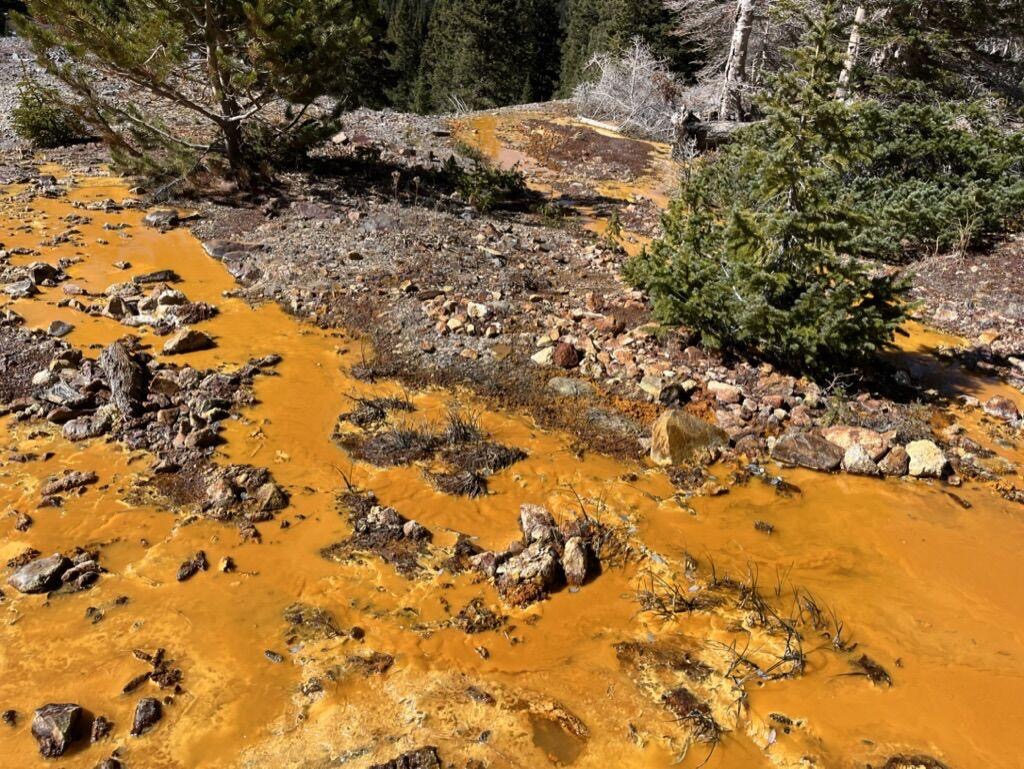
Sallie Bernard/Courtesy photo
A local, collaborative effort seeks to address significant heavy-metal contamination in Lincoln Creek, a tributary of the Roaring Fork River.
While Aspen’s drinking water is sourced from Maroon and Castle creeks and thus remains safe, this contamination poses serious environmental risks. Lincoln Creek was found by new studies conducted by Environmental Protection Agency (EPA) to be contaminated with high levels of numerous heavy metals, including aluminum, arsenic, beryllium, copper, iron, lead, mercury, molybdenum, uranium, and zinc, among others.
Commissioner and Chair Greg Poschman highlighted this issue at a recent Pitkin County Board of County Commissioners (BOCC) meeting. He noted the dangers posed by high concentrations of these metals, which can affect groundwater, private wells, and aquatic life.
The natural hydrothermal springs — which contribute to Lincoln Creek along with other tributaries that have the same issues — rather than the nearby Ruby Mine are the primary contributors, with the EPA attributing about 90% of the contamination to these springs.
Consequently, because this is considered a natural source of mineral contamination and not human-caused, the EPA cannot classify Lincoln Creek as a Superfund site, thus limiting federal funding for cleanup efforts.
The contamination process involves iron sulfides (pyrite) leaching into the water, reducing pH levels and increasing acidity. This acidic environment then dissolves toxic heavy metals from the rocks into the water, creating a positive feedback loop that further lowers pH levels, raising acidity even more. This process, known as “Yellow Boy,” results in highly acidic carbonic acid that devastates aquatic life and riparian ecosystems.
Several local organizations are taking action to mitigate the contamination. The Aspen Center for Environmental Studies (ACES) and the Independence Pass Foundation are leading the charge, along with other nonprofits and government agencies.
ACES Forest and Climate Director Andy McCurdy explained that the minerals causing the contamination are hydrothermally altered by volcanic activity — that is, the water is heated by natural sources, making the minerals more soluble to leech into the water, which essentially speeds up the acidification process. Climate change is exacerbating the issue by increasing water flow and mineral content, he added.
Karin Teague, executive director of the Independence Pass Foundation, emphasized the complexity of the issue and the extensive group efforts involved.
“We have an extraordinary coalition of government agencies, state and local entities, and nonprofits like Trout Unlimited working together,” she said. “A robust sampling and monitoring program is planned for this summer and fall to better understand the contamination.”
Both she and McCurdy agree that understanding and mitigating the contamination will take years. Despite the challenges, the coalition is committed to ongoing monitoring and research to determine viable remediation measures.
“This contamination affects a crucial tributary and is not unique to our area, extending throughout the West and up to Alaska,” Teague noted. “We are determined to find solutions and protect our waterways.”
For more information and updates on the cleanup efforts, visit ACES online at aspennature.org or Independence Pass Foundation online at independencepass.org.



Support Local Journalism
Support Local Journalism
Readers around Glenwood Springs and Garfield County make the Post Independent’s work possible. Your financial contribution supports our efforts to deliver quality, locally relevant journalism.
Now more than ever, your support is critical to help us keep our community informed about the evolving coronavirus pandemic and the impact it is having locally. Every contribution, however large or small, will make a difference.
Each donation will be used exclusively for the development and creation of increased news coverage.