Matt Smith hopes to keep seat in family
GSPI News Editor
Editor’s note: The Post Independent continues five days of profiles of the candidates competing in the Aug. 10 Republican primary in Colorado’s 3rd Congressional District race. The candidates include Greg Walcher, Matt Smith, Gregg Rippy, Dan Corsentino and Matt Aljanich. The winner will face Democratic candidate John Salazar in November. Salazar is unopposed in the August primary.
U.S. Rep. Scott McInnis has declined to endorse any of the Republicans running in the Aug. 10 primary.
“But there’s no doubt where his wife stands on this race,” said Matt Smith, a Grand Junction entrant in the primary.
Lori McInnis is Smith’s sister. The two grew up in Meeker on a farm that has been in their family for more than 100 years.
Smith understands McInnis’ decision not to endorse him. He believes the congressman wants to be able to back whichever Republican wins on Aug. 10.
Still, Smith hopes to convince voters that they’d be wise to keep the seat in the Smith-McInnis family for at least one important reason that’s only a faucet away.
Protecting the Western Slope’s water from grabs by the Front Range and other states always was a top priority for McInnis, first while he was in the state House of Representatives, and then while serving in Washington. Smith has been driven by the same issue.
“As far as I am concerned, that is the biggest distinction between the Republican candidates, is the water issue.”
“This race is all about water,” he said.
Smith said he has introduced three basin-of-origin bills in the Statehouse. These aim to protect the interests of water-rich areas. He’s also worked to protect water quality and maintain instream flows, he said.
Water issues arise at the federal level as well, including operation of federal reservoirs, completion of the Animas-La Plata project near Durango, and decisions that affect the availability of water on public lands, Smith said.
But where Smith is proudest to declare himself the protector of the Western Slope’s water is on Referendum A.
That measure, rejected by Colorado voters last year, would have funded $2 billion in unspecified water projects. Smith vehemently opposed it, fearing it was a “blank check” that would have allowed for unchecked diversion of Western Slope water to more populated areas.
One of Smith’s opponents, state Rep. Gregg Rippy, R-Glenwood Springs, cast a key vote that got Referendum A out of committee, clearing the way for it to be placed on the ballot. He then opposed the measure.
Another opponent, Greg Walcher, supported it. He was head of the state Department of Natural Resources at the time.
When it comes to water, “I’ve been on the side of rural Colorado, and some of my opponents have been on the side of the cities,” Smith said.
Other than Smith, he said, Democratic 3rd District candidate John Salazar is probably the strongest advocate of district water interests among those vying to replace McInnis. Salazar also opposed Referendum A.
Walcher campaign manager John Marshall took issue with Smith’s characterization of Walcher on water. He said Walcher has “a long list of tangible accomplishments” regarding water, including participation in obtaining an agreement with California regarding Colorado River water use, and working on Animas-La Plata.
He said Smith is trying to get elected to Congress on a single issue.
“Matt’s been beating on the same drum, which is Referendum A, for 10 months now,” he said.
But Smith said 3rd District voters always could trust McInnis to look after the 3rd District’s water.
“They shouldn’t have to wonder now,” Smith said.
Resource issues are a focal point for Smith. He has carved out a legislative specialty in energy policy. In 2001 he chaired the Energy Council, a group of 10 U.S. states, three Canadian provinces and the nation of Venezuela. He also has served two terms on the National Conference of State Legislators Energy and Electrical Utilities Committee.
Smith delivered a national energy strategy statement to the White House, and has worked to promote coal gasification, and technology to capture energy from ocean waves.
Smith said zero-emission coal technology would supply the United States for 1,000 years.
He vows to be a fervent proponent of a strong national energy plan. It’s important that the United States come up with clean, reliable energy resources, Smith said. Otherwise, the economy is vulnerable when energy prices rise, he said.
Regarding public land resources, Smith said he believes strongly in the multiple-use philosophy, and striking a balance between resource development and environmental protection.
“I do believe there are proper ways to conduct work within the environment and I certainly have a great knowledge in working on a lot of environmental permits through the projects I have worked on,” he said.
He said a system is needed within the Endangered Species Act for removing species when they’ve been recovered.
“We need to include humans as part of the equation in the Endangered Species Act,” he added.
He supports the direction forest timber management is headed since McInnis succeeded in getting legislation passed aimed at streamlining logging and fuels reduction projects.
“I think Scott has made a tremendous step forward in his Healthy Forest Act. I think we’ve gained some ground. I do believe there’s more work to be done. We’ve got a real crisis in the forest habitat today,” Smith said.
Beetle and disease outbreaks are killing even more trees than the act can address, he said. Logging has been erratic, and the nation needs to take a better long-term approach to forest management, aiming for sustainability just as wildlife managers try to maintain sustainable herds, Smith said.
Smith said he stands behind President Bush and U.S. troops and the work they are doing in Iraq and Afghanistan.
“I believe if we don’t rise to meet the threat of terrorism that’s out there, then we will surely be fighting terrorism on the sidewalks of this country,” he said.
“It’s not a battle over territory. We are fighting a war where people have the intent of kiling Americans over who we are and our lifestyle.”
He said the key to the United States defeating terrorists is to go after them where they are. That means insisting that nations get rid of them, or the United States going after them itself.
“You cannot win this battle by ignoring it,” he said.
He believes attacking Iraq was justified. Ousting Saddam Hussein was important, Smith said, and he hasn’t given up on weapons of mass destruction being found.
“I believe that there is a good chance that some of those weapons may still exist,” he said.
Smith believes the U.S. military may deserve additional funding. He’s concerned that the nation isn’t doing all it can to equip soldiers with protective devices.
He also supports McInnis’ attempts to make it so veterans can receive government-provided health care at private hospitals, not just veterans hospitals that sometimes are far away from those who need them.
On other issues:
– Smith defended his record on fiscal policy from criticism from Walcher, who said he would be more aggressive in cutting taxes than Smith has been.
“I’ve got a record of cutting taxes,” said Smith.
He said he voted for two cuts to the state’s income tax and one to the state sales tax.
He noted that Walcher has never served in the legislature, and has no record on tax reduction. But Smith said Walcher “never met a fee he didn’t want to increase” while head of the Department of Natural Resources.
“Greg pushed forward numerous fee increases,” Smith said.
– Smith hopes to reduce health care costs through such measures as making health care premiums deductible for income tax purposes.
“I’m convinced that as Republicans, if we don’t address the rising costs of health care now, that in four years someone like Hillary Clinton is going to be back promoting socialized medicine,” Smith said.
– Smith says he’s never been able to describe himself as pro-life or pro-choice. What he can say is this: He’s voted to ban late-term abortions, and in favor of parental notification and withholding use of public money for abortions. He’s also voted in favor of encouraging adoptions wherever possible, he said.
That said, he wouldn’t vote to overturn Roe vs. Wade. Smith said he doesn’t want to criminalize the actions of a doctor when a woman has been raped or the victim of incest, or when her life would be endangered by not having an abortion.
As Smith continues to campaign with a promise to be a bulldog on issues such as water, he can take inspiration from the bulldog-like manner in which his brother-in-law served in the Colorado House and then in Congress. Not to mention from how he pursued Smith’s sister.
Smith and McInnis got to know each other while both were attorneys in Glenwood ” sometimes on opposite sides of a case.
“I tell you, Scott was a tough attorney,” Smith said.
He also was a determined suitor. After meeting Lori at a function in Meeker, he called Smith at 5 in the morning, asking for her number. Smith tried to comply with his request, but repeatedly and errantly gave him the wrong number, only to have McInnis call back, accusing him of trying to wake up half of Meeker.
Smith finally called his dad to get the right number, and McInnis took it from there with Lori.
“I couldn’t believe it. She agreed to go out with him at 5:15 in the morning. He said he couldn’t sleep after he met her.”
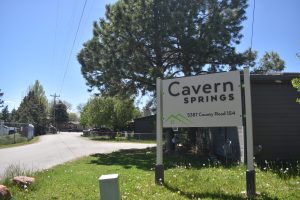
Pitkin County likely to support Cavern Springs mobile home park purchase
The Cavern Springs mobile home park has been up for sale to new landowners who could increase the residents’ rent, spurring a movement for residents to fundraise to purchase the entire park.


Support Local Journalism
Support Local Journalism
Readers around Glenwood Springs and Garfield County make the Post Independent’s work possible. Your financial contribution supports our efforts to deliver quality, locally relevant journalism.
Now more than ever, your support is critical to help us keep our community informed about the evolving coronavirus pandemic and the impact it is having locally. Every contribution, however large or small, will make a difference.
Each donation will be used exclusively for the development and creation of increased news coverage.