Recovery programs support unhoused individuals, inmates and more

Katherine Tomanek/Post Independent
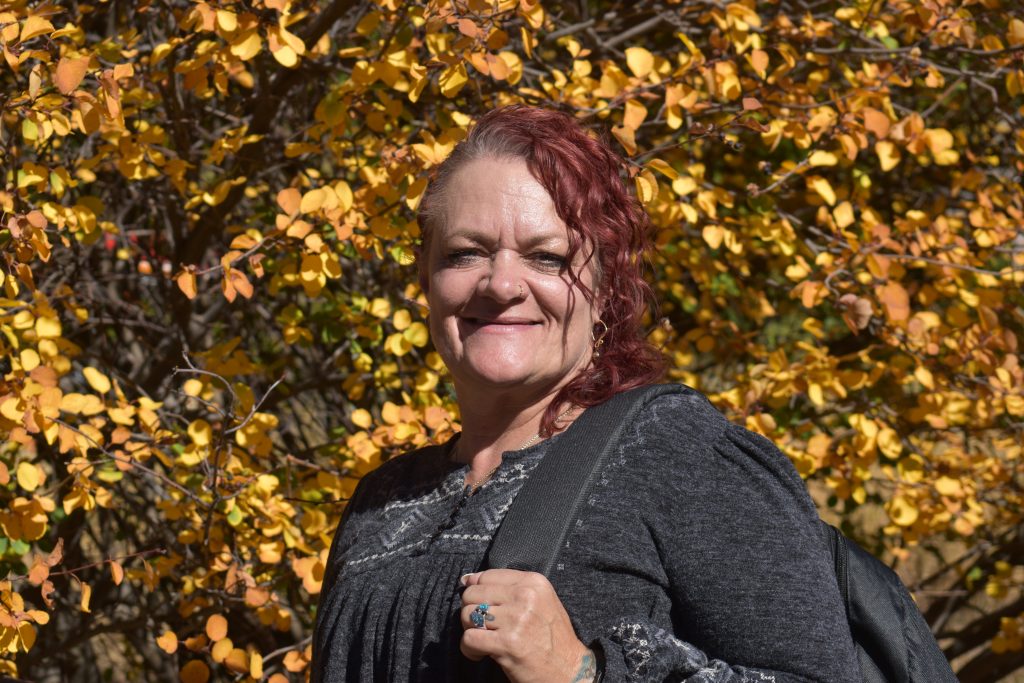
When it comes to healing, Vanessa Lane speaks from experience.
“I was addicted to meth for 13, 14 years, and alcohol,” she said. “I started at a young age because of trauma and brokenness. These items are what motivates me to be in the community to help others because I made it out.”
Lane, 51, is determined to help others get out, too.
As executive director and founder of local nonprofit God’s Beloved, Lane started offering a new backpack program. The program gives the region’s unhoused population items like water, a drug test, narcotic overdose treatments and hygiene supplies, including menstruation products. The backpacks also come equipped with a resource list of where to obtain legal services, food stamps, recovery group listings and connections all over the Western Slope.
When it gets cold, people can also reach into the backpack and pull out hats, gloves and socks. God’s Beloved is currently taking donations for tents, sleeping bags and winter clothes.
“People are dying from drug overdoses, from alcoholism, from malnutrition,” Lane said, adding these issues will only increase if it’s ignored. “How do we help this community recover if we don’t go to the people that are struggling and say ‘I want to help you’? They’re human beings.”
Lane said God’s Beloved gives backpacks to local organizations, like Mind Springs, Salvation Army, local hospitals and jails anytime it receives a referral.
“We use the backpack as a tool to connect with the unhoused population and ones that are getting out of jail, because they have nothing,” Lane said. “So, that way we make that connection the first time we hand you that backpack. We’ll ask your name and start a conversation.”
Lane holds face-to-face peer support, a life-skills program, a 12-step celebrating recovery group and a ministry service once a month. She works closely with Jennifer Hawks, the head of Behavioral Services in Garfield Jail.
Lane’s peer-support group, Rise-Up Recovery, offers services to Garfield County Jail inmates with substance abuse issues. This program connects inmates with mental health services, support systems and other communities before and after their release.
‘We work on skills, triggers, conversations that are hard, conversations that look at our behaviors and thought processes and how we’ve done things and coping skills. It’s about doing something different,” Lane said about Rise-Up Recovery. Either her or one of her peer coaches will meet with the inmate right before their release. “We will walk beside them, making sure they’re connected to mental health services, probation, parole, recovery, whatever that looks like, what their recovery looks like, to make those things happen.”
William McCabe was an inmate that had a substance abuse issue and he received a backpack that he said helped out a lot.
“When I left jail, I had a lot of books and paperwork, so the backpack came in. The supplies helped until I could get my own hygiene stuff back,” he said. “I stay in touch with them and let them know I’m okay. They’re not just there to give you stuff, they’re there in case you need them, if feeling bad or like you’re going to use.”
McCabe said a person signs their life away when they go to jail.
“When you need to get things, like cellphones for instance, you have to be compliant, have to check in, have to show you’re making an effort to be successful. I always see Jennifer once a week or two weeks if my schedule allows it. Jennifer helps with a cellphone, her budget is different than Vanessa’s, so they link together to get someone the help they need.”
McCabe said it’s important when someone checks in with Hawks, to go physically see her, because she wants to know how you’re doing. He also said that Hawks was the one to give him all the books he has.
He also said when he got out, he went to talk to people across the Western Slope.
“Vanessa has a lot of internal connections with people on the western slope of Colorado, if you say her name anywhere, they’re real quick to help faster,” he said. “If you utilize the resource and use her name, it’s networking.”
McCabe said Lane put him in touch with the Salvation Army and they gave him work clothes so he would be able to work that same day. He does volunteer work because they were giving to him and he wanted to give back.
“When the person takes the initiatives to utilize the programs, they’re important, and when they’re coming out of jail, they’re not treated like an animal and being thrown to the wolves,” McCabe said. “They’re there to help when you come out of jail and set up all kinds of stuff, how to schedule stuff, what to do, there’s so many different things they have to offer. They’ll basically take the clothes off their back for you if you show them the work for them to do that.”
Hawks said her program was there to help inmates after they get out of jail.
“It’s designed to provide appropriate behavioral health while supporting continual help outside of jail,” she explained. “They have to have a substance abuse diagnosis. We screen for mental health, substance, suicide, trauma, TBI (traumatic brain injury), and we develop individualized transition plans.”
Hawks said sometimes inmates must wait for screenings, but they will provide interim mental health services, like a psychiatrist, while they wait.
The plans are tailored to the individual who needs help, and might consist of going with Lane to Walmart to buy clothes, or be sent across the street by Hawks to reactivate food stamps. It’s a guide to getting out of jail.
Hawks said the program is funded by the state and inmates are asked if they’d like to opt in. It can help with medications, personal documents, phones, clothes and food. If this program can’t provide it, then she relies on community support like Lane’s Rise-Up Recovery.
“If you need social security, disability, or if you’re homeless, we’ll connect you with family, we will find you help,” Hawks said. “We’ll connect you with a peer support specialist.”
Hawks said that people who come see her before they get out of jail will have access to the program for a year after their release, they will be checked on to help them be successful.
“I had annual reports back to the state on the program and I had a list of people that were in five to seven times in a year,” she said. “My program was lacking that warm hand-off when they get out of jail, and the number one thing that will help any of these individuals will be connection.”
Lane said this process cannot be done without the help of volunteers. This includes support from Crystal Mauer, who helps put together the backpacks, and Mary-Lauren McMath, who cooks for Extended Table.
“It makes it worth doing. I couldn’t do what I do if I didn’t have the support of my community members,” Lane said. “It’s just not possible to do it alone.”
If anyone would like to help, donate, find a backpack, or needs support, please call Vanessa Lane at (970) 459-7335, or email at vanessa@riseuprecoverycolorado.org.




Support Local Journalism
Support Local Journalism
Readers around Glenwood Springs and Garfield County make the Post Independent’s work possible. Your financial contribution supports our efforts to deliver quality, locally relevant journalism.
Now more than ever, your support is critical to help us keep our community informed about the evolving coronavirus pandemic and the impact it is having locally. Every contribution, however large or small, will make a difference.
Each donation will be used exclusively for the development and creation of increased news coverage.