Roaring Fork snowpack numbers are leaning below-average: What does this mean for our water supply?

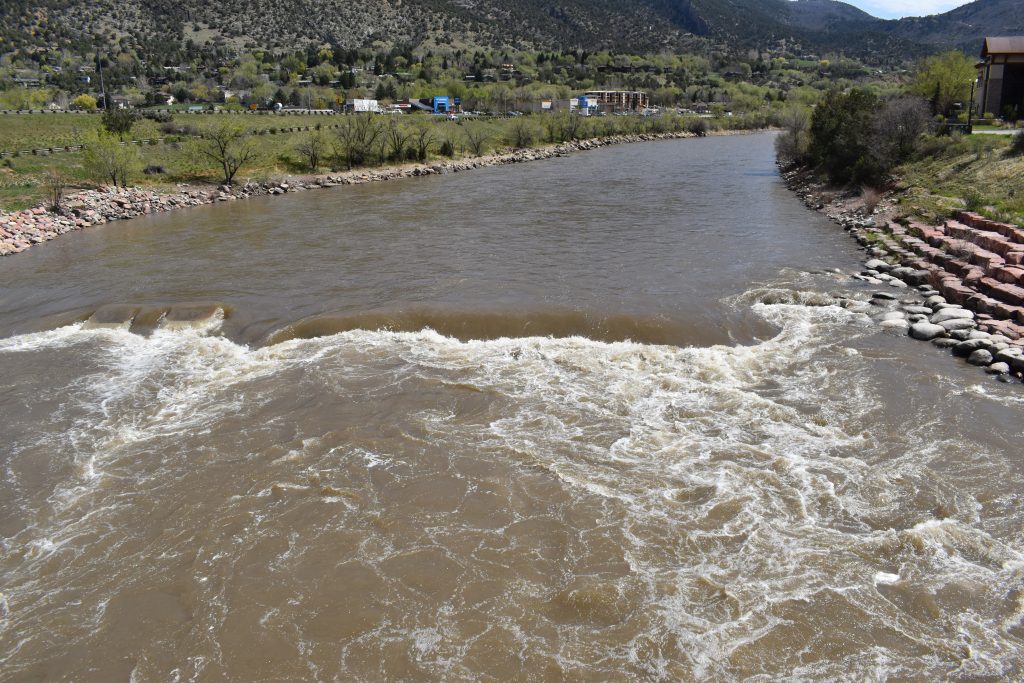
Andrea Teres-Martinez/Post Independent
What is going on with Colorado’s snowpack right now?
The expert consensus is in: It’s all up in the air (or, more specifically, on the ground).
In late March, the Roaring Fork Basin showed signs of ample snowpack, measuring 115% of the median annual snowpack water equivalent. As of April 23, snowpack is at 95% of normal.
Snowpack is the accumulated snow covering an area, which melts in the spring. Snow water equivalent determines the amount of water available in the snow.
The Roaring Fork Watershed is located in central Colorado on the west side of the Continental Divide. Snowpack from this region, once melted, can enter the Roaring Fork, Fryingpan, and Crystal rivers — all of which drain to the Colorado River in Glenwood Springs.
On April 6, the date considered the “median peak” for the Roaring Fork Watershed based on the last 30 years of data, the figure for snow water equivalent sat at 17.6 inches, half an inch over the median, according to National Resources Conservation Service (NRCS) data.
While this might seem to indicate that the watershed would see an above-average snowpack heading into late spring, Colorado weather can be fickle.
A collection of factors have caused the snowpack water equivalent to dip down to 12.2 inches as of April 24, which is only 71% of its median peak. With the month of April being so close to the median peak, anything could happen in the next few weeks.
“It’s important to know when we hit median, but it’s also important to know when we typically start to see the snowpack decrease,” said Matthew Anderson, Water Quality Technician with the Roaring Fork Conservancy. “As of right now, we’re kind of decreasing at a faster rate than is average.”
Snowpack and weather trends
For one, Colorado is expected to experience warmer-than-average seasonal temperatures throughout the summer (and even heading into fall) according to April 18 temperature maps from the National Weather Service’s Climate Prediction Center.
“Things are trending toward warm and dry,” said Dave “DK” Kanzer, Director of Science & Interstate Matters for the Colorado River District. “Again, it’s too early to say, but that’s the concern.”
The same maps depict a 40-50% chance that the state will receive below-normal precipitation from the months of June to August. In addition, Kanzer said ocean temperatures possibly shifting from warmer (El Niño) to cooler (La Niña) could dampen the probability of monsoon rains that Colorado typically sees in July through August (sometimes into September). In 2023, the monsoon season didn’t materialize at all according to Roaring Fork Conservancy Director of Community Outreach Christina Medved.
“We’ve had times when our snowpack has looked better and above average, and times when it’s looked not quite as good,” Anderson said. “And it just so happens that these past couple of weeks have been kind of unseasonably warm and sunny … and it’s been very windy too, which is also something that’s going to decrease the snowpack.”
What Anderson is referring to is the dust that has blown in from all over the country, especially states like Arizona and New Mexico, which has settled on top of the snowpack. This has caused it to melt faster, as instead of reflecting sunlight, the darkening of the snow by the dust causes it to absorb more sunlight. According to Medved, the Roaring Fork has seen at least four dust-on-snow events since March.
In addition, an Airborne Snow Observatories survey found that the snow is warmer than in previous years.
“The snowpack is what they call isothermal, meaning it’s the same temperature throughout the snow profile from bottom to top, meaning it’s ready to melt pretty quickly and doesn’t take a lot of solar energy,” Kanzer said.
The recent warmer Colorado weather, paired with warmer snow and dust-on-snow events, suggests that the snowpack could melt quicker, therefore triggering an earlier and stronger runoff season.
This wouldn’t be much different than previous drought years in Colorado, with the exception of 2023, which was an anomaly for the state because of its above-average snowpack. This week in 2021, the Roaring Fork basin was at 78% of its normal snowpack. In 2022, it was at 99% of normal, while in 2023 it was at 134%, according to Medved.
“What happened is that we kept getting consistent snowfall (in 2023),” Medved said. “That’s the type of snowfall we need here. We love the snowfall that comes 2 feet, 3 feet at a time … but that’s not the snow that’s building our snowpack.”
The year 2023 saw a cool spring with lots of moisture, meaning the heat didn’t heavily impact the snowpack until June. This year, the Roaring Fork is seeing a decreasing snowpack in April.
“We’re not even close to what (the snowpack) looked like last year,” Medved said.
She explained there’s been conversations about dropping the drought classification, as nearly 24 years of drought seasons could suggest that this is Colorado’s new normal.
“To say you’re in a drought implies you’re going to eventually get out of the drought,” Medved said. “Scientists are saying … we (could be) going from a semi-arid climate to an arid climate, (and) we’re alive and watching it happen.”
The impacts of a below-average snowpack are often earlier growing seasons, dried out soil, lower and earlier runoff, among other things, according to Medved and Anderson.
“I was just out sampling today and was certainly a little surprised at least by some of the (runoff) conditions I saw on the river,” Anderson said. “Come late summer, early fall, if by that point in the year our flows are below average, we’re going to be concerned about water temperatures … (high) temperatures can be harmful to fish.”
Impacts on recreation in Glenwood Springs
It’s near impossible to say whether snowpack conditions will stay as they are right now. The direction they’re pointing to, however, rings good news to Glenwood Adventure Company.
“Low water years are busier years for us,” Glenwood Adventure Company Owner Ken Murphy said.
Murphy explained that having high water or high flows in June and July aren’t good for recreation, since it can hinder accessibility and safety.
“The client that comes to visit Colorado, predominantly a lot of families, a lot of first time whitewater rafters, they don’t want the the high-adrenaline death-defying rafting trip. They’re looking for that incredible experience, enough whitewater to get everybody wet, but not scare anybody,” Murphy said. “I love when we can get rid of a lot of the snowpack early but come down to more average flows. That’s wonderful for business.”
Murphy said there’s a clear difference between “a drought” and “average-to-low water,” and that it’s all about the balance.
“I think this year we’re heading to a good balance,” he said.
Things still look okay… at least for now
Both Anderson and Kanzer said they didn’t feel comfortable diagnosing the future of the snowpack based on these traits, as Colorado’s ever-changing temperature and weather conditions means the snowpack’s forecast could flip over one single weekend.
“Sometimes we don’t even fully trust the forecast one week out,” Anderson said. “If we were to get a dust-on-snow event tomorrow, that changes everything.”
USDA Roaring Fork River Basin Graphs show snow water equivalent projections for the Roaring Fork Basin. The max projection marks 15.4 inches by May 7, while the minimum projection for the same date shows 3.8 inches.
The sheer size of the snowpack’s range also makes it difficult to predict how it will factor into the valley’s fire danger heading into the summer.
However, Kanzer explained that although snowpack and snow water equivalent numbers have a high variability day to day, longer timeframe estimates are more reliable, especially when it comes to the Colorado basin’s water supply.
“I’d say the bottom line … conditions are around average from a water supply perspective, and most of our water needs, if not all our water needs, will be met this year without too much difficulty,” Kanzer said. “We achieved near-average maximum snowpack as measured at 21 sites throughout the (Colorado) basin … The next 60 to 90 days will tell us if we’re in a 2023-type of year, which was really wet, or a 2021-type of year, which was really dry.”
In the meantime, Roaring Fork Conservancy is spreading the message to residents to conserve their water. The warmer it gets, the more water will be lost to evaporation and plant consumption, which means less water in the rivers and drier soil.
“The best thing that could happen right now for the immediate future is we get some cloudy days, we get rainy, snowy days and cooler temperatures, and that it lasts as long as possible,” Medved said.
For weekly snowpack updates on the Roaring Fork Watershed, visit roaringfork.org/news.




Support Local Journalism
Support Local Journalism
Readers around Glenwood Springs and Garfield County make the Post Independent’s work possible. Your financial contribution supports our efforts to deliver quality, locally relevant journalism.
Now more than ever, your support is critical to help us keep our community informed about the evolving coronavirus pandemic and the impact it is having locally. Every contribution, however large or small, will make a difference.
Each donation will be used exclusively for the development and creation of increased news coverage.