Wax on, glide on: How to tune your gear this winter like a pro

Cody Jones Follow
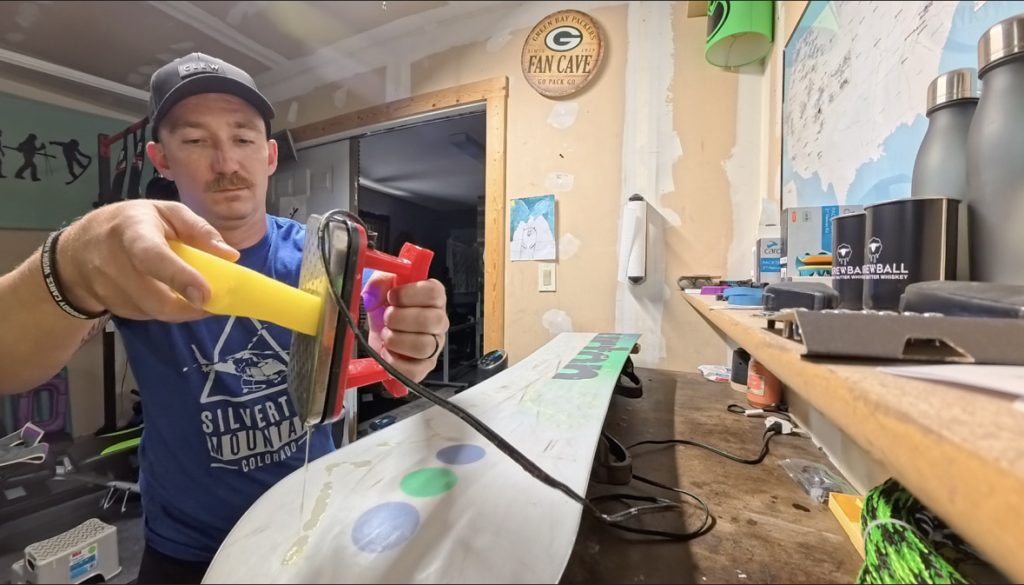
Johnathan Buckhouse/Courtesy photo
Anyone who skis or snowboards knows there’s nothing quite like the feel of freshly tuned gear.
Every turn glides a little smoother, making each run down the mountain feel that much more rewarding. For casual skiers and riders, a tune or two each season might be enough. However, for those who spend their days chasing plentiful stashes of powder in mountain towns like Summit County, keeping gear in top shape takes a little bit more attention.
While ski tune shops can expertly service skis and snowboards, the cost of regular tunes can quickly add up over the course of the winter season. As a result, many avid skiers and riders choose to tune and wax their own gear throughout the winter season.
Although the task can seem daunting to complete, with proper tools, guidance and advice, tuning your own equipment can help save time and money.
Summit County resident and snowboarding YouTuber Johnathan Buckhouse started tuning his own snowboards as a way to save money.
“It is expensive to always pay someone to do it,” Buckhouse said. “Tecnically you are supposed to tune your gear every three to four days of riding. I go 150-160 days a season, so it is going to be a ton to get your stuff tuned every time by a professional.”
Buckhouse, like many who start tuning their own gear, went from knowing next to nothing to becoming a seasoned pro who can efficiently tune his board every week.
One of the first lessons Buckhouse learned about tuning is the importance of equipment. Every good tune comes down to a solid layer of wax being laid on the base. Prior to new wax being put on, users should clean the base of their skis or snowboard with a rag and some type of base cleaner.
Many ski shops will sell base cleaners, but a homemade cleaner can be used by combining gentle dish soap and water. With the base now clean, the wax can be melted onto the base with a handheld iron before being spread out across the ski or snowboard by the heat of the instrument.
When Buckhouse was first beginning to tune his own equipment, he made the mistake of using an ordinary clothes iron. While the common household appliance is effective in melting wax, a clothes iron gets too hot and can actually damage the base of the skis or snowboard.
“The reason you do not want to use a household iron is that it can get too hot,” Buckhouse said. “It is harder to control the temperatures. The holes in the iron can also suck up the wax. You also can no longer use it for your clothes, meaning that the iron is shot.”
A waxing iron will feature temperature controls that will allow users to melt down wax, but not get to a temperature point that will hurt the base. Once a solid layer of fresh wax has been administered to the base, the excess must be scoured off using a scraper.
Michael Walsh, who has spent nearly 10 years running his mobile ski tune business, The Ski Doctor, advises using a plastic scraper to remove and smooth wax. The wax should be removed in from the very tip to the bottom, not side to side.
“Make sure to scrape off the excess,” Walsh said. “Don’t have a lot of big clumps. Some are okay. It does not have to be perfect. As long as you have some wax on there you will glide.”
With the wax now evenly spread out across the base, brushes can be used to buff and create channels in the wax job.
“After you scrape, you can buff the board with a household sponge.” Buckhouse said. “I used to only do that, but now I use brushes that help create little water channels in the wax that you just applied. When you snowboard or ski, the very top layer of snow melts into water and funnels through those channels.”
- Waxing iron – A ski waxing iron is needed because it has a thermostat to hold a consistent low temperature, preventing damage to ski bases.
- Ski Wax – Waxes are temperature specific, so pick the wax that matches the conditions you are riding in.
- Plastic scraper – A plastic scraper helps to remove excess wax after it cools. A sharp, 90-degree scraper is essential to leveling out any wax job .
- Brushes -Nylon or brass brushes are used to finish the base by brushing out the wax that has seeped into the base structure.
- Edge tuning tool – A handheld file guide will help to maintain consistent edge angles for better grip on the snow and ice.
- Ski brake retainers – Large rubber bands that are used to keep ski brakes out of the way while working to tune skis.
- Cloths – used to remove any grime that is on the base of the skis or snowboard before waxing.
- Base cleaner – used to remove any grime, edge shavings or other debris from the base before tuning.
- A complete tuning kit: Could be helpful in getting you the basics to tune your own board or skis.
Once the base has been buffed with a sponge or a tuning brush, the equipment is set for its next trip to the mountain.
Those who want to take their tuning job to the next level may be intrigued by sharpening their own edges. Although more complicated than waxing, tuning edges is possible at home with a handheld edge tuning tool.
Featuring a file, the tool allows skiers and snowboards to gradually sharpen their edges and smooth out any kinks that may have developed from hitting objects on the mountain. The handheld tool will allow users to resharpen their edges, but it won’t be the same level of tune if you took it into a ski shop.
For this reason, both Buckhouse and Walsh recommend leaving the edges to the professionals.
“The difference is pretty big between a hand file and a machine,” Walsh said. “One, it is way quicker. Two, it is very even and consistent. With a hand file it is easy for your wrists to fall off and it is hard to get a really straight edge. I have noticed that people love to wax their own boards, but when it comes to the edges, they tend to take it to a shop. And I think it should probably stay that way.”
Walsh specifically offers professional-level tunes from his mobile ski tuning van. New this season, Walsh has an infrared waxing system that makes it easier than ever to lay a fresh sheet of wax on a pair of skis or snowboards.
Walsh hopes to partner with Buckhouse throughout the season on a new business endeavor — Buckhouse Wax. The company will offer high-quality waxes for people to buy which Walsh will then use in his tuning business.
In addition to the infrared wax machine, Walsh was an edge sharpening machine that efficiently files and sharpens well-used eagles. All edge tunes should be completed before waxing in order to avoid getting metal shavings and debris into the equipment’s base.
The final piece of tuning that people can explore is completing base repair work via P-TEX. The material is used to repair core shots or other base damage on skis and snowboards. Similar to sharpening edges, putting down P-TEX can be complicated and is probably best left to professional tuners if you want it done properly.
While tuning your own equipment can be intimidating, Walsh and Buckhouse stress taking your time, watching videos and not striving to be perfect.
“I think a lot of people think that they can’t do this themselves,” Walsh said. “I just encourage people to have the confidence to try.”
“It is fun to tune your stuff,” Buckhouse said. “You crack a beer, watch a football game, tune your skis or snowboard. If you are going often enough and you are interested in the sport, I highly recommend getting into the the world of tuning your own gear.”
This story previously published in the winter 2025 edition of Explore Summit County magazine.






Support Local Journalism
Support Local Journalism
Readers around Glenwood Springs and Garfield County make the Post Independent’s work possible. Your financial contribution supports our efforts to deliver quality, locally relevant journalism.
Now more than ever, your support is critical to help us keep our community informed about the evolving coronavirus pandemic and the impact it is having locally. Every contribution, however large or small, will make a difference.
Each donation will be used exclusively for the development and creation of increased news coverage.