Colorado climbers say new rules proposed by feds would clarify use of ‘fixed anchors’ in wilderness areas
Among other limitations, the federal government's proposed climbing policies would continue to require the use of hand tools to install fixed anchors in wilderness areas

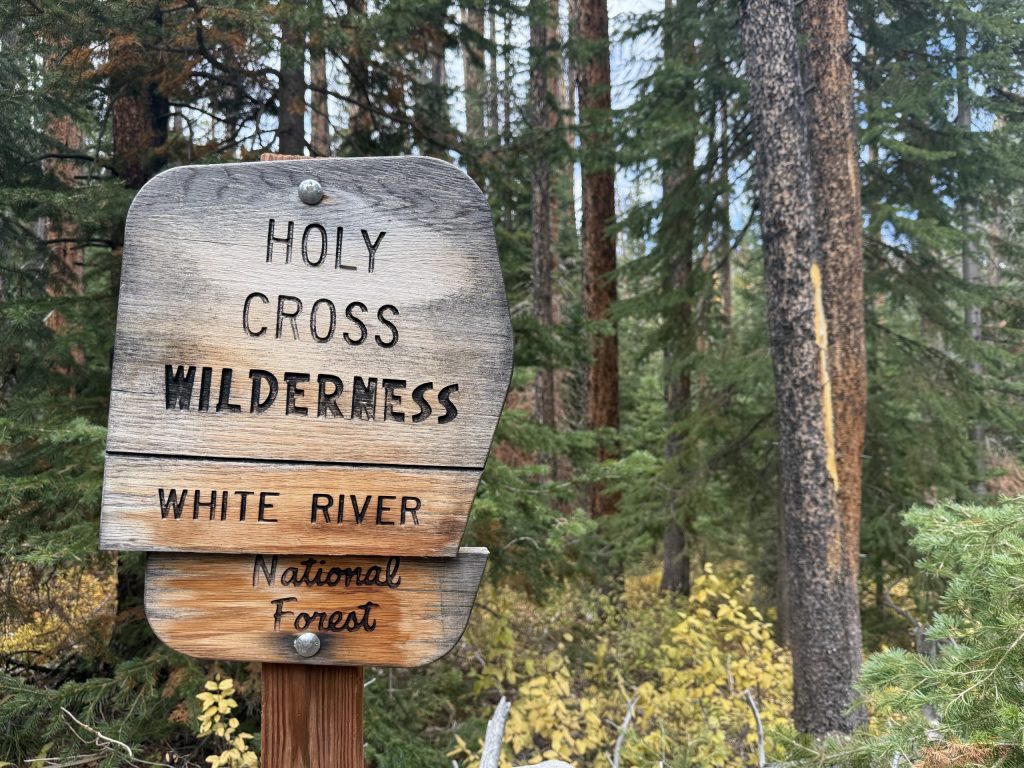
Ali Longwell/The Aspen Times
Colorado rock climbers say new guidelines being proposed by the federal government could help settle a decades-long dispute over the use of fixed anchors in highly-protected wilderness areas.
The U.S. Forest Service, a 121-year-old federal agency, is asking the public for feedback on a proposal that could become its first ever national policy for recreational climbing. The National Park Service, Bureau of Land Management and U.S. Fish and Wildlife Service are also proposing changes to their rock climbing policies for wilderness areas.
Eagle County Climbing Coalition Director Tim Nottingham said the proposed guidance would provide greater clarity to climbers and help ensure there’s a process for replacing unsafe anchors on historic climbing routes.
“We have hundreds, if not thousands, of these bolts in our rocks spread across Eagle County that are fully at the end of their usable life, which is creating this genuine risk for our climbing community,” Nottingham said. “Us as an organization, the replacement of those is one of the big priorities we have, so people can continue to recreate here in this way.”
Erik Murdock, the deputy director of programs, policy and government affairs at the Access Fund, a climbing advocacy group, explained that the federal government has managed climbing on public lands since the 1980s. Over all that time, the Forest Service never issued national guidance to oversee the sport, though it drafted many iterations.
That’s a big deal, Murdock said, because the Forest Service oversees an estimated 30% of the nation’s climbing routes. With no national policy, each national forest adopted its own guidance, including around the use of fixed anchors in wilderness areas. He said other agencies like the National Park Service and Bureau of Land Management also borrowed from the Forest Service’s draft guidance to create rock climbing policies.
The lack of a national policy came to a head in 2023 when President Joe Biden’s administration proposed an interpretation of the Wilderness Act of 1964 that would have considered fixed anchors to be permanent installations, which are banned in wilderness. The proposal would have required every bolt and anchor in designated wilderness areas across the country to be inventoried and made it difficult for climbers to replace existing anchors or place new ones in wilderness.
“There are thousands — tens of thousands — climbing routes across 28 states in designated wilderness, including some of the most important climbs in America’s climbing legacy and part of the evolution of this activity,” said Murdock, who is an Estes Park resident. “Places like El Capitan in Yosemite National Park and The Diamond in Rocky Mountain National Park.”
After rock climbers spoke out, the Biden administration walked back its proposal. Congress later passed the Expanding Public Lands Outdoor Recreation Experiences Act, or EXPLORE Act, with unanimous bipartisan support and it was signed into law in 2025. The EXPLORE Act included the Protecting America’s Rock Climbing Act, which required federal agencies to establish this proposed guidance for using fixed anchors in wilderness areas and allowed for the continued use and maintenance of existing climbing routes.
“The EXPLORE Act — it really codifies climbing as a recognized recreational activity alongside kayaking, rafting and horseback riding, all these other sports that are in wilderness areas,” Nottingham said. “They’re saying ‘Yes, rock climbers have a place here. We recognize that it is historic, and these anchors over time become unsafe and need to be replaced.'”
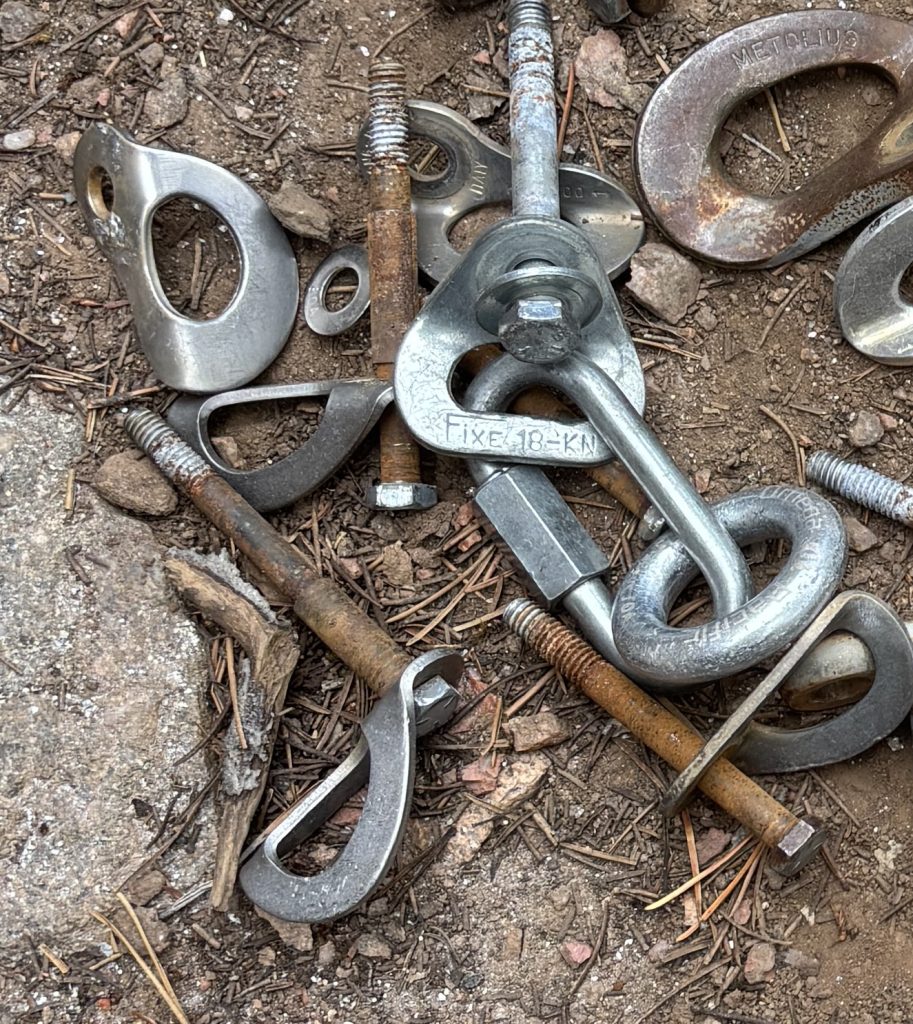
Climbing in wilderness
Wilderness areas, which are designated by Congress, receive among the highest levels of environmental protection under federal law and are free from motorized vehicles, resource extraction and human development.
Rock climbers, though, require devices known as “fixed anchors” — which are usually small metal bolts drilled into the rock — in order to be able to safely repel down steep rockfaces. This has sometimes raised controversy in wilderness areas since the anchors are permanent.
“(Fixed anchors) are essential for much of rock climbing because you need to have something that is permanent and fixed so that you can anchor yourself to that. If you’re at the top of this cliff, you’ve gotten to the top — how do you come down?” Nottingham said. “You can’t just put your ropes around a tree. I mean, sometimes you can, but generally speaking a fixed metal point is required to come back down. It’s critical infrastructure for climbing.”
But Nottingham said that climbing in a way that has a minimal impact on the environment is built into the sport’s culture. He said that climbers often paint anchors to camouflage them with the rock and will re-use existing anchor points when possible, instead of drilling a new hole when an anchor needs to be replaced.
In wilderness areas, Nottingham said the use of fixed anchors is especially limited due to the remoteness of these backcountry places and the long-standing requirement that climbers use hand tools to install anchors, which isn’t changing.
“You find substantially less anchors in wilderness because it is so difficult to get there, and they are used sparingly,” Nottingham said. “Imagine carrying a hand drill and a hammer 8 miles into the backcountry, plus bolts. We’re not going to carry 20 of them. You’re going to be like, ‘Oh, dude, we need one.'”
Murdock said the proposed guidelines reflect the ethics of climbing in wilderness areas. The policies would keep permitting powers with the local land managers for each wilderness area and create stipulations for replacing anchors on existing routes, while requiring pre-approval to establish new routes, which is rare in wilderness areas, he said.
“In wilderness, the standard is to use removable gear, cams and nuts and other forms of removable gear when it’s viable, when there’s places for it and cracks and knobs and trees to use for removable protection,” Murdock said. “But sometimes, you have to place a fixed anchor. A fixed anchor is anything that is left behind.”
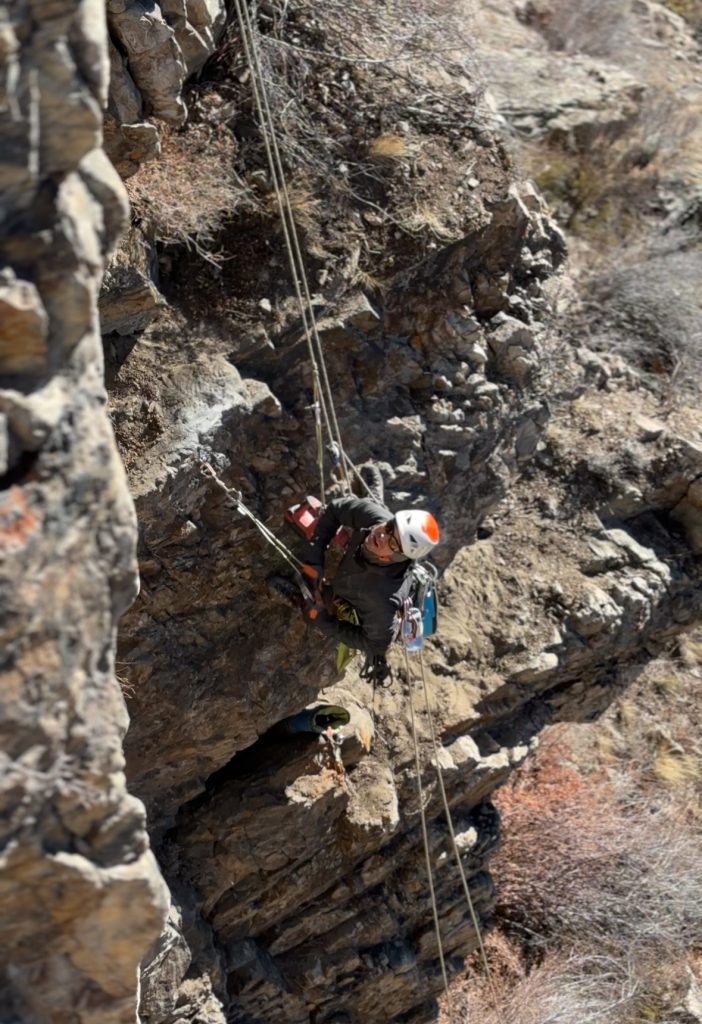
Colorado climbers support proposed policies
Although there are estimated to be more than 10 million climbers in the U.S., Murdock said most will not notice the proposed changes since very few climbers ever drill a hole and place a fixed anchor.
“A tiny percentage — less than 1% of climbers — ever go out and establish new climbing routes and use and place fixed anchors, whether they’re slingings or bolts or pistons, in the first place,” he said. “The vast majority, more than 99% of climbers who venture into the wilderness are repairing routes, are climbing established routes.”
But Nottingham said that the proposed rule changes are important because they will allow groups like the Eagle County Climbing Coalition to continue work to replace decades-old fixed anchors that are rusting and unsafe with stainless steel anchors that could last over 100 years.
Murdock said the Access Fund has submitted comments seeking small changes to the proposed climbing guidance, such aligning what land management agencies define as fixed anchors. But he said the group is generally in favor of the policies and would like to see them passed as soon as possible.
“We don’t want the federal government to spend more time deliberating on this. They’ve spent a lot of time. Right? Thirty years working on these ideas,” Murdock said. “It’s time to establish some guidance and implement them to make sure that climbers understand how to behave in the wilderness. That fixed anchors should be used as a last resort in wilderness. That climbers need to climb in the wilderness with restraint and humility.”





Support Local Journalism
Support Local Journalism
Readers around Glenwood Springs and Garfield County make the Post Independent’s work possible. Your financial contribution supports our efforts to deliver quality, locally relevant journalism.
Now more than ever, your support is critical to help us keep our community informed about the evolving coronavirus pandemic and the impact it is having locally. Every contribution, however large or small, will make a difference.
Each donation will be used exclusively for the development and creation of increased news coverage.