Drought worsens in Colorado and across the West amid ‘lackluster monsoon’
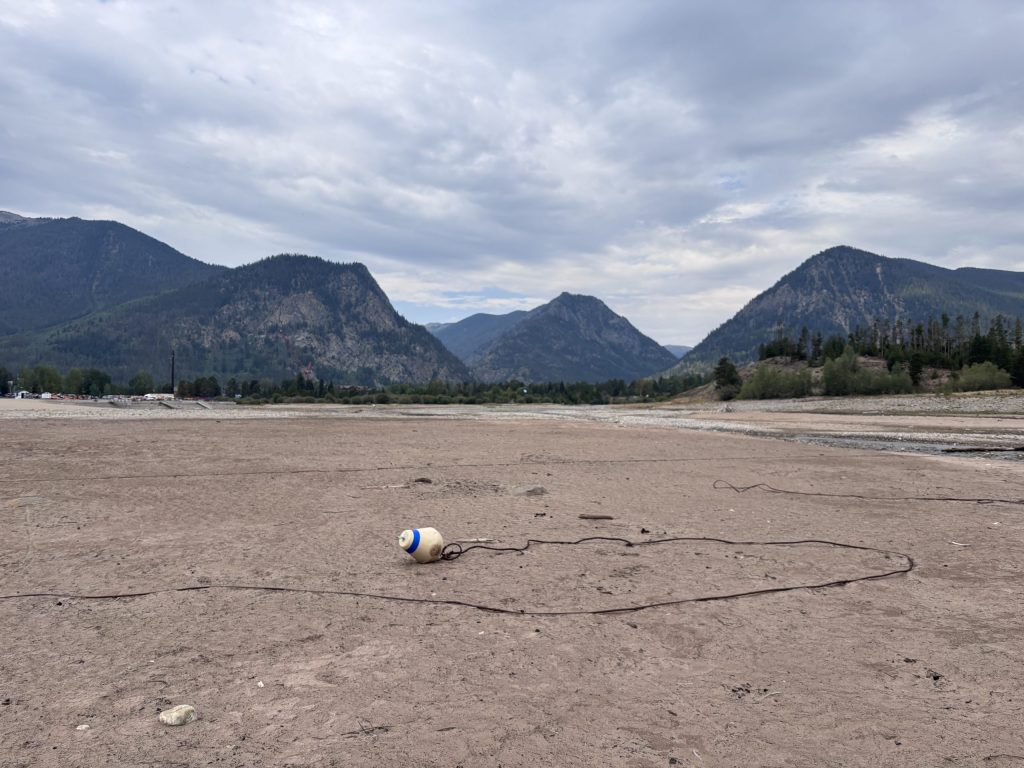
Extreme drought continues to plague counties across Colorado’s Western Slope

Ryan Spencer/Post Independent
Drought conditions continue to expand across Colorado and the West as forecasters predict above-average temperatures for at least the next two weeks.
An Aug. 20 drought status update from the National Integrated Drought Information System describes how record-breaking July temperatures and a “lackluster monsoon” have left nearly 95% of the Intermountain West in drought.
So far, this year has been the hottest on record for nearly every county for the region, which is defined by mountains and high plateaus that includes Nevada, Utah, Idaho, northern sections of Arizona and western parts of Colorado, Wyoming, Montana and New Mexico, according to the update.
July was reportedly the hottest on record for Wyoming, the second-hottest on record for Colorado, New Mexico and Utah and the fourth hottest on record for Arizona.
“Monsoon rains arrived in July and brought some drought relief, primarily in Arizona, Utah and western parts of Colorado and New Mexico,” the update states. “But those rainstorms were isolated, some have contributed to flash flooding and they have not led to any widespread or meaningful improvements to overall water supply in the region.”
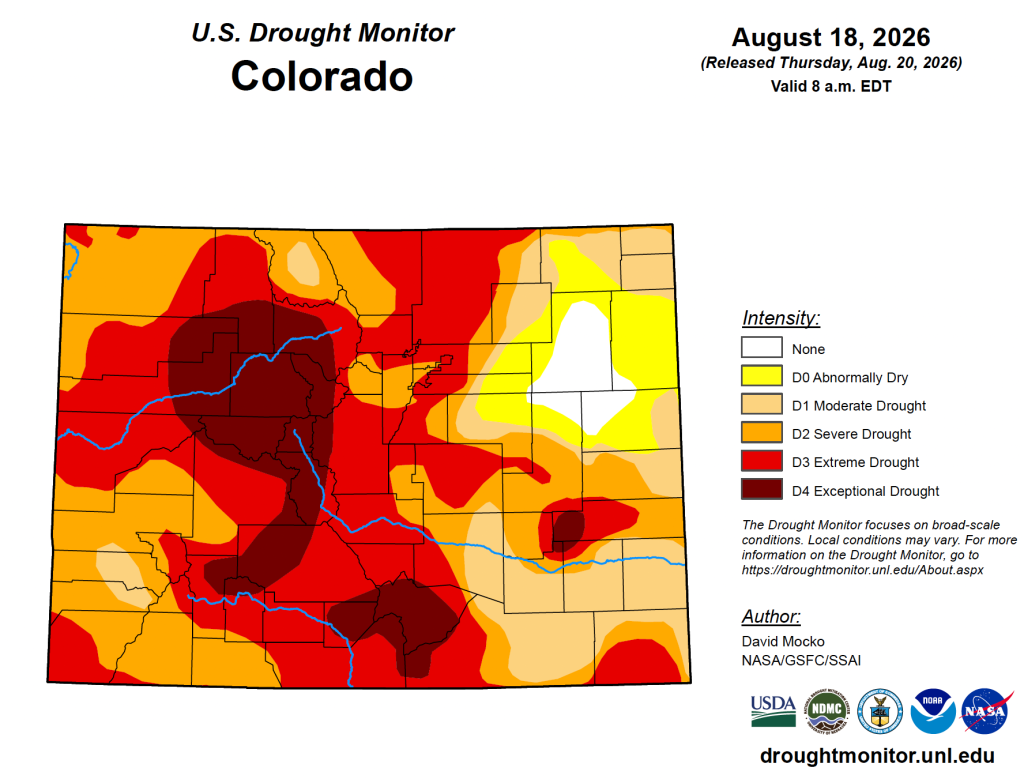
About 30% of the region is in extreme, Level 3 of 4, or exceptional, Level 4 of 4, drought — with some of the worst drought conditions in western Colorado, according to the U.S. Drought Monitor maps updated Aug. 20.
Eagle, Pitkin, Lake and large parts of Garfield, Rio Blanco, Routt, Grand and Summit counties remain under exceptional drought as deep precipitation deficits remain after last winter’s historically low snowpack. Since early July, the Drought Monitor shows exceptional drought has also stretched deeper into southern Colorado, extending into parts of Chaffee, Gunnison, Sagauche, Hinsdale and Mineral counties.
Large swathes of Colorado’s northern mountains and areas along the Interstate 70 mountain corridor have seen a half-inch to an inch of rain in the past 14 days, according to the Colorado Climate Center. Conditions in the southern mountains have been drier with less than a half inch of rain over the past two weeks, while parts of the Front Range have seen heavier rain with between 1-3 inches in the last week.
In Pueblo County, an 80-year-old man died Aug. 16 after he was caught in flash flooding after heavy rain fell over the burn scar from the Aspen Acres Fire, according to local authorities.
Across the West, drought update states that the combination of a record-low snowpack, record hot temperatures and the unremarkable start to the monsoon season are stressing water supplies.
Lake Mead, the largest reservoir in the U.S., dropped to its lowest water level on record since it was filled in 1937, and Lake Powell, the nation’s second largest reservoir, is also critically low at 22% full, according to the update.
Blue Mesa Reservoir, the largest reservoir, is only about 24% full — and concern is rising that it could drop below the minimum levels at which it can generate hydropower by the end of this year, the update states.
Across much of the West, fire danger remains elevated amid what has been a significant wildfire season with destructive wildfires that have tied up federal firefighting resources for weeks on end, according to the National Interagency Fire Center. Stage 2 fire restrictions banning campfires remain in place across Colorado’s Western Slope, though recent rain has dropped the fire danger from “extreme” to “high” in places.
Over the next two weeks, National Oceanic and Atmospheric Administration outlooks show above-normal temperatures are likely to persist across the Western U.S, while precipitation is expected to be near-normal in most places, including Colorado.
Human-caused climate change is expected to continue to result in warmer temperatures and more severe drought conditions throughout the 21st century, according to the Climate Change in Colorado report.
For the continental U.S., this past July was the all-time warmest month on record surpassing the prior record from the Dust Bowl era in 1936, according to the nonprofit Climate Central. July was also reportedly the hottest month on record globally, tied with 2024.
“Another day, another record,” said Climate Central climate scientist Zachary Labe in a statement. “… Until we reduce carbon pollution, these record-breaking headlines will continue, and the impacts on communities and ecosystems around the world will only grow worse.”





A bear walks into a bar …
On Aug. 10 at 10:45 p.m., a docile black bear was captured on film after entering Sant Ambroeus Aspen and climbing onto tables.




Support Local Journalism
Support Local Journalism
Readers around Glenwood Springs and Garfield County make the Post Independent’s work possible. Your financial contribution supports our efforts to deliver quality, locally relevant journalism.
Now more than ever, your support is critical to help us keep our community informed about the evolving coronavirus pandemic and the impact it is having locally. Every contribution, however large or small, will make a difference.
Each donation will be used exclusively for the development and creation of increased news coverage.