‘Completely overwhelming’: Colorado mountain town leaders worry Medicaid, SNAP changes are breaking down rural safety nets
Counties are struggling with how to implement benefit changes and contend with funding cuts, while healthcare providers and food banks work to contain the fallout
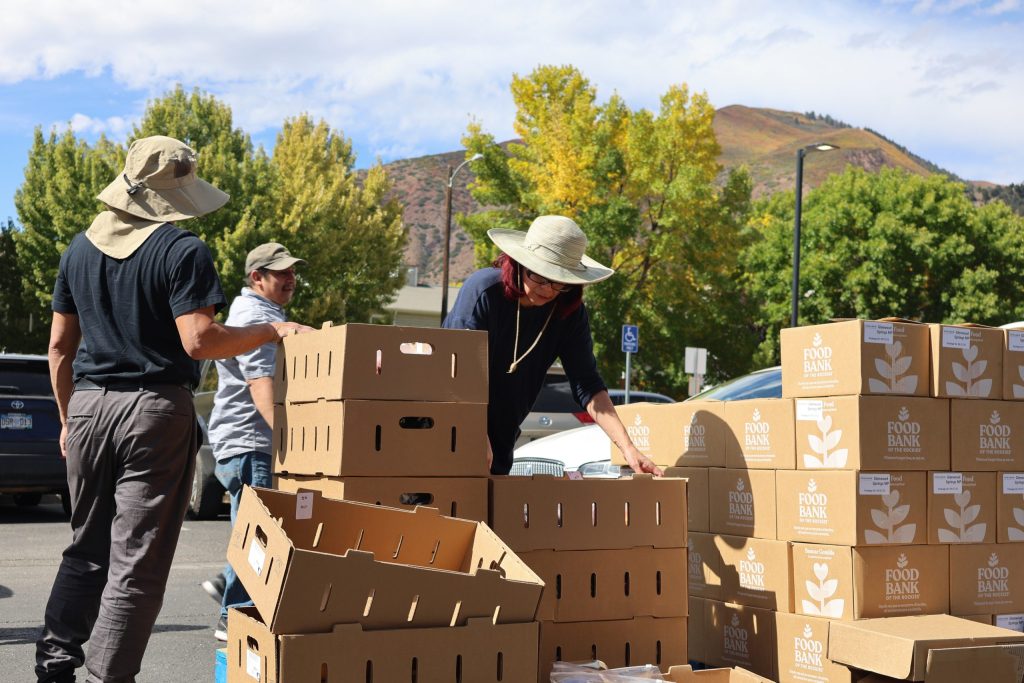
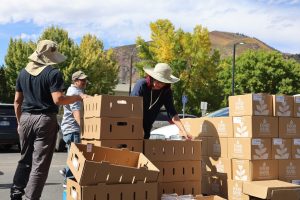
Food Bank of the Rockies/Courtesy photo
Healthcare groups, food banks and local government leaders in Colorado’s mountain towns find themselves on the front lines of a looming overhaul of the country’s social safety net system.
The sweeping megabill passed by congressional Republicans in July 2025, which President Donald Trump dubbed the One Big Beautiful Bill Act, is set to reshape Medicaid and food assistance programs with new work requirements, tighter renewal periods and federal funding cuts — much of which will begin to take effect next year.
The megabill is projected to cut federal spending on Medicaid by upwards of $1 trillion and reduce funding for SNAP by anywhere from $187 billion to $287 billion over the next 10 years, while also adding $4.5 trillion to the national deficit, according to analyses by the Congressional Budget Office.
The Trump administration and Republicans in Congress have defended the changes as a way of reducing waste, fraud and abuse in social safety net programs, with Trump spokesperson Abigail Jackson telling NOTUS last year that the bill protects Medicaid “for the vulnerable Americans who rely on it most.”
Local leaders say the changes will reduce access to critical services in their communities.
Many of the safety net changes will fall to local governments and community organizations to implement at a time when officials, particularly in Colorado’s resource-strained mountain counties, are contending with tight budgets and increased demand for services.
“What we’re experiencing here, driven by the federal government, is the dismantling of the social safety net,” said Tamara Pogue, a Democratic Summit County commissioner.
Healthcare providers work to minimize coverage losses
Healthcare leaders in Colorado’s rural mountain communities say much uncertainty remains around how the megabill’s Medicaid changes will be implemented. But they largely agree that coverage losses seem inevitable.
Starting Jan. 1, people without disabilities aged 19-64 will need to prove they’ve spent at least 80 hours per month working, going to school or doing community service to qualify for Medicaid and will need to verify their eligibility every six months, up from once a year. More than 370,000 people in Colorado will be subject to the requirements, according to the Colorado Department of Health Care Policy and Financing.
The department estimates that Medicaid eligibility changes alone will cost the state nearly $46 million in the current fiscal year, which runs through June 30, 2027.
“My biggest fear is that people will lose coverage not because they’re not eligible but because the additional reporting requirements and the biannual certification will just be really complex and burdensome,” said Dustin Moyer, chief executive officer for Mountain Family, a federally qualified health center operating in Eagle, Garfield and Pitkin counties.
To mitigate that, Moyer has hired an additional full-time employee to help with Medicaid enrollment. The health center is also working with a third party to compile eligibility data for its patients, of whom roughly 1,500 could be subject to the new requirements.

Moyer said it’s impossible to know how many of those patients could lose Medicaid coverage as a result. He likened the megabill’s changes to the “Medicaid unwind” period in which Congress ended automatic reenrollment for Medicaid in spring 2023 as the nation was winding down its COVID-19 response.
That event caused around 2,000 Mountain Family patients to lose Medicaid coverage. As a federally qualified health center, the organization is obligated to provide care to anyone who needs it, regardless of whether they have insurance.
The increase in uninsured patients during the Medicaid unwind period blew a roughly $1.5 million hole in Mountain Family’s budget, and Moyer suspects the organization could be looking at a similar situation if people lose coverage next year under the megabill.
Moyer said the health center has been “aggressively fundraising” to help prepare for budget pressures, with $1.1 million raised from donors and grants in the past two months alone, and about $2.3 million raised last year.
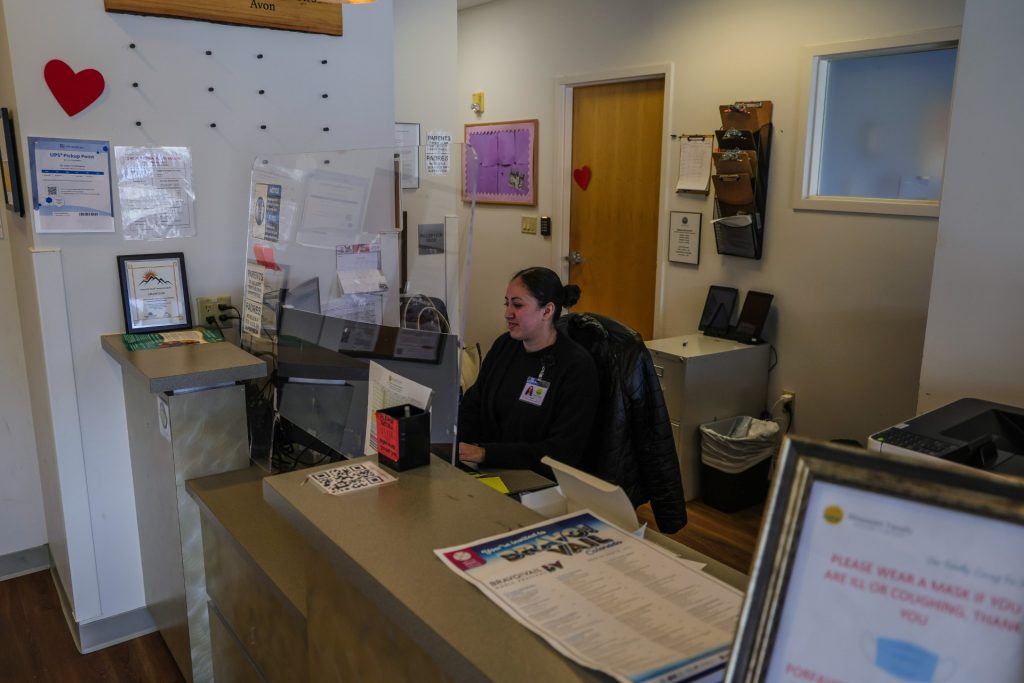
Stephanie Einfeld, chief executive officer for Northwest Colorado Health, a federally qualified health center serving the Yampa Valley region, said relying on local revenue, like grants and taxes, could help health centers weather financial storms.
“And, ultimately, if we can’t, we have to pull back access (to care),” she said.
Einfeld worries even people who qualify for Medicaid under the new work requirements could lose coverage, especially in mountain communities. In rural and resort areas, workers often have jobs with fluctuating seasonal hours, such as construction and hospitality.
Einfeld said it could be hard for those workers to properly document and satisfy the megabill’s requirements. The law does carve out exceptions to the work requirements for caregivers and people with disabilities or severe medical conditions. People will also be able to log education and community service hours instead of work to qualify for Medicaid.
But healthcare providers are still waiting on guidelines from the state — which is waiting on the federal government — on how to implement those provisions. Until that happens, Einfeld said it’s hard to tell patients what to expect.
“We don’t know what to communicate yet,” she said.
Costs rise, benefits shrink as SNAP changes kick in
Other changes to social programs have already gone into effect.
The age cutoff for work requirements for the Supplemental Nutrition Assistance Program, or SNAP, was raised last year from 54 to 64. Reporting exemptions were also removed for groups like veterans and unhoused individuals.
A report from the Center on Budget and Policy Priorities shows that since the megabill was passed in July 2025, 33,681 fewer Coloradans are accessing SNAP benefits. More than 600,000 Colorado residents were enrolled to receive SNAP benefits in 2025.
Other long-term fiscal impacts have yet to kick in, including millions of dollars in cuts to Colorado’s SNAP funding, which local officials estimate will shrink food benefits. In Pitkin County, for example, overall benefits are projected to be reduced by $267,000 in 2027, according to Kelly Medina, the county’s interim director of human services.
Currently, the majority of SNAP funds distributed to Coloradans come from federal dollars, with some light cost-sharing from states. Under the megabill, states will be responsible for funding a significant portion of SNAP benefits starting in October 2027 based on their payment error rate, which measures how accurately state and county agencies calculate benefit amounts.
Colorado’s error rate was 9.9% in 2024. Based on cost-sharing thresholds set by the megabill, this would leave the state on the hook for a 10% match of SNAP benefit costs per year after 2027.
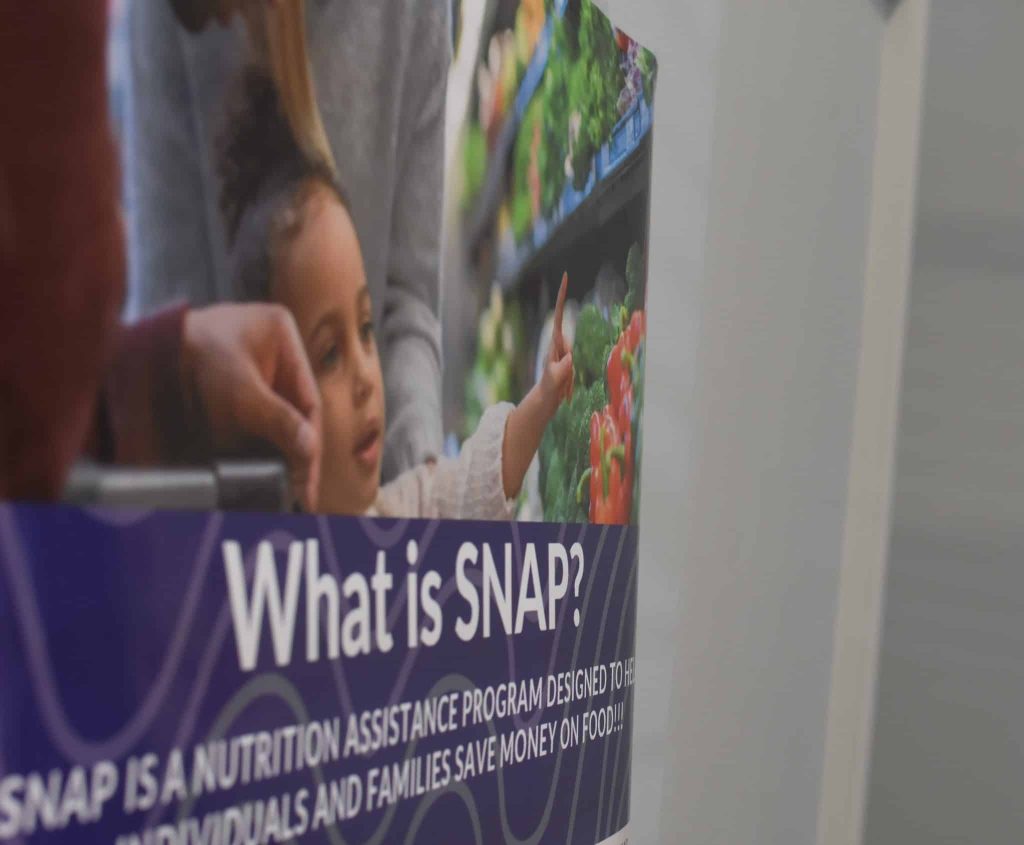
The megabill also requires states to pay a larger percentage of SNAP administrative costs annually, which the Colorado Department of Human Services said could come out to a $50 million increase. Combined with the error rate match, the SNAP changes could cost Colorado $180 million or more annually.
The Colorado Department of Human Services said it is discussing different cost-sharing scenarios with counties, which may be on the hook to cover upwards of 40% of the cost to states. That could come out to as much as $60.8 million.
“There is no cost-sharing information that is confirmed at this time, though apprehension over how much will shift to the county level is a widespread feeling across Colorado,” said Melina Bricker, Routt County’s assistant manager. “One concern is that errors made outside of one county may impact overall error rates and create impact for others.”
In Rio Blanco County, Republican Commissioner Jennifer O’Hearon said if counties end up paying 40% of the state’s SNAP error rate penalty, that could cost her county $50,000 per year. That’s roughly equal to the cost of a full-time human services employee.
“If someone left for whatever reason, could we replace them? I don’t have that answer,” O’Hearon said. “There’s going to be additional burdens on our case managers, and also the cost has now increased (that) the state and the feds won’t be covering.”
Those impacts come as the Western Slope experienced a 10-year high for food insecurity in 2024, the most recent year with available data, according to Feeding America.
Amber Henning, director of development and community relations for Food Bank of the Rockies, said the food banks had to increase their monthly spending by $25,000 per month to meet the growing needs of the communities they serve. In Colorado, that’s more than 380,000 people, 53,000 of which live on the Western Slope.
Samantha Freese, executive director for LIFT-UP, a food bank serving the Roaring Fork Valley, said there have been over 10,800 visits to its food pantries so far this year, a 6% increase from last summer.
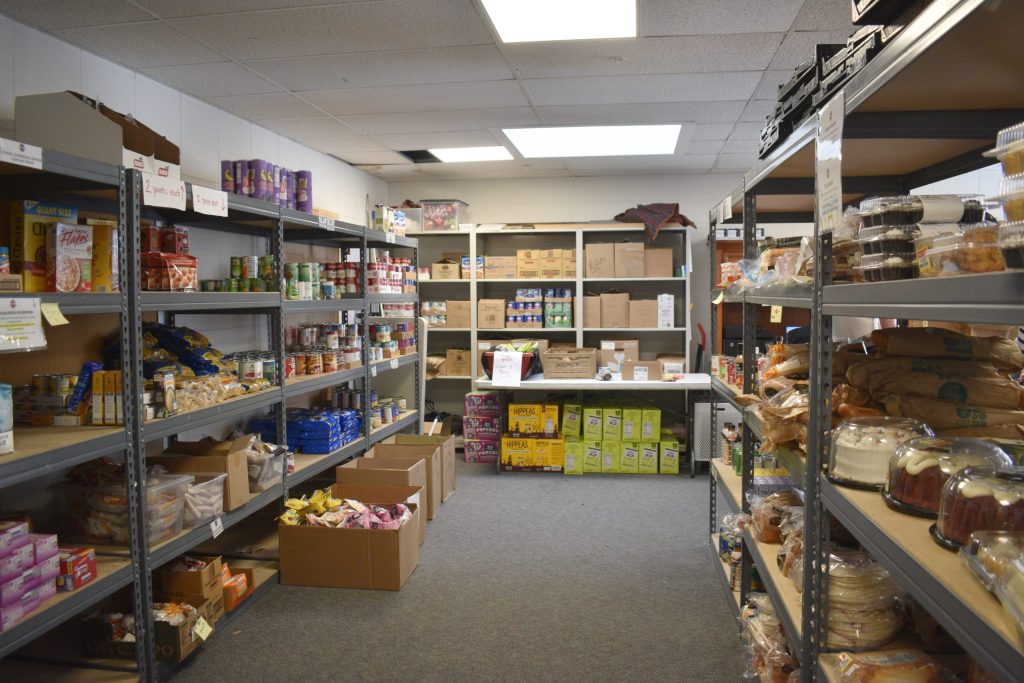
For every meal that a Feeding America food bank provides, SNAP provides nine. That means that when fewer people are able to access SNAP benefits, food banks have put in double the work and barely make up half of the gap left by SNAP.
“We are doing our best to make up those gaps by fundraising, increasing community support … but we do see the need increasing,” Henning said, adding that many of the food bank’s hunger relief partners are asking for more food. “We’re also seeing other supports fall out, and that’s where we really are struggling.”
‘Local governments will have to take care of themselves’
Work requirements and increased verification will mean heavier caseloads for counties, which administer social services like Medicaid and SNAP.
The state projects that counties may need to double their number of Medicaid case managers, which would mean an additional 3,700 new staffers statewide. For some, that may not be possible.
Pogue, the Summit County commissioner, said her health and human services department wanted two more employees, up from six currently, to deal with the deluge of paperwork under the megabill. Funding constraints have prevented the county from making those hires.
“I think it’s completely overwhelming for counties,” Pogue said.
The issue exemplifies what local leaders warned Congress about as it debated the megabill: eligible Medicaid and SNAP recipients could experience a loss in benefits due to the sheer exhaustion of local governments unable to keep up with the increased demands of their caseloads.
“There’s no way to avoid the reality that clients are likely going to feel reductions in the quality of the service they receive,” Pogue said.
In Rio Blanco County, Republican Commissioner Jennifer O’Hearon said if counties end up paying 40% of the state’s SNAP error rate penalty, that could cost her county $50,000 per year. That’s roughly equal to the cost of a full-time human services employee.
“If someone left for whatever reason, could we replace them? I don’t have that answer,” O’Hearon said. “There’s going to be additional burdens on our case managers, and also the cost has now increased (that) the state and the feds won’t be covering.”
Bricker said administrative responsibilities in Routt County are expected to double as a result of increased SNAP requirements alone.
“That also then creates concerns for retention,” Medina said. “It’s really hard already for counties to retain staff … and staff morale.”
Despite the many unknowns, Pitkin and Routt counties have been able to retain existing staff so far. Bricker said Routt County staff “aren’t feeling the squeeze just yet.”
State lawmakers passed a law in May aimed at streamlining some social services and reforming the dated benefit management system that counties use to administer those programs. Pogue said the effort could save counties money, but she is also wary of disrupting an already fragile system.
Ultimately, Pogue said local governments are in a time where they’re having to do more with less.
“We are absolutely going through a period where local governments will have to take care of themselves,” Pogue said.





A bear walks into a bar …
On Aug. 10 at 10:45 p.m., a docile black bear was captured on film after entering Sant Ambroeus Aspen and climbing onto tables.




Support Local Journalism
Support Local Journalism
Readers around Glenwood Springs and Garfield County make the Post Independent’s work possible. Your financial contribution supports our efforts to deliver quality, locally relevant journalism.
Now more than ever, your support is critical to help us keep our community informed about the evolving coronavirus pandemic and the impact it is having locally. Every contribution, however large or small, will make a difference.
Each donation will be used exclusively for the development and creation of increased news coverage.