How to survive a drought emergency: Lessons learned from a ‘miserable’ year for the Colorado River basin
Colorado River District’s annual water seminar included stories of how collaboration and creativity pulled users through this year’s drought crisis, while questions remain about whether that’s enough to secure water in a hotter, drier future

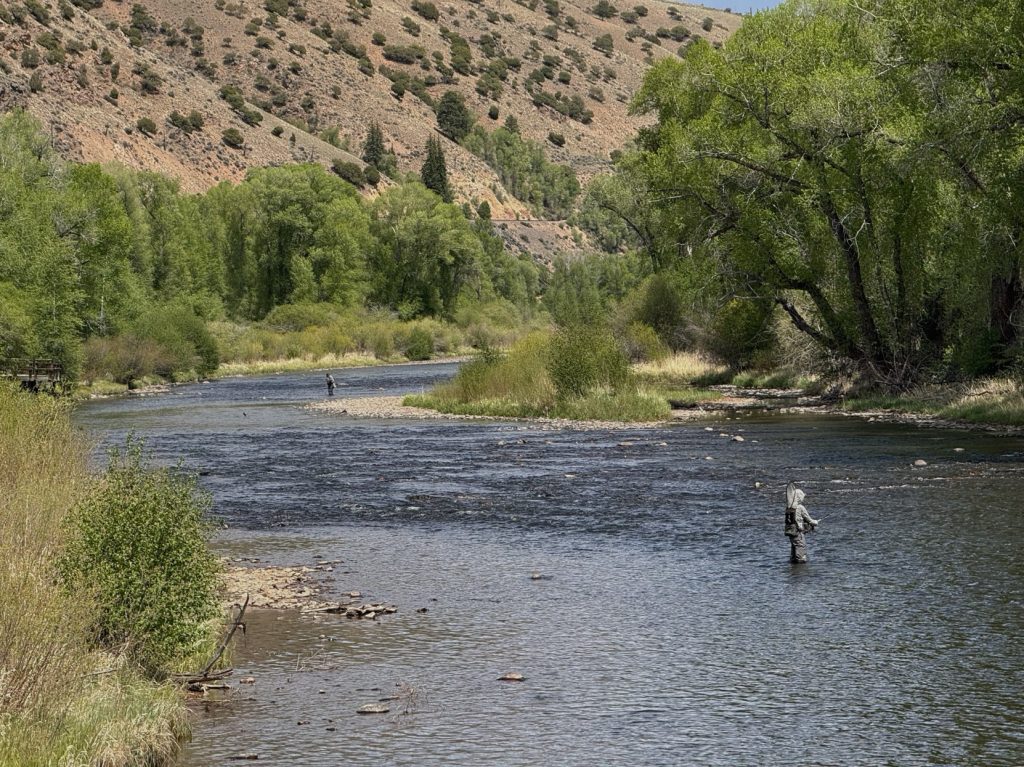
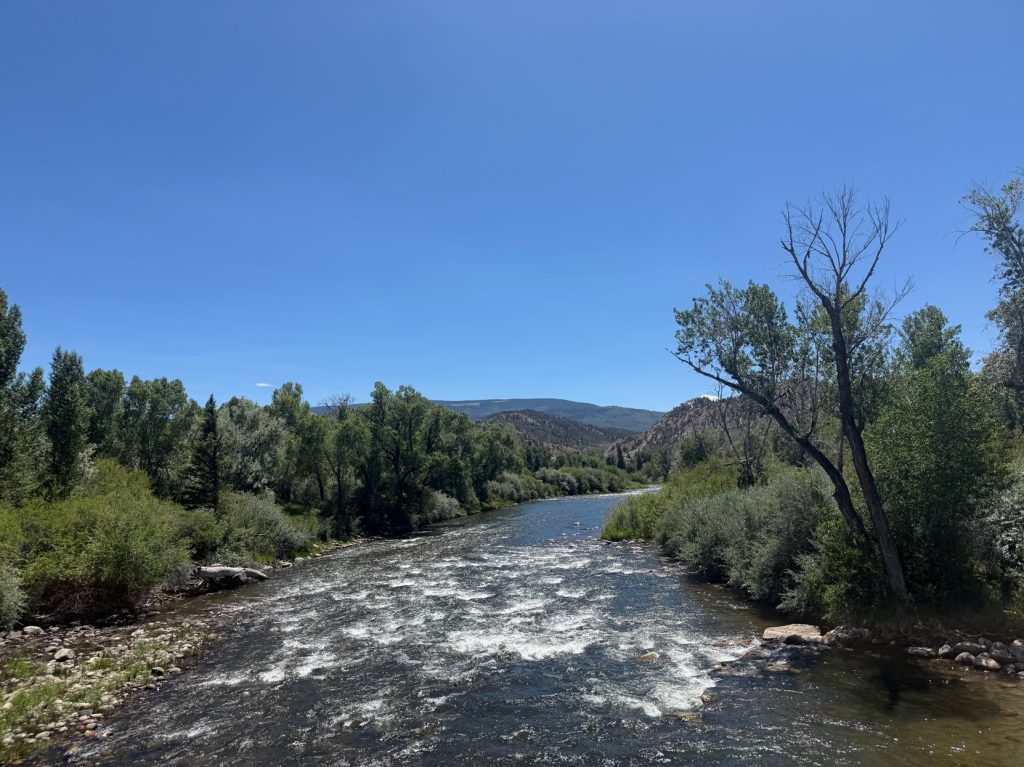
Ali Longwell/Post Independent
On Colorado’s Western Slope, water managers, ranchers, producers and community leaders knew early in the year that this summer was going to be unlike any others they’ve experienced.
“Things were not looking great — and then March happened,” said Rebecca Briesmoore, senior water resources engineer for the Colorado River Water Conservation District, at its annual water seminar on Friday, Sept. 18, in Grand Junction. “Every single county in the state of Colorado broke the record for the hottest March on record by a large margin. What does that do to our snowpack? It started melting very, very quickly. We saw that [snow water equivalent] just plummet down the graph.”
In Colorado, mountain snowpack serves as its largest reservoir, with 80% of the state’s precipitation falling as snow on the Western Slope. With 90% of the state’s population residing east of the Continental Divide, however, transmountain diversions carry this water east during the annual melt-off.
Jen MacPherson was less than a year into her new role as Kremmling town manager when the red flags started flying.
“I knew that we had a problem on our hands back in late March,” MacPherson said. “I went up to the two reservoirs above our town that normally supply us with 100% of our drinking water all year round, and what I saw when I got there was not encouraging.”
The first reservoir, Jones 1, was “completely empty, below deadpool,” MacPherson said. Jones 2 was so low that the water elevation markers were dry, sitting feet above the water line, she added. The town’s backup supply from the Colorado River, supported by an “infiltration gallery” which pumps water from the river to the town’s treatment facilities, was buried in a sandbar beyond the water’s reach.
“It was pretty scary,” MacPherson said. “When we ran the numbers, we came up pretty short, pretty quick, so we knew we were gonna get squeezed from all sides.”
While April and May brought cooler temperatures and slightly more precipitation than March, most recognized that recovery was extremely unlikely.
“By this point, everyone knew — whether you were a water manager, whether you’re an irrigator, a municipality, recreationist, citizens — we all knew that this was unprecedented, and that it was going to be a very challenging year in terms of managing water,” Briesmoore said.
Reid Fishering, owner of Mountain Quality Farms in the Uncompahgre River basin, described the growing season for Olathe sweet corn in the San Juans simply: “It started dire and it ended dire.”
Fishering said that the Uncompahgre Water Users Association communicated early to producers in the southwestern basin that they would likely start the year with around 50% of their typical water allocations, and not to expect any water after Aug. 22 “just to be safe.”
“We went into the season pretty much with a hope and a prayer, and it did come through, but it still was the barest of minimum skating through the season money-wise,” he said, later adding that most producers chose not to plant crops on 50-60% of their fields this year. “… we still just made enough to pay rent.”
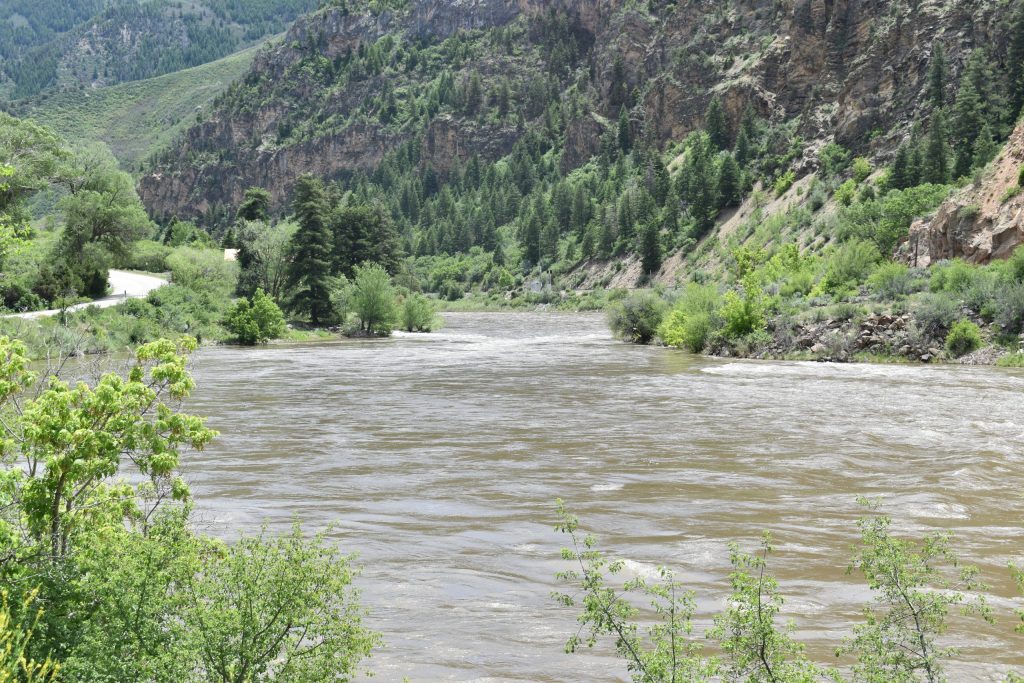
These stories of how challenging this year was for those relying on the Colorado River and its tributaries were plentiful throughout the Colorado River District’s annual seminar Friday.
“The people closest to the resource are often the people solving the hardest problems,” said Amy Moyer, chief of strategy for the district, which supports water interests in 15 Western Slope counties.
“It was simply not just another difficult year, it tested the assumptions that we relied on, it pushed systems and people to their limits, and it forced decisions to be made with incomplete information and left very little margin for error,” Moyer said. “… These impacts are those things that might not have been on our bingo card … They showed up in our irrigation decisions, they showed up in our reservoir operations. They showed up in the work of our drinking water providers, providing water to their communities, and they showed up in the policy and legal conversations happening across the Colorado River basin.”
While adjectives like unprecedented, worst-ever, depressing, miserable or hottest-ever were used to describe the year — so were words like collaboration and creativity as individuals, communities and organizations came together to find ways to survive.
“You can’t deny it, we’re in deep trouble. Things are as bad as they’ve ever been,” said Sen. Marc Catlin, a Republican representing state district 5 and board president of Colorado River District. “… It may not rain, it may not snow. But we don’t have to fight with one another.”
Leveraging local action, partnerships and collaboration
“Drought is really a different kind of emergency,” MacPherson said, adding that there aren’t a lot of tools set up for towns to address running out of water.
In Kremmling, partnership and collaboration ultimately helped the new town manager find solutions. The town’s water rights in one of its reservoirs were shared with the Colorado River Cattle Ranch.
“That ranch decided to cut irrigation to a hay meadow; they sacrificed hundreds of thousands of dollars to help us [provide] drinking water,” MacPherson said. “And we’ve seen stories like that up and down the entire river.”
Plus, the town and residents stepped up with conservation efforts, reducing its use by 45%, she added.
In the Vail Valley, Lauren Snyder, government and public relations manager for Eagle River Water and Sanitation District, said its conservation efforts were bolstered by a local community that is “very connected to the snowpack, to our water.”
“Our economy is driven by water, either frozen on a ski mountain or in the rivers for recreation and fishing,” she said. “So we’ve been very lucky to have a community that absolutely knows when we are in drought.”
Part of the challenge in resort communities, however, is the abundance of second homeowners — 50% of its customers in Eagle County, Snyder said — who may be less connected to the conditions.
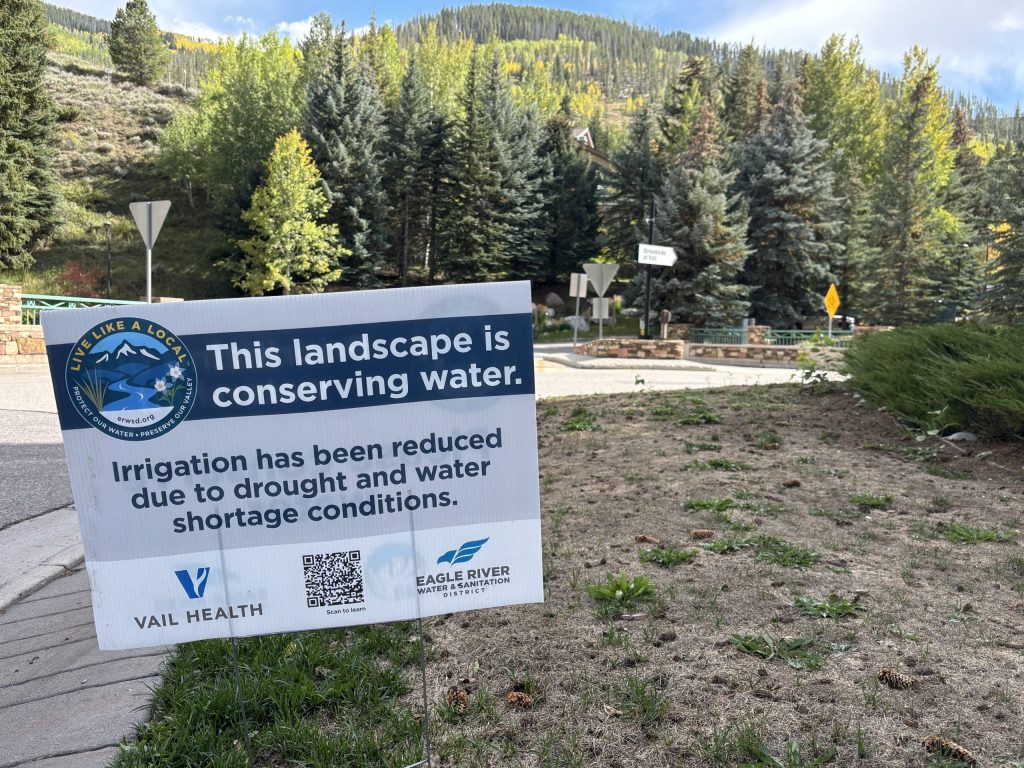
Still, Eagle River Water and Sanitation was able to leverage partnerships and lead education that resulted in a 50% reduction in outdoor water use in the community by September. Among the provider’s “excessive user” group — those who use 30,000 gallons of water or more in a month — reduced use by 85%. Part of its success was rooted in partnering with municipalities like the town of Vail to reduce their outdoor water use.
“Our roundabouts looked really terrible, and that was intentional, and I’m so proud of it,” Snyder said, adding that the lesson was, “when you communicate with your customers, it really does work. There’s a little bit of panic going on, and sometimes that works, too.”
Managing water in a hotter, drier future
While collaboration and partnership helped individuals survive this year, it also emphasized the need for future investments, infrastructure and new perspectives.
“With the level where storage is at right now, I do have some concerns about, if we don’t have good snowpack this coming year, whether there’ll be less willingness to work together, if you’re less secure than you were coming in this year,” said Jason Ullmann, state engineer and director of the Division of Water Resources.
Colorado State Climatologist Russ Schumacher said that while there is a lot of hope that the upcoming winter is better — and “some reason for that optimism” — there’s no guarantee that “it’s going to be a blockbuster or huge snow year,” particularly as Colorado’s climate changes.
“We’re warming, and that’s having an influence on water and snow and streamflows and everything else,” Schumacher said, adding that the Climate Center’s 2024 climate change report shows uncertainty around future precipitation and peak streamflows. “Every single model, though, shows the runoff being earlier, because it’s getting warmer, the springs are getting warmer, so the snow melts earlier in the spring, which means there’s very little flow in the summer even in years that have good snowpack.”
Andy Mueller, Colorado River District’s general manager, said that basin-wide, individuals need to shift their perspective: “Stop assuming that the next water year is gonna fix all our problems. Stop thinking that this Super El Nino is gonna fill every bucket in the Colorado River system.”
“We have to recognize that relying on past hydrology and systems that were built for it is not a recipe for success. So we have to remain nimble, build systems that are capable of responding to a much wider range of hydrology and temperatures than we’ve ever seen before,” Mueller added.
One example of how existing systems were challenged this year for the first time was the state’s prior appropriation doctrine. Ullman said this doctrine was selected as the model for allocating water in Colorado due to its semi-arid climate and as a way to deal with inevitable water scarcity.
“For 150 years, it’s worked pretty well. It’s been stressed this year beyond a point where it has been before,” Ullman said. “But because of some collaborative efforts and things, it is bent but not broken. … some of that past certainty has created an assumption of future security that may not be there.”
In the Grand Valley, Luke Ginerich, water resources consultant and co-owner of Bluebird Organic Fruit Company in Palisade, said that without partnerships, prior appropriation and basin storage vessels, “we would not have been able to make a peach crop this year. There would not have been sufficient water.”
The lesson for him, he added, is that, “in the next couple of years, I think we have to find a way to emphasize infrastructure on the Western Slope, and specifically agricultural infrastructure” that allows users and managers to “properly steward this resource.”
As a water provider, Eagle River Water and Sanitation District faced a challenging dilemma that water managers and special districts need more tools to address in the future.
“Mother Nature does not provide us an unlimited amount of water. Why should I, as a municipal provider, be required to provide an unlimited amount of water to some of our customers?” Snyder said. “If they pay their bill, I provide them water. That’s the reality of water managers right now. We have very few tools available to us to actually manage the water supply.”
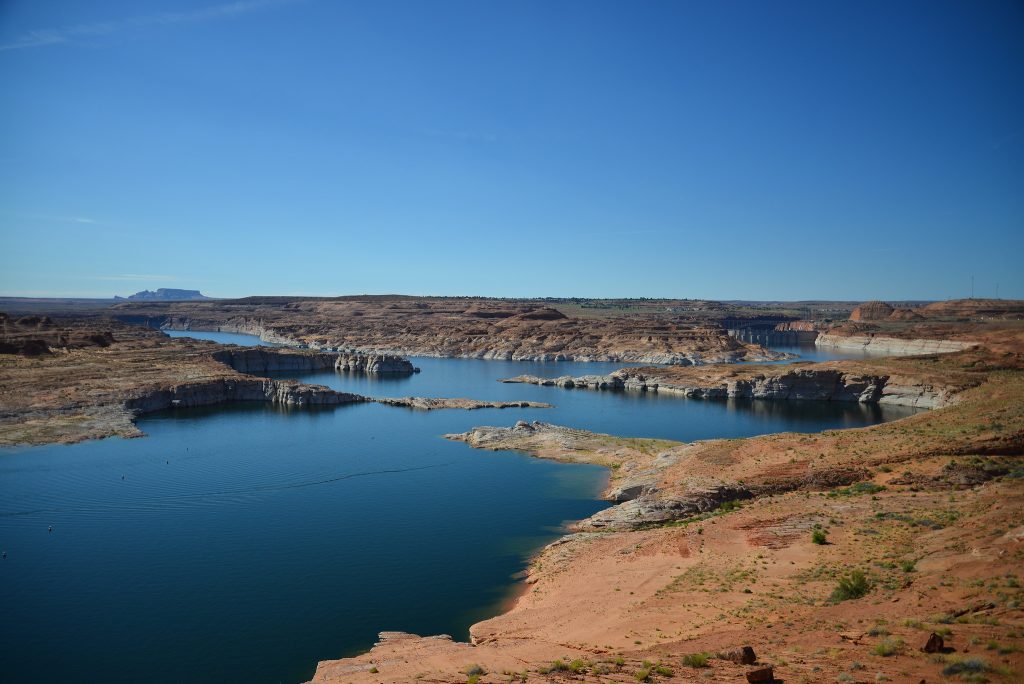
Mueller described the broader situation on the Colorado River basin — where water levels fell to 23% of normal this summer, and the seven basin states failed to reach a consensus on future operations of Lake Powell and Lake Mead, forcing federal government intervention — as “a little scary.” He added that the system has been operating in “crisis management, constantly running a system at its lowest level and reacting.”
“We need to help our leaders in our state and in the basin, focus on the future and rebuilding the resiliency within our system,” he said, adding that the U.S. Bureau of Reclamation’s warnings that the Glen Canyon Dam is only 10 feet above infrastructure failure “is a crisis of our own making, because we refuse to recognize the hydrologic trends that are out there that we didn’t manage for them over the last 25 years.”
“Let’s change that and let’s proactively manage the world we’re in,” Mueller said.






Support Local Journalism
Support Local Journalism
Readers around Glenwood Springs and Garfield County make the Post Independent’s work possible. Your financial contribution supports our efforts to deliver quality, locally relevant journalism.
Now more than ever, your support is critical to help us keep our community informed about the evolving coronavirus pandemic and the impact it is having locally. Every contribution, however large or small, will make a difference.
Each donation will be used exclusively for the development and creation of increased news coverage.