The Colorado River’s largest reservoirs plummet to all-time lows as plans for basin remain precarious
Lake Powell and Lake Mead surpassed records set in 2023 and 2022, respectively

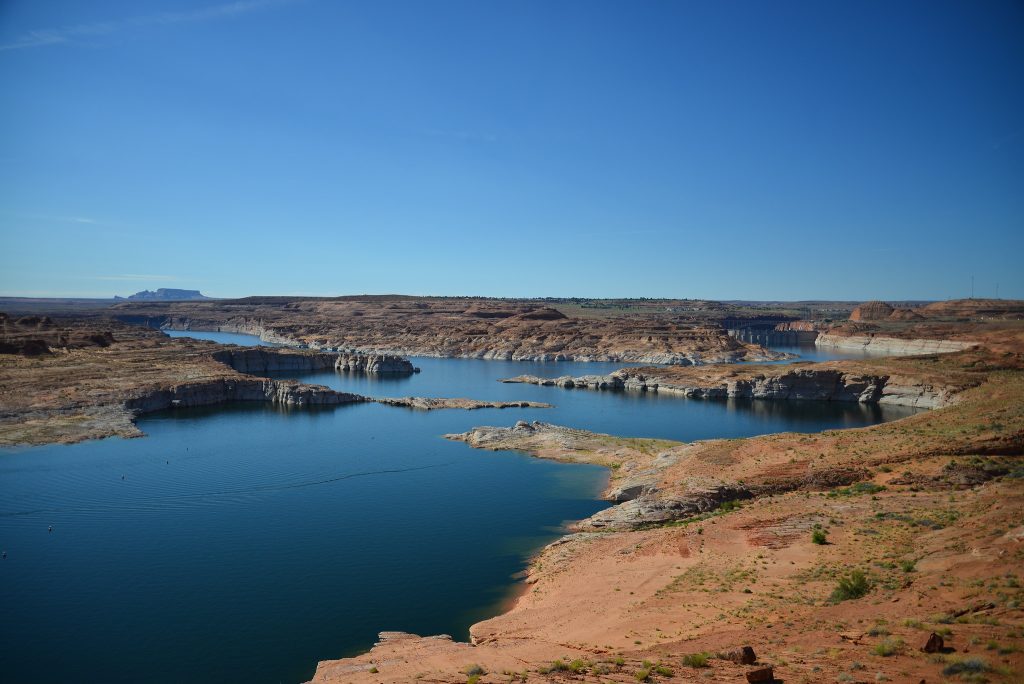
U.S. Bureau of Reclamation/Courtesy Photo
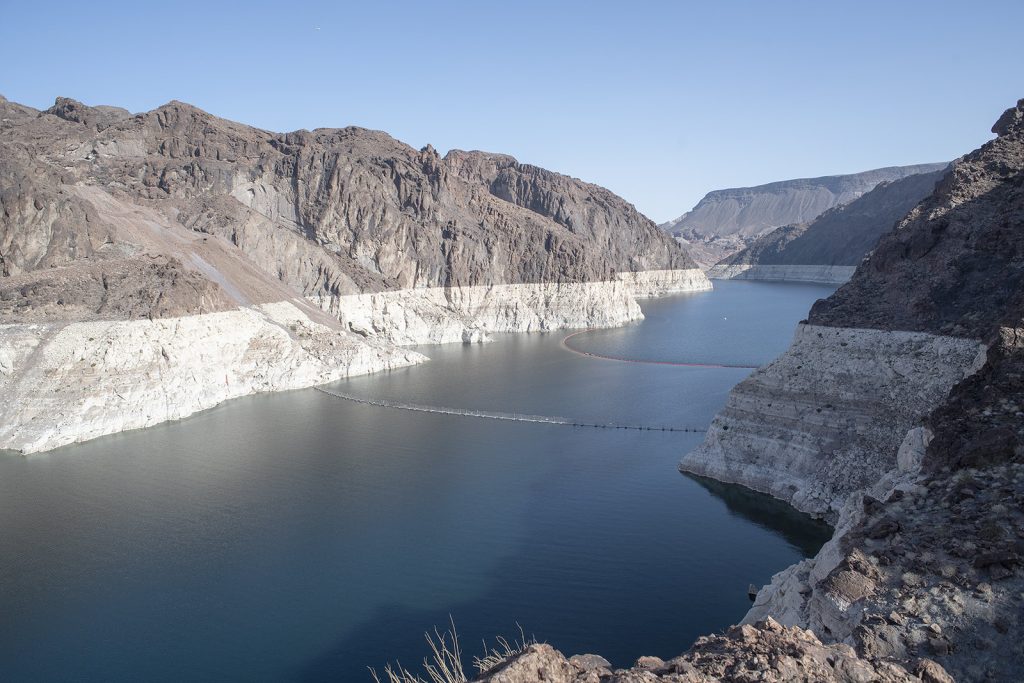
The two largest reservoirs in the Colorado River basin — Lake Powell and Lake Mead — hit new historic lows this past week as critical drought conditions persist across the West and future operations of the two storage pools remain somewhat uncertain.
Lake Mead was the first to plummet below its previous record, falling to 1,040 feet, or around 27% full, on Friday, Aug. 14. Lake Powell fell to an elevation of 3,519.91 feet on Saturday, hovering around 22% full and only 30 feet above the minimum power pool level, at which point the Glen Canyon Dam would halt hydroelectric power production.
While these levels surpass previous records set in 2022 for Mead and 2023 for Powell, a University of Colorado Boulder research brief reported that the last time the combined storage of these two reservoirs was this low was 1957, during construction of the Glen Canyon Dam and before Lake Powell was filled.
The dwindling reservoirs serve as a critical storage and supply for the Lower Colorado River Basin states of Arizona, Nevada and California, while water supply for the Upper Basin states — Colorado, Wyoming, Utah and New Mexico — is primarily driven by snowpack. Across these seven states and into Mexico, the Colorado River provides water for around 40 million people.
The current drought conditions and declining reservoir levels across the basin follow a winter when snowpack was 22% of normal in the Upper Basin, marking a historic low of its own. The U.S. Bureau of Reclamation reported that unregulated inflow into Lake Powell during June was 12% of the 1991-2020 average.
The federal agency, which manages the two reservoirs, announced in April that it would take emergency actions this year to attempt to prevent Lake Powell from hitting critical lows for power generation. This included limiting releases from the reservoir to the Lower Basin states but also releasing water from Flaming Gorge Reservoir, an Upper Basin reservoir in Utah and Wyoming.
Feds plot future management, but disagreements persist
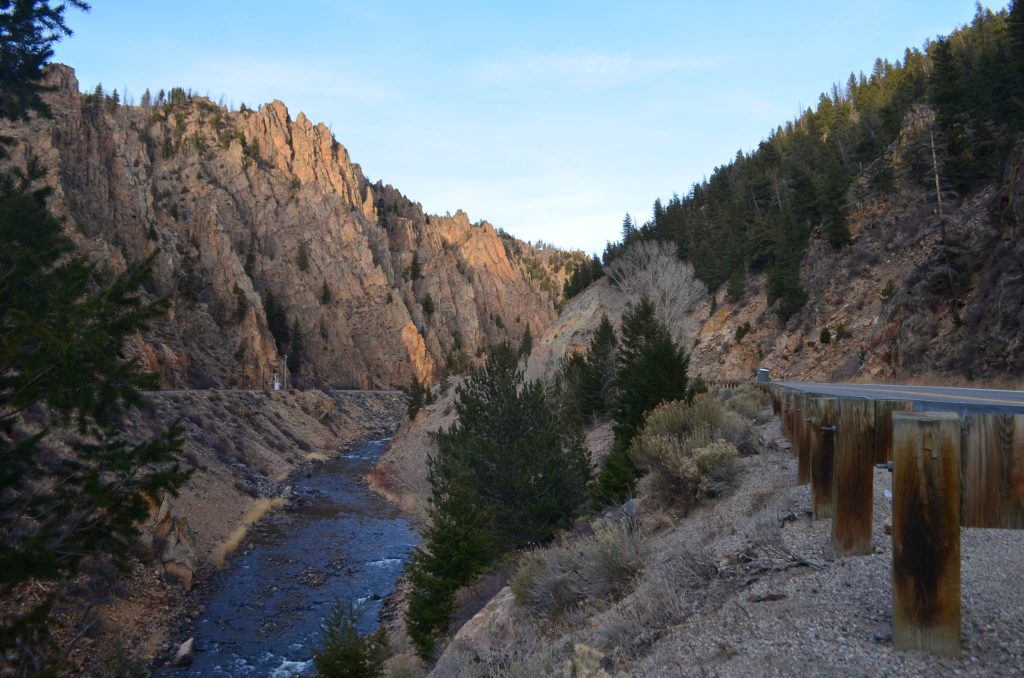
Amid this year’s drought and growing aridification of the basin, exactly what the long-term management of Lake Powell and Lake Mead will look like remains precarious as the reservoirs’ current operating guidelines are set to expire this year.
After the seven basin states failed to agree on future reservoir operations, the Bureau of Reclamation released its final environmental impact statement for the post-2026 operations, which will guide management in two-year increments through 2036.
“It isn’t a plan,” said Sarah Porter, director of the Kyl Center for Water Policy at Arizona State University’s Morrison Institute, on an Aug. 6 press briefing hosted by SciLine. “It is a decision-making framework.”
During the briefing, David Rosenberg, a professor at Utah State University’s Department of Civil and Environmental Engineering and Utah Water Research Laboratory, said this framework represents Reclamation making “a very clear statement of how they’re going to protect infrastructure and what that looks like.”
Rosenberg said this includes articulating the elevations at which the Bureau of Reclamation will sustain operations as well as a buffer volume to mitigate the risk of losing hydropower.
“By defining these protection elevations and these critical drawdown elevations and making specific statements about it, we’ve essentially defined the bottom line for the system,” Rosenberg said. “That, at worst case, we’re going to be here, we’re still going to be generating hydropower and all the other benefits for the reservoir. And the additional thing is by defining these elevations, we’re also giving users, all users, a lot more predictability about what they can potentially be seeing.”
Some, however, believe this predictability will be impacted by the Bureau of Reclamation’s plan to renegotiate operations every two years based on this framework.
“The effect of a two-year operating program is that the water users in the Lower Basin have only incremental certainty over what will happen,” Porter said. “So if you’re a city water manager that’s trying to balance the supplies in your portfolio and figure out your long-term water supply, even if you’re a farmer — many farmers have three- or five-year cropping plans — a two-year operating program is not the kind of certainty that is helpful.”
In an Aug. 3 statement, Andy Mueller, general manager for the Colorado River District, said the framework also fails to provide certainty for Colorado’s Western Slope.
“Instead, it keeps the Basin in a cycle of crisis management by requiring the operating guidelines to be renegotiated every two years while leaving unresolved legal risks that could further destabilize the system,” Mueller said.
Rosenberg said he believes taking two years at a time is appropriate given the unprecedented conditions facing the Colorado River.
“We don’t have any experience operating in these conditions and it’s gonna take a lot of experimentation, trying things, seeing what works, monitoring, evaluating, reassessing, trying to see how we can sustain through these really critical conditions,” he said. “… The situation can change very vastly from year to year; and we really need an adaptive and flexible framework.”
While the Bureau of Reclamation has made it clear that its framework and final environmental impact statement leave the door open for the seven basin states to still reach a consensus, Porter said that an agreement is unlikely due to “very fundamental disagreements” over the 1922 Colorado River Compact and the 1968 Colorado River Basin Projects Act.
“The low inflows didn’t help. They don’t help at all. If there were lots of water, it would be easier for people to be coming to new agreements about how to share it,” she said. “But I think that this situation was set up to not reach consensus. And I give a lot of credit to the principals of the seven states and their teams; they’ve worked very hard for years to try to get to an agreement, floating different ways of approaching the problems and simply couldn’t get to agreement.”
Porter added that the final environmental impact statement likely did not help. “I think, if anything, it has moved them farther away from consensus,” she said.
Throughout negotiations, the disagreements have been rooted in where cuts to water use are needed. While the Lower Basin states have called for system-wide mandatory cuts, the Upper Basin has argued that its supplies are already impacted by the hydrology and snowpack.
While Reclamation’s framework contemplates voluntary programs in the Upper Basin to conserve water, the Lower Basin states could be called upon to make cuts of up to 3 million acre-feet. Arizona Gov. Katie Hobbs said in a statement that the feds’ plan still contains “unacceptable options” and could force the state — which has some of the most junior water rights on the river — to “take the majority of draconian water cutbacks.”
While final in name, Porter said she believes the statement “is not going to be the last word.”
“I believe there will be legal challenges to some parts of the [final environmental impact statement],” she added.
Porter went on to say that the framework “doesn’t achieve the things that the basin really needs at this point.”
“It doesn’t place the basin on a path to stabilizing the system at all,” she said. “It really sort of tells how we’ll manage things when they get really bad, as they are right now. I mean, there’s some parts that discuss what to do if we have a gloriously wet year, but it’s really about how do we keep managing a system that’s on the edge. And it doesn’t resolve conflict at all.”



A bear walks into a bar …
On Aug. 10 at 10:45 p.m., a docile black bear was captured on film after entering Sant Ambroeus Aspen and climbing onto tables.




Support Local Journalism
Support Local Journalism
Readers around Glenwood Springs and Garfield County make the Post Independent’s work possible. Your financial contribution supports our efforts to deliver quality, locally relevant journalism.
Now more than ever, your support is critical to help us keep our community informed about the evolving coronavirus pandemic and the impact it is having locally. Every contribution, however large or small, will make a difference.
Each donation will be used exclusively for the development and creation of increased news coverage.