Glenwood Springs withdraws from SPEAR task force

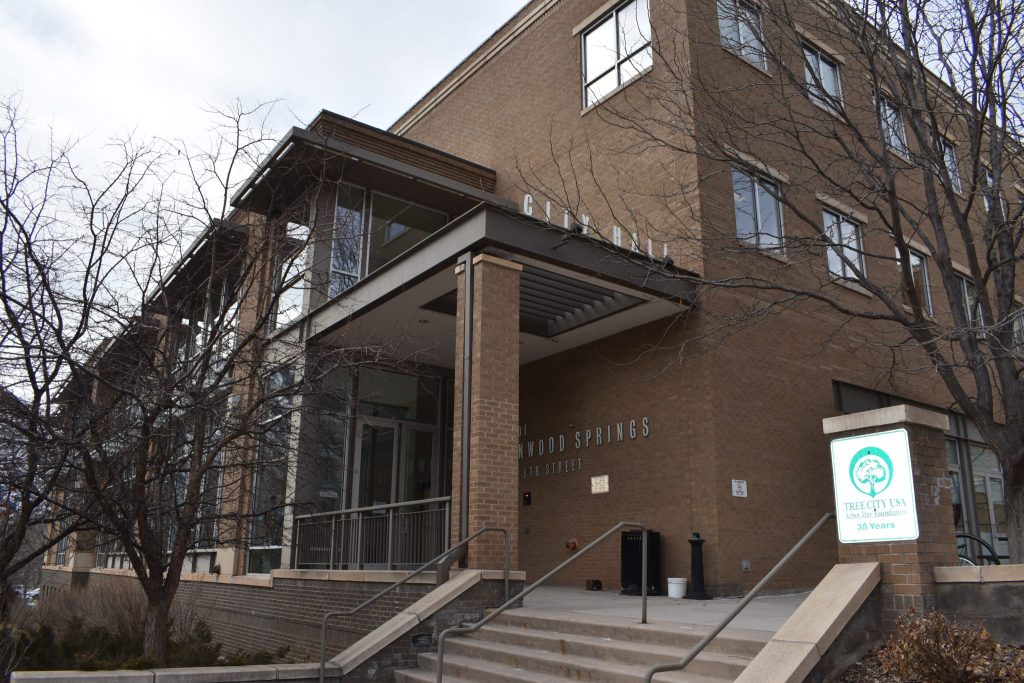
Andrea Teres-Martinez/Post Independent
Glenwood Springs City Council voted 6-1 on Thursday to formally withdraw from the Special Problem Enforcement and Response task force, known as SPEAR, after a lengthy discussion over public safety, state law and the city’s association with a regional law enforcement agreement that includes federal agencies.
The motion passed with support from Mayor Marco Dehm, Mayor Pro Tem Erin Zalinski, and councilors David Townsley, Sumner Schachter, Steven Smith and Mitchell Weimer. Councilor Ray Schmahl cast the lone no vote.
Before the vote, Glenwood Springs Chief of Public Safety Joseph Deras told council the city had already effectively stepped back from the task force years ago, even though it remained a signatory to the memorandum of understanding. He said Glenwood Springs once paid about $14,000 a year and assigned a detective to the team when it operated under its former name, TRIDENT, short for Two Rivers Drug Enforcement Team, but later withdrew its officer and stopped making payments because of staffing shortages, changing drug laws and questions about whether the arrangement still benefited the city. Since then, he said, Glenwood Springs has not attended meetings, participated in investigations or otherwise taken part in the task force.
Deras stressed that Glenwood Springs police have not used the task force for immigration enforcement and have not violated Colorado law restricting local cooperation with federal immigration authorities. Asked whether there had been any documented violations by the department, Deras responded, “There’s been an even number of zero.”
Even so, Deras told council the task force has remained a valuable tool when cases exceed the department’s internal capacity. “Absolutely, they’re a force multiplier for resources that we don’t necessarily have here,” he said.
He pointed to recent cases in which SPEAR assisted Glenwood Springs police, including armed domestic violence incidents, a narcotics case involving what he described as a portable manufacturing lab in a hotel room, a $500,000 cash seizure tied to suspected trafficking, and a child sexual assault investigation handled with Homeland Security Investigations. Deras also said the task force can provide specialized help in homicide, robbery, human trafficking and organized crime cases, particularly when suspects flee across state lines or investigations require resources beyond what the city can provide on its own.
Still, Deras said he was not advocating for one outcome over another. He told council his role was simply to provide information and carry out whatever policy direction the city chose.
The debate Thursday centered less on the conduct of the Glenwood Springs Police Department and more on the wording of the agreement itself.
City Attorney Karl Hanlon said the city’s concern was not that the agreement was currently violating state law on its face, but that its broad language about cooperation and information sharing with federal partners created unease and confusion.
“It wasn’t about bringing it into compliance,” Hanlon said. “It was about making it clear what the boundaries were as state agencies operating in Colorado in conjunction with federal agencies.”
Hanlon said the city asked for revisions that would better reflect Colorado law and clarify those limits, but those changes were rejected. He said that left city staff concerned not only about public perception, but also about the department’s reputation. “I want to make sure that there’s not a reputational hit to this department as a result of the language in that agreement,” Hanlon said.
That concern resonated with several council members.
Smith, who made the motion to withdraw, said the decision was not a criticism of the Glenwood Springs Police Department, which he described as exemplary. Instead, he said, the city needed to avoid being tied to agencies or conduct that could undermine public trust, especially after proposed language changes were turned down.
Zalinski said she was torn between the practical value of the partnership and the risk it posed to the city’s standing in the community.
“I’m sitting up here weighing … the benefit to the organization and public safety of our community, versus the potential hit to reputation,” she said.
Others focused more on the public safety tradeoff.
Townsley said Glenwood Springs’ location along Interstate 70 makes it vulnerable to crimes involving drugs, weapons and suspects moving quickly through town. He questioned whether the city should walk away from a potentially useful law enforcement resource without evidence that Glenwood Springs police had engaged in improper immigration cooperation.
Schmahl, the lone no vote, said he could not support reducing the department’s tools because of what he viewed as unsubstantiated concerns and appearances. He said he found it difficult to support diminishing the department’s capabilities based on opinions not grounded in fact.
Schachter said he struggled with the vote, citing competing concerns about public safety, reputational fallout and the possibility that formally withdrawing could reduce future cooperation from the task force. Still, he voted in favor of leaving the agreement.
One of the most consequential moments in the discussion came when Deras said Garfield County Sheriff Lou Vallario told him earlier in the week that if Glenwood Springs formally withdrew from the MOU, the sheriff would follow up with a letter stating the task force would no longer provide support because the city was no longer contributing to it. Deras said immediate help in a major emergency would likely still be available, but future day-to-day investigative assistance could become less certain.
City Manager Steve Boyd told council he, Deras and Hanlon were aligned in recommending withdrawal. Boyd said the city had entered the agreement largely for information sharing and the ability to tap a larger investigative team when needed, but staff ultimately concluded the benefits no longer outweighed the risks.
Thursday’s vote made official what Deras described as a practical separation that had already existed for several years.






Support Local Journalism
Support Local Journalism
Readers around Glenwood Springs and Garfield County make the Post Independent’s work possible. Your financial contribution supports our efforts to deliver quality, locally relevant journalism.
Now more than ever, your support is critical to help us keep our community informed about the evolving coronavirus pandemic and the impact it is having locally. Every contribution, however large or small, will make a difference.
Each donation will be used exclusively for the development and creation of increased news coverage.