Roaring Fork Schools retains accredited rating for 2nd straight year


Katherine Tomanek/Post Independent
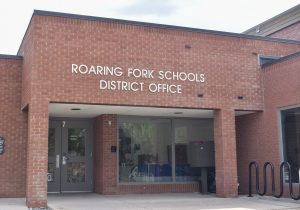
The Colorado Department of Education released its 2026 school and district performance frameworks Aug. 31, with Roaring Fork Schools retaining its “Accredited” status for the second consecutive year.
Twelve of the district’s 13 traditional schools earned the highest rating of “performance.” Glenwood Springs Elementary School was the district’s only traditional school not to receive the rating in 2026..
“These results give us an important snapshot of where we are as we begin year three of our five-year strategic plan.” RFSD Superintendent Anna Cole said in a release detailing the ratings. “Since launching the plan, our district moved into the state’s ‘Accredited’ performance category and has maintained that rating. We’ve also seen three of our schools move from ‘Improvement’ to ‘Performance’ during this period.”
Of the 12 schools that maintained the ‘Performance’ rating, eight increased their year-over-year scores. iCrystal River Elementary School increased 12.6%, Roaring Fork High School increased 8.1%, and Glenwood Springs Middle School increased 7.3%.
Glenwood Springs Elementary moved up 6% from “Priority Improvement” to “Improvement” since last year.
“The annual performance ratings are based on student achievement and growth on state assessments and postsecondary measures from the prior school year,” the release states. “The 2026 student assessment results for the Roaring Fork School show strong academic achievement and growth in math, while literacy results remain stable.”
According to RFSD Chief Academic Officer Jessica Piwko, math is the “clearest area of positive momentum.”
“Math is the district’s clearest area of positive momentum, with improving achievement and strong growth across all assessments,” she said in the release. “We are especially encouraged to see growth above the state among several student groups that have historically experienced opportunity and achievement gaps. RFSD adopted a new math curriculum in 2022, and we’re seeing the impact reflected in our student outcomes.”
The district’s median growth percentile on theColorado Measures of Academic Success (CMAS) increased from 55 in 2025 to 56 in 2026, while its PSAT 8/9 median growth percentile increased from 53 i to 58.5.
RFSD students also made gains in five of the six grade levels tested on CMAS math. Achievement on the PSAT 8/9 (increased 3.3 percentage points to 39.2%, while the SAT increased 4 percentage points to 30.3%.
The district’s CMAS achievement in English Language Arts (ELA) dropped slightly, but stayed consistent with the statewide trend — which showed a slight decline in ELA achievement. According to the release, achievement dropped 0.2% from 37.3% in 2025 to 37.1% in 2026.
“These results reinforce why literacy remains an important area of focus for our district,” Cole said in the release. “We began the process last year of selecting a new K-8 ELA curriculum because we have not seen the level of achievement and growth we expect for all students. This data affirms that direction and the importance of continuing that work.”
RFSD student achievement declined from 54% in 2025 to 49% in 2026, though it is still slightly above the district’s 2024 48.5 percentage.
Even through the dip, RFSD saw multiple bright spots in both CMAS and SAT results.
Third- and fifth-grade ELA achievement exceeded the statewide performance, and the district outpaced the state in ELA growth across all student subgroups.
The SAT Evidence-Based Reading and Writing (EBRW) also showed that RFSD increased from a median growth percentile of 49 in 2025 to 51.5 in 2026, which exceeds the state median growth percentile of 49. Multilingual learners and free and reduced lunch-eligible students also exceeded statewide average growth.
The release also points out that all RFSD middle schools showed strong growth in both ELA and math, and Roaring Fork High School students outperformed the state in both math and EBRW on the SAT — with 64.7% of students meeting or exceeding expectations in EBRW compared to 63% statewide, and in math 41.5% met or exceeded expectations, compared to 37% statewide.
“The bright spots we’re seeing across certain schools, grade levels, and student groups show us the pockets where our work is producing the outcomes we want for students,” Cole said in the release. “Now our task is to scale and amplify what’s working so all of our students experience that same growth and performance.”
To view the preliminary school and district performance frameworks for Roaring Fork Schools, and to compare to other districts, visit the Colorado Department of Education’s website.







Support Local Journalism
Support Local Journalism
Readers around Glenwood Springs and Garfield County make the Post Independent’s work possible. Your financial contribution supports our efforts to deliver quality, locally relevant journalism.
Now more than ever, your support is critical to help us keep our community informed about the evolving coronavirus pandemic and the impact it is having locally. Every contribution, however large or small, will make a difference.
Each donation will be used exclusively for the development and creation of increased news coverage.