Fishing closure lifted on Roaring Fork River, other rivers remain under restrictions
he afternoon voluntary fishing closure on the Roaring Fork River lifts on Thursday, Aug. 20

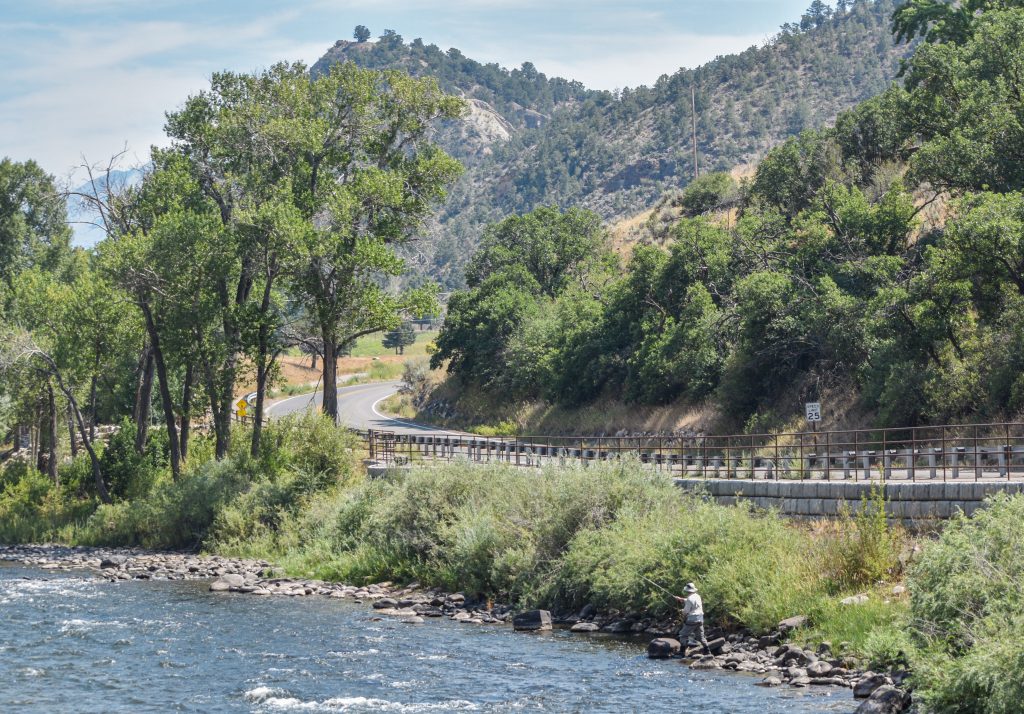
Jaymin Kanzer/Post Independent
As recent releases from Ruedi Reservoir have increased streamflows and decreased water temperatures, Colorado Parks and Wildlife is lifting the voluntary afternoon fishing closure on the Roaring Fork River on Thursday, Aug. 20.
The closure was initially implemented on July 17 to protect fish and minimize fish mortality as streamflows dropped well below 50% of normal and water temperatures exceeded a safe level for fisheries.
While Parks and Wildlife is lifting the Roaring Fork River closure, voluntary closures on the Colorado, Eagle, and Crystal rivers remain in place as extremely low flows and high water temperatures continue to persist in these waters. These closures include:
- Colorado River: A full-day voluntary closure is in effect from Red Dirt Creek downstream to the Colorado State Highway 13 bridge in Rifle. Water temperatures are exceeding 71 degrees, and flows remain critically low. Additionally, an afternoon voluntary closure is in place from the Windy Gap Dam downstream to the Williams Fork confluence from noon to midnight.
- Eagle River: A full-day voluntary closure is in effect from Lake Creek in Edwards downstream to the Colorado River confluence. Daily temperatures have been peaking at 77 degrees in Gypsum and 74.5 degrees in Wolcott.
- Crystal River: A full-day voluntary closure is in effect from mile marker 64 on State Highway 133 downstream to the Roaring Fork River confluence. Flows are declining rapidly and ar, e expected to drop to a level at which fish movement is limited in the near future. Crystal River flows are currently less than 10% of normal for this time of year.
Anglers are asked to adhere to these voluntary closures to help conserve fish populations and avoid the need for mandatory closures. Some mandatory closures are in place across Colorado, including a full-day restriction along the Yampa River downstream of Stagecoach.
Parks and Wildlife’s regulations allow the agency to implement these closures based on temperatures, streamflows, declining fish condition and dropping oxygen levels in the water. These closures are meant to conserve fish populations by removing angling pressure when conditions are already stressed in fisheries.
Once river temperatures rise above 71 degrees Fahrenheit, oxygen levels in the water drop. As a result, fish can stop feeding, become more susceptible to diseases, and, ultimately, die. When streamflows drop below 50% of the daily average, it can concentrate fish into small areas, increasing competition for food and making them more susceptible to angling pressure and disease.
In these conditions, fish struggle to recover after being caught and released, according to Parks and Wildlife.
For a complete list of voluntary river closures, visit Parks and Wildlife’s 2026 Weather and Drought Closures tracker on CPW.State.CO.US/bodies-water-finder.


A bear walks into a bar …
On Aug. 10 at 10:45 p.m., a docile black bear was captured on film after entering Sant Ambroeus Aspen and climbing onto tables.



Support Local Journalism
Support Local Journalism
Readers around Glenwood Springs and Garfield County make the Post Independent’s work possible. Your financial contribution supports our efforts to deliver quality, locally relevant journalism.
Now more than ever, your support is critical to help us keep our community informed about the evolving coronavirus pandemic and the impact it is having locally. Every contribution, however large or small, will make a difference.
Each donation will be used exclusively for the development and creation of increased news coverage.