Colorado ski destinations see slow start to winter bookings
Ski resorts are facing lower bookings and revenue for the first few months of winter compared to what the Colorado locations saw this time last year

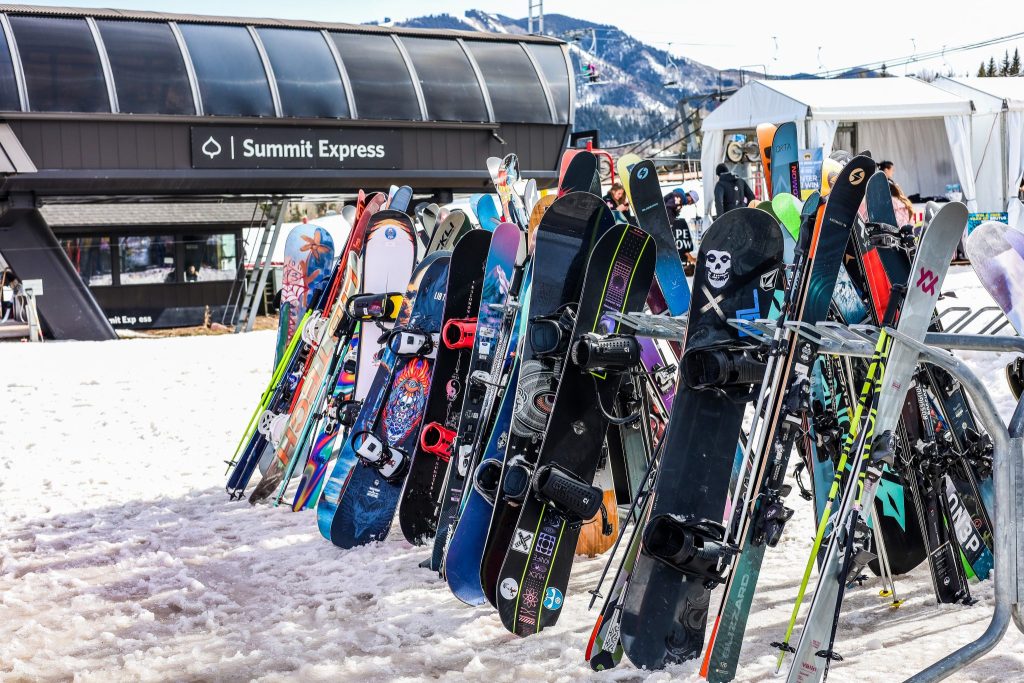
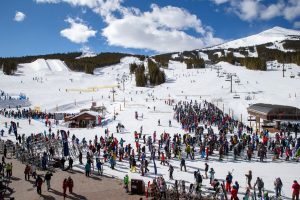
Austin Colbert/The Aspen Times
Colorado’s early winter tourism season is off to a sluggish start as lingering effects from poor snow and an uncertain economy leave ski destinations with fewer reservations on the books.
Bookings to Colorado destinations made in August for arrival during the first few months of the winter season — November, December and January — were 10.9% lower than last year, contributing to what has been an underwhelming start to early winter bookings, according to the latest market briefing report released by Inntopia.
Overall occupancy for November through February is also down a notable 4.4% as of Aug. 31. Although average daily rates for the first few months of winter have seen a slight year-over-year decrease of 2% in an attempt to attract more bookings, “it’s not really working,” said Tom Foley, director of Business Intelligence for Inntopia.
As a result, revenue for Colorado’s early winter season is down a sharp 6.1% so far, with December seeing the steepest drop of 11.1%.
“We have to frame all of that with [the fact that] it’s early,” Foley said. “The snow won’t even start to fly for a couple of months.”
Historically, booking data has shown that poor snowfall during a winter season can negatively impact advanced reservations for the following winter — known in tourism terms as a “snow hangover,” according to Foley.
While Colorado destinations are still experiencing the effects of last winter’s poor snow conditions heading into the colder months, Foley said resorts are facing another compounding issue: a tumultuous economic environment.
“We’re not just following a bad season though — we’re following the worst in living memory for many skiers and riders,” Foley said. “We’re not helping it with the fact that the economy is so uncertain right now.”
Low consumer confidence dampens early winter bookings
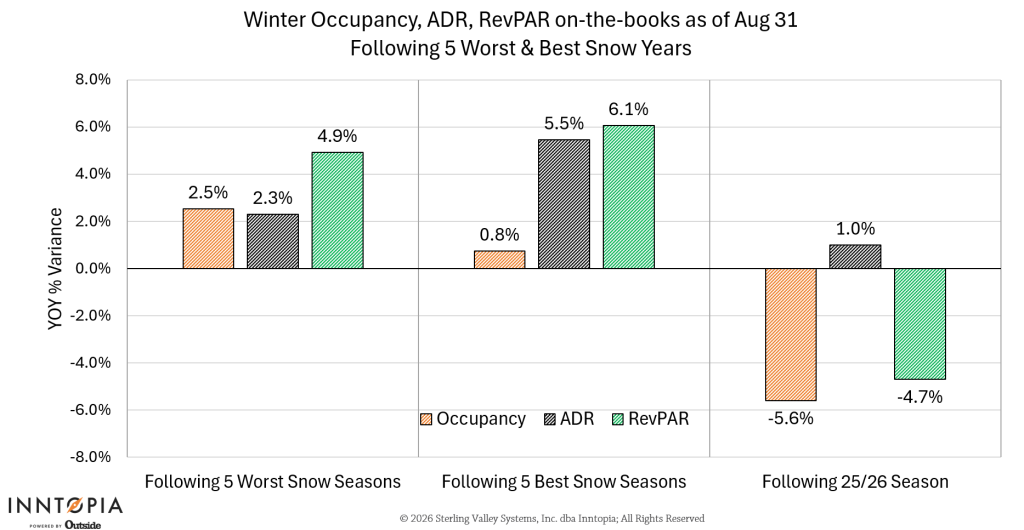
An Inntopia analysis looking at western states shows that, during winter seasons following the five worst snow years over the last 24 years, occupancy was up an average of 2.5%, rate was up 2.3% and revenue was up 4.9% as of August. Because resorts have historically seen positive growth in these areas following a bad snow year, last month’s drops in occupancy, rate and revenue recorded for the upcoming winter months suggest the slower-than-usual bookings are a result of more than just a bad snow year.
“Our fill-in to get to historic norms — following bad years, even — is a big lift at this point,” Foley said. “There’s a 9.5% difference between where we are right now and where we would typically be after a bad year.”
The Federal Reserve raised its benchmark interest rate in September, which has since played a part in pushing the average 30-year mortgage rate to its highest level in over a year and a half. New York Federal Reserve President John Williams said Sept. 24 that another rate hike could be on the table before the end of the year.
Foley added that wage growth slowed to 3.1% last month — its lowest level since February 2020. Wage growth is also below the national inflation rate for the fifth time in the last six months, putting pressure on consumers.
“With airfares up more than 23% and gas up 27%, inflation is outpacing wages for the fifth straight month, and that is making getting to the slopes a significantly more expensive proposition than one year ago — before we even factor in the cost of lodging, food and lift tickets,” Foley said in the August Inntopia report.
The Consumer Confidence Index and the Consumer Sentiment Index both declined by varying degrees in August, with respondents in both surveys citing concerns about inflation, pessimism about the ongoing Iran War and job security.
“Consumer confidence is hanging … well below the 100 points needed for consumers and suppliers to be on an even keel about where pricing power lives,” Foley said. “It’s been that way for 24 months. It’s not going anywhere.”
Early winter forecasts suggest Colorado will get strong early-season snow, but later months show equal chances of above- or below-average snowfall, thanks to strengthening El Niño conditions.
Regardless of whether snow conditions in Colorado end up falling below average, meteorologists say the state is almost certain to still get more snow than last year, which could be enough to attract more bookings.
“We have seen in the past …that good snow will overcome economic pressures almost always, because skiers and riders are so passionate about what they do,” Foley said. “So I think we’re doing a bit of a ‘wait and see,’ but the wait and see has been … more intense relative to the issues last year [because of] extreme uncertainty across pretty much every sector of the economy.”
Summer rates, revenue hold strong
Consumers waiting longer to book trips could also be a sign that they’re concerned about the value proposition, which is why the more affordable fall months have been a bright spot for August bookings.
More affordable rates for the end of the summer prompted a lively booking pace during August for the remaining two months of the travel season. Colorado bookings made in August for arrival in September were up 15.5% compared to last year, while bookings for arrival in October were up 8.5%.
On the other hand, reservations made in August for arrival that same month were down 26.7% in Colorado, showing that more visitors were willing to hold off their end-of-summer vacations for a more attractive offer, Foley said.
The length of the bookings to Colorado destinations during September and October were also higher than last year as visitors saw an opportunity to get better value for their dollar.
“People are taking a budget that might have been set for three nights in August and saying, ‘Hey, I can get four nights in September for this. I want the value proposition,'” Foley said.
“The decrease for the typically high-volume month of August was a setback for lodging properties, but the strong occupancy growth for the autumn is taking some of the sting out of that loss,” Foley added.






Support Local Journalism
Support Local Journalism
Readers around Glenwood Springs and Garfield County make the Post Independent’s work possible. Your financial contribution supports our efforts to deliver quality, locally relevant journalism.
Now more than ever, your support is critical to help us keep our community informed about the evolving coronavirus pandemic and the impact it is having locally. Every contribution, however large or small, will make a difference.
Each donation will be used exclusively for the development and creation of increased news coverage.