St. Mary’s Glacier, a Colorado landmark, has melted amid a record-hot summer
The perennial snowfield’s disappearance comes on the back of Colorado’s worst snowpack on record and a historically hot summer

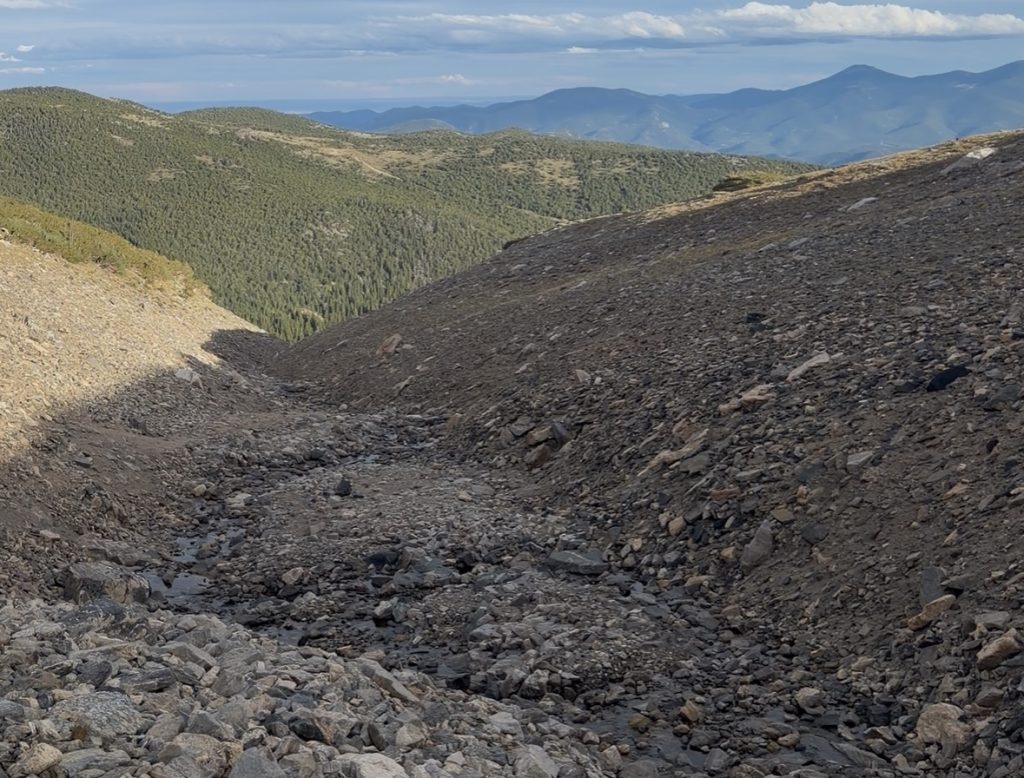
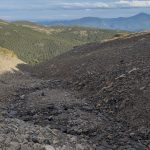
Jeremy Elder/Courtesy photo
St. Mary’s — a perennial snowfield that scientists say is a remnant of the glaciers that dug Colorado’s mountains — has melted out for what appears to be the first time in recorded history.
Idaho Springs resident Jeremy Elder has lived about five miles from the snowfield since purchasing a house on Fall River Road about three years ago. On Monday, Sept. 14, Elder hiked up to the cool, high-Alpine valley that protected the snowfield for centuries — but for the first time, the valley was barren of snow.
“I was surprised to see absolutely nothing,” Elder said. “Not seeing any snow up there — it was honestly pretty sad to see that. It’s been such a hot summer and with the weak snowpack last winter, I feel like all those things contributed. It’s just getting hotter and hotter and we’re seeing the direct effects here.”
Sometimes referred to as St. Mary’s Glacier, the snowfield that existed in this valley has long been one of the easiest patches of year-round snow to access in Colorado. The trailhead is just 30 minutes off Interstate 70, with a 1.5 mile hike to the valley where the snowfield had long resided.
St. Mary’s persisted for hundreds of years, always known to last through the summer until winter snowstorms could replenish it. Historic newspapers show the snowfield was there when miners established the nearby town of Alice in the late 1800s and became a fascination of Colorado’s burgeoning tourism economy in the early 20th century.
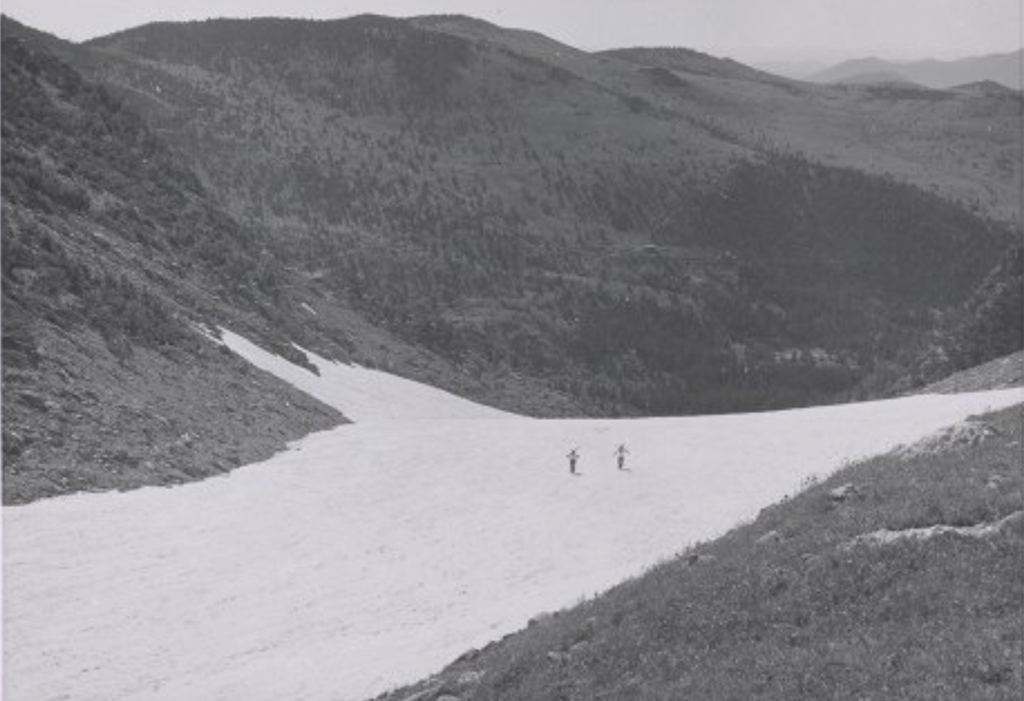
A landmark of Colorado
One article published April 5, 1902, in the Idaho Springs Siftings described St. Mary’s as a site that “would attract every tourist that will cross the continent — and a glacier that could furnish the whole world with the purest of ice on any day of the year.”
St. Mary’s became the site of a resort, including an adjacent ski area that operated for about 50 years, until it closed in 1986. For many years, the glacier hosted annual Fourth of July ski competitions that attracted thousands.
Skiers thirsty for summer turns, and invariably described as “hardy,” “fanatical” or just “crazy,” have always flocked to the spot. Today, many Colorado skiers who have made a tradition of linking up decades-long streaks of skiing every month of the year visit St. Mary’s in the summer for its ease of access.
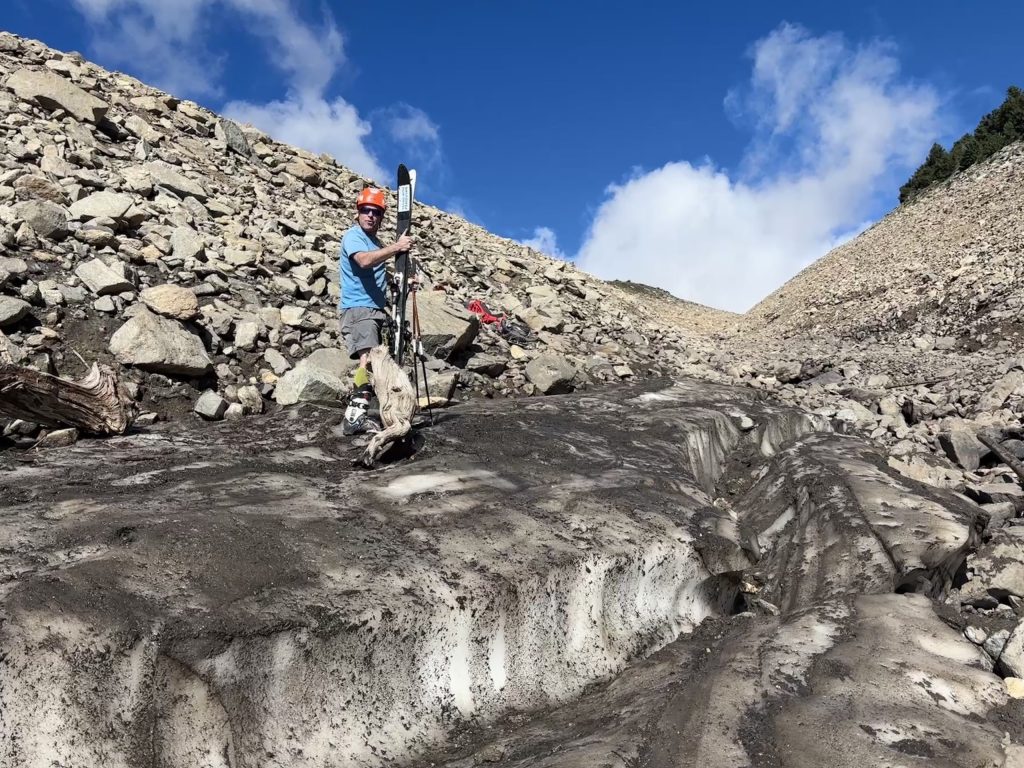
But those who have frequented the spot in the 21st century have watched the snowfield slowly shrink as climate change has tilted the scales toward hotter temperatures that have whittled the snowfield down, year by year.
Golden resident Jordan Lipp, a skier who has visited St. Mary’s more than 100 times over the past 30 years and has always documented his trips in journals, began to realize that the snowfield would disappear this summer.
Lipp said he has returned to St. Mary’s twice since last skiing the snowfield on Sept. 1. On Saturday, Sept. 12, he returned to find the snowfield un-skiable with only “two tiny pieces of snow left.”
When he hiked back up on Wednesday, Sept. 16, the last of the snow was gone.
A global glacial retreat
St. Mary’s retreat is part of a larger global trend, as scientists say glaciers and snowfields across the world are shrinking at a rapid rate as humans warm the climate by burning fossil fuels, which release heat-trapping gases into the atmosphere.
Worldwide, glaciers have shrunk every year for the past 39 years — with each of the past three decades bringing bigger declines in ice than the decade before, according to the National Oceanic and Atmospheric Administration.
Average annual temperatures in Colorado have risen about 2.3 degrees Fahrenheit from 1980 to 2022 and this summer was 3.4 degrees above the 1991-2020 average, according to the Colorado Climate Center.
Elder, a commercial and travel photographer, has traveled all over the world, photographing glaciers in Alaska, Iceland, Patagonia and New Zealand. He said everywhere he goes, he hears a recurring theme: Glaciers and year-round snow is disappearing.
“I’ve always been fascinated by glaciers and the beauty of glacial ice and the patterns it forms,” Elder said. “But I’ve been sad to see that everywhere I go, they’re shrinking. I have a feeling that once I have kids, those kids won’t be able to see some of these glaciers. If they do get to see them, they’ll just be small remnants.”
He added that if he ever has grandchildren, there will be few — if any — glaciers left for them to see.
“I think people have to stand up for what they believe in to protect the world that we have, to protect the beautiful state that we have,” Elder said. “Because if we don’t, there’s some big corporations that are going to come and, quite frankly, take as many of the resources that they can — and it’s just going to have negative ripple effects down the line.”
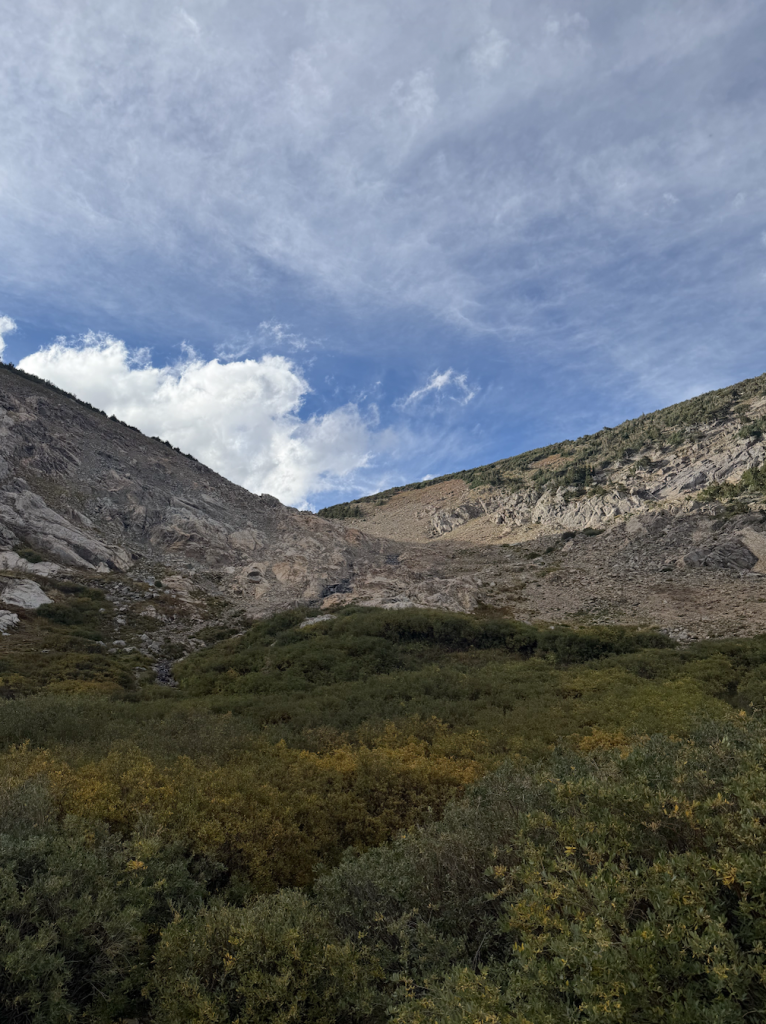
The ghost of a glacier
Sheltered in the valley below James Peak, the snowfield known as St. Mary’s will reform this winter when snow falls.
But amid a warming climate, scientists say snowfields like St. Mary’s will have a harder and harder time reestablishing themselves, and are expected to melt out sooner and sooner as the years go on.
“It’s not at all impossible to rebuild these things,” University of Colorado Boulder Professor of Geological Sciences Robert Anderson said. “In fact, they’ve been rebuilt many, many times over the course of the last couple million years. It’s just that we’re accelerating at the rate at which these are being lost.”
When he was hiking back home down the snowless valley on Monday, Elder said he encountered a tourist who asked, “How far is it to the glacier?”
He said he had to break the news to the out-of-stater that the snowfield was usually right where they were standing, but had melted away.
“I think a lot of people are still coming to try to see the glacier and they’re going to be a bit disappointed when they get up there and it’s gone — even though it’s still beautiful without it,” Elder said. “But it definitely changes the feeling up there.”









Support Local Journalism
Support Local Journalism
Readers around Glenwood Springs and Garfield County make the Post Independent’s work possible. Your financial contribution supports our efforts to deliver quality, locally relevant journalism.
Now more than ever, your support is critical to help us keep our community informed about the evolving coronavirus pandemic and the impact it is having locally. Every contribution, however large or small, will make a difference.
Each donation will be used exclusively for the development and creation of increased news coverage.