Proposition NN puts Colorado’s TABOR system before voters again to increase school funding. Here’s what’s at stake.
If passed, the measure would reduce or eliminate TABOR refunds for Colorado taxpayers in exchange for improving teacher salaries and classroom conditions [Featured: Back2School.jpg]

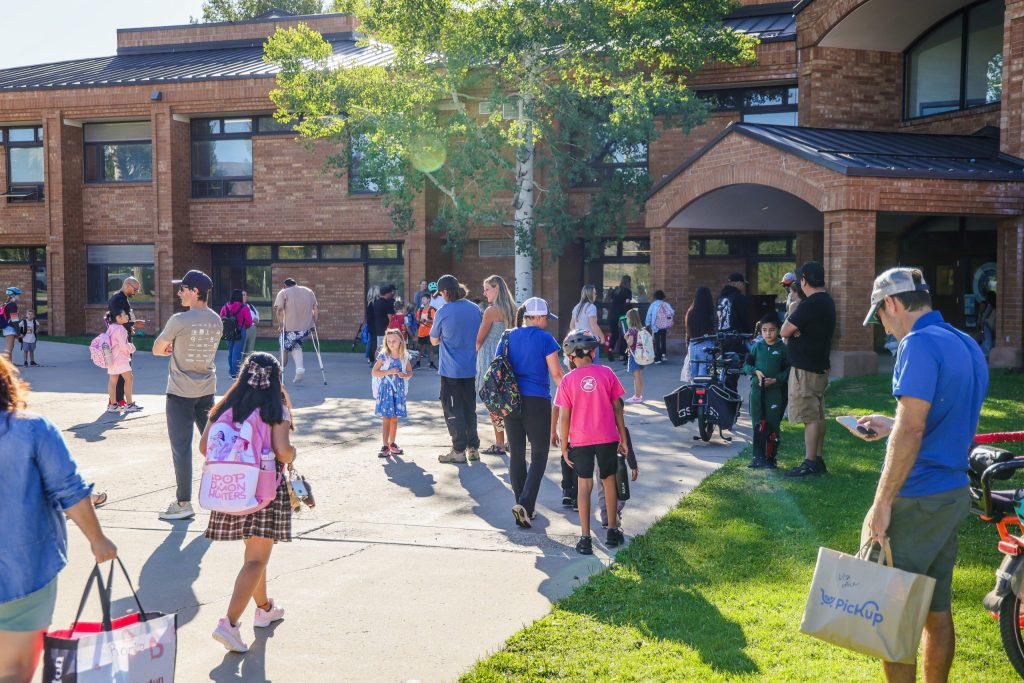
Chris Dillmann/Vail Daily
A ballot measure headed to voters in November is asking Coloradans to forgo tax refunds to improve teacher salaries and shrink classrooms. Supporters and opponents disagree, however, on whether or not the measure would count as a tax increase — and whether it would be an efficient use of taxpayer money.
Proposition NN — referred to the ballot by Democrats through Senate Bill 26-135 — asks voters whether the state can retain and spend up to $4.6 billion more in tax money than the existing Taxpayer’s Bill of Rights cap allows annually.
Over the next 10 years, the revenue retained through Proposition NN would go toward increasing K-12 education funding by 2% annually, which proponents say will enable districts to raise teacher pay, reduce class sizes and expand career and technical education.
The campaign supporting Proposition NN — Yes for Colorado Kids — says the measure would increase state K-12 funding by up to 50% over the next decade, following years of chronic underfunding for public schools.
“The level of inadequacy in our funding here in Colorado mainly means that we simply cannot keep educators,” said Colorado Education Association President Kevin Vick. “When you’re talking about that level of shortfall, a lot of that is borne on the backs of the education employees themselves (through) poor pay, an erosion of benefits and being incredibly short staffed in a lot of areas. The workload is overbearing.”
Specific restrictions for education phase out after 10 years, however, leaving behind what opponents argue is a “blank check” for lawmakers.
TABOR, approved by voters in 1992, limits the amount of money lawmakers can spend each year based on the rate of population growth plus inflation. The new cap proposed in Proposition NN would permanently raise the state’s spending limit under TABOR, reducing or eliminating refunds for Colorado taxpayers.
A fiscal impact statement published by the Colorado Legislative Council Staff in September estimates that Proposition NN would reduce TABOR refunds by $329.9 million in fiscal year 2026-27 and $521 million in FY 2027-28. For a single filer making $100,000, that would translate to a refund reduction of $28 in 2027 and $68 in 2028, or a reduction of $56 in 2027 and $96 in 2028 for joint filers.
Supporters of Proposition NN argue the TABOR cap has limited the state’s ability to adequately fund education, while those in opposition argue that it bypasses the voter protections TABOR was built on.
“Our concern with Proposition NN is that this directly attacks the Taxpayer Bill of Rights,” said Kristi Burton Brown, executive vice president for the Advance Colorado Institute and a board member with the Colorado State Board of Education. “It would permanently take taxpayers’ refunds under the Taxpayer Bill of Rights and give them over to the state government to the tune of $4.6 billion a year, so you’re permanently losing your paper tax refund.”
Over the last 7 years, three other ballot measures that would have allowed the state to retain more revenue under or above the TABOR cap have been rejected by voters, including one that would have increased funding for public and higher education.
It’s Proposition NN’s straightforward rules and transparency requirements that will win over voters this time, Vick said. The ballot measure requires state government and individual school districts to publish how they spend retained TABOR funds every fiscal year.
“It’s very short and very simple to understand,” Vick said. “Voters are not being tricked. They’re not being manipulated. It says exactly what it intends to do.”
Opponents of Proposition NN, however, say the previous failed ballot measures are a clear indicator that Coloradans don’t want to permanently forgo their TABOR refunds.
“Instead of the government being responsible with the money they already have, they’re saying ‘give us more’ yet again, and that’s a problem for a lot of working families around the state,” Burton Brown said.
Colorado’s public school funding challenges

Despite recent budget increases for public education in Colorado, advocacy groups say funding continues to lag behind adequacy targets, with several schools still recovering from the elimination of the budget stabilization factor — a Great Recession-era mechanism that allowed the state to skirt its constitutional funding obligation to schools for more than a decade.
A 2024 study commissioned by the Colorado Department of Education found the state had a gap of $4,600 per student between the “funding needed to provide students with
an adequate education” and existing levels of spending. The study also estimated that Colorado schools were being underfunded by $4.1 billion annually.
Data published by the Colorado Education Association — the largest union in the state — ranks Colorado 50th in the nation for teacher pay competitiveness and retention.
Michael Agostinho, president of the Eagle County Education Association and an educator at Eagle Valley High School, said his school district has had to cut full-time positions over the past year as a result of declining enrollment and local budget constraints, in addition to implementing a pay freeze earlier in the year.
For some schools in the district, this has translated to the loss of mental health resources and interventionists who provide academic, behavioral and developmental support to students. The district has also had to go without some specialist educators, such as music teachers.
“I talked with a wonderful counselor on Tuesday who works in four different schools. That’s a big strain,” he said. “We need to have more money that’s put into those school-based therapy programs because kids are struggling. … I think there are kids that are falling through the cracks.”
Some groups opposing Proposition NN argue schools should prioritize reorganizing their existing budgets to help educators before they turn to taxpayers.
A 2024 survey conducted by the U.S. Census Bureau ranked Colorado at 27th in the nation for public education spending per pupil, sitting lower than the national average in per-pupil spending by roughly $1,700. However, Colorado continues to rank among the lowest states for federal funding received per student.
“The claims that somehow we’re starving education in Colorado are just fallacious,” said Penn Pfiffner, chair of advocacy organization The TABOR Committee and its issue committee, Your Family’s Future Alliance.
Other groups say it’s unreasonable to spend more taxpayer money on education when middle school literacy scores and some grade-level cohorts continue to lag behind pre-pandemic benchmarks.
“More money doesn’t always equal better results,” Burton Brown said. “We have seen Colorado education funding increase recently by quite a bit, and yet our achievement scores pretty much stay the same. I think a big reason for this is that we don’t have our formula right when it comes to the percent of money that goes into the classrooms versus the percentage of money that’s spent on administration.”
Data for the 2022-23 school year from the National Center for Education Statistics shows Colorado devoted 53% of its K-12 expenditures toward instruction, 6 percentage points below the national average of 59%. The state also spent a larger portion of its budget on administration expenses in 2022-23, about 11% compared to the national average of 8%.
“We absolutely believe teachers should be paid more, but we don’t think you need to take more from working families right now in Colorado,” Burton Brown said.
Supporters of the bill, however, argue that increasing K-12 funding could help keep quality educators in classrooms, building the kind of consistency required for students to achieve notable improvements in their work.
“The way you improve student learning is you make sure that there’s a team of educators that stays together in a school, and is able to develop their skills and build a curriculum that improves over time,” Vick said. “Because we have such high turnover — we are actually the highest turnover state in the nation — every year, most of our schools are having to start over again trying to get new people up to speed. When you have that situation, you can’t grow because nothing’s sustainable at that point.”
Would Proposition NN raise taxes?
Proponents of the ballot measure argue that Proposition NN would provide a long-term source of additional funding to chronically underfunded K-12 schools without raising taxes, since the measure wouldn’t alter tax rates or tax brackets.
“We are not changing TABOR in any way,” Vick said. “We are simply putting forth a question within the rules of TABOR to begin with. Secondly, we’re not changing any tax rates at all. Nobody will pay a dime more in their taxes than they are currently.”
Groups opposing Proposition NN argue that claiming the ballot measure wouldn’t increase taxes is “disingenuous and dishonest” since the state would retain money that would have otherwise been refunded to taxpayers, said Kim Monson, president of the Colorado Union of Taxpayers.
“Proponents are trying to fool the voter by confusing ‘no new tax rate increases’ and saying, ‘That’s the same as no new taxes,'” Pfiffner said.
For the first 10 years, Proposition NN would require retained revenue to go toward K-12 education and programs supporting children. After that, the Blue Book states spending from Proposition NN could be used for “K-12 education and any other purposes to be determined by the state legislature.”
“I think a lot of people are missing that Proposition NN is a blank check to the legislature,” Burton Brown said. “That’s not being honestly communicated to voters by the ballot language or by supporters.”
Vick said he believes education would continue to be the prominent focus for the legislature’s TABOR spending plans after the 10 years, since school budgets will still be under adequacy targets by the time those spending requirements expire.
Funding projections under Proposition NN
Proposition NN would allow the state to hold onto funding equal to the most the state has spent on K-12 funding through its general fund for 10 years, which is forecast to be around $4.6 billion by the end of fiscal year 2025-26, but could vary based on how well the economy performs each year.
The state is projected to collect nearly $21 billion in revenue subject to TABOR in fiscal year 2026-27 and more than $22 billion in fiscal 2027-28, according to a September legislative analysis. That would put revenue above the current TABOR limit by $483 million in 2026-27 and $674 million in 2027-28. The measure would allow the state to redirect this surplus from taxpayers to education.
Legislative analyses estimate that the new K-12 funding mechanism created by Proposition NN could grow to roughly $2 billion annually by the end of the 10 years, depending on state revenue. Opponents of the ballot measure argue that because the cap is out of reach, the impacts to TABOR refunds would be permanent.
“There’s never been a TABOR tax refund that has met the $4.6 billion dollar cap that Proposition NN basically raises,” Burton Brown said. “…We also believe that’s why the number was intentionally set basically about a billion dollars higher than any total amount of TABOR refunds has ever been.”
Opponents — citing a nonpartisan estimate reported on by Colorado Politics and Rocky Mountain Voice — say that the average Colorado taxpayer could forgo roughly $7,300 in TABOR refunds over 10 years if Proposition NN passes. However, the state’s most recent analysis does not provide a 10-year taxpayer refund estimate, saying revenue forecasts are unavailable beyond fiscal year 2027-28.
“The fiscal note [doesn’t] go out any further than 2027-2028. We need to know what those forecasts are,” Monson said.
Supporters outfunding opposition
Yes for Colorado Kids, the committee supporting Proposition NN, has raised over $2 million and spent roughly $800,000 in support of the ballot measure as of the most recent filing period ending Sept. 16. Major contributors include the Colorado Fund for Children & Public Education and the Colorado Education Association, as well as local chapters like the Littleton, Cherry Creek, Boulder and Pueblo education associations.
Your Family’s Future Alliance, a campaign committee opposing the ballot measure as well as Amendment 87, has raised over $15,000 — contributed by mostly individual donors — and spent $10,000 as of Sept. 16.
Five other multi-purpose issue committees have registered in opposition to Proposition NN, including A Brighter Colorado and Keep Colorado Affordable, both registered to the same agent.
Election day is Nov. 3. Ballots will be mailed to voters beginning Friday, Oct. 2. The last day to submit a voter registration application and still receive a ballot in the mail is Oct. 26.









Support Local Journalism
Support Local Journalism
Readers around Glenwood Springs and Garfield County make the Post Independent’s work possible. Your financial contribution supports our efforts to deliver quality, locally relevant journalism.
Now more than ever, your support is critical to help us keep our community informed about the evolving coronavirus pandemic and the impact it is having locally. Every contribution, however large or small, will make a difference.
Each donation will be used exclusively for the development and creation of increased news coverage.