Roaring Fork Safe Passages launches wildlife data program for the valley
The program coincides with participation in the first national roadside wildlife count event

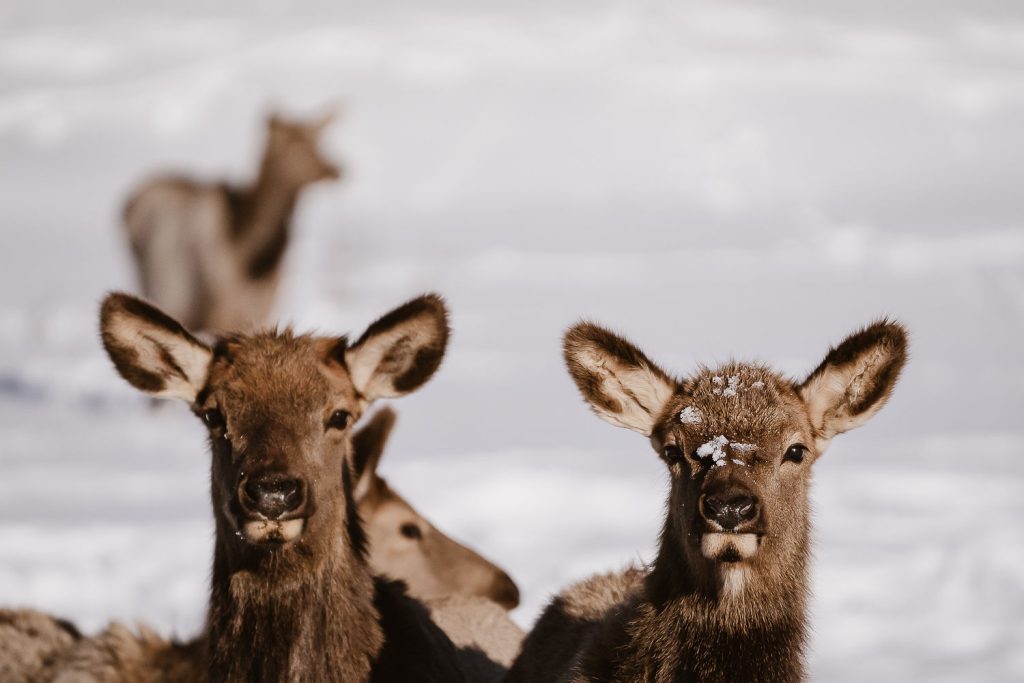
Tamara Susa/Courtesy photo
Roaring Fork Safe Passages has launched a new citizen science program for anyone traveling Highways 82 and 133 to help build a complete picture of how wildlife-vehicle collisions are impacting the Roaring Fork Valley.
The program comes as part of the nonprofit’s work toward establishing local wildlife crossings.
“This is a concrete and very impactful way everyone can help continue to make the cause for wildlife crossings here in the valley,” Tucker Vest Burton, who spearheads Community Engagement, Development & Strategic Communications for Roaring Fork Safe Passages, told The Aspen Times. “And very much aligns with our goals of being a citizen-led advocacy organization bringing local residents, businesses, government agencies and state partners together to build wildlife crossing infrastructure. This work is impactful, but momentous, and it’s going to happen because of all of us coming together, including commuters on 82 & 133, to continue to support and make the case here in the valley for wildlife crossings.”
He added, “We are already so grateful to the amount of people who reach out to us to support or who are on our advocacy team. This is a very tangible way everyone can jump in and help.”
The launch coincides with Roaring Fork Safe Passages’ participation in the 2026 Roadside Wildlife Count, which is the first year for the national data-collection event, running Oct. 2 to 11. It’s organized by the Environment America Research & Policy Center in partnership with the Environment Colorado Research & Policy Center, Wild Aware, the Center for Large Landscape Conservation and state partners that include Safe Passages.
While statewide reporting has traditionally come through the Colorado Department of Transportation and Colorado State Patrol, the Pitkin County Sheriff’s Office stepped up in 2024 as a local partner to help Safe Passages begin to building a more focused and complete, valley-specific dataset.
“For years, wildlife-vehicle collision data in the Roaring Fork Valley has told only part of the story,” a press release states. “Now, RFSP is expanding that effort further by inviting the whole community to pitch in so no sighting goes unrecorded.”
Commuters and drivers throughout the Roaring Fork Valley’s highways can now feed the same standardized dataset that the Sheriff’s Office uses by reporting a collision or carcass with the tool. Combining law enforcement and citizen-collected data into one pooled place is aimed at providing Safe Passages and the decision makers that the nonprofit works alongside with a more accurate view of where, when and what is happening regarding wildlife on the roads.
“Our deputies are out on these roads every day and see firsthand how often wildlife and vehicles collide,” Pitkin County Sheriff Michael Buglione said in the release. “Bringing the community into this effort means more eyes, more data, and a much fuller picture of what’s happening on our highways that benefits public safety and wildlife alike.”
For Pitkin County Commissioner Greg Poschman, collecting this type of information will help the community, community leaders and community partners decide where resources should then be applied.
“Good data builds the case,” he shared in a statement in the press release. “When both leaders and commuters can see exactly where, and how often, wildlife collisions occur on our highways, we’ll begin to understand the actual cost. This information will strengthen our advocacy before CDOT and other funding sources — and we can demonstrate the urgency for crossings and fencing.”
The local launch folds into the national Roadside Wildlife Count, where volunteers across multiple states will utilize the same phone-based reporting approach to capture a 10-day snapshot of roadway impacts on wildlife, during a time when fall migration, rut and pre-winter foraging bring animals into motion across the landscape. Organizers of the initiative will share the data with agency partners, media and decision-makers.
“Roads and traffic are one of the biggest threats to wildlife in this country as they cut up habitat, making it harder for wildlife to access food, water, and mates,” Andrew Rothman, Wildlife Campaigns director at the Environment America Research & Policy Center, said in the release. “The Roadside Wildlife Count is about exposing people to the impacts of roads on wildlife by getting them involved with data collection. RFSP’s work in the Roaring Fork Valley is exactly the kind of local effort that adds to the national picture.”
But, while the Safe Passages program launch aligns with the 2026 Roadside Wildlife Count campaign, it is also designed to extend beyond next month and run “indefinitely,” according to Vest Burton, in order to compile a long-term dataset leading to the establishment of wildlife crossings in the valley.
According to the release, research shows properly designed wildlife crossings can reduce wildlife-vehicle collisions by more than 90%.
“In a world filled with issues that are complex and not just one fix — wildlife crossings are powerful in that you build the crossing and fencing system and they immediately and effectively work,” Vest Burton added.
He shared information from the Washington State Department of Transportation confirming that, between 2019-2023, 39,258 carcasses were removed from Washington highways; however, in the stretch of I-90 Snoqualmie Pass where overcrossings and undercrossings exist, that number was shrunk to nearly zero.
“Every data point matters,” Cecily DeAngelo, executive director of Roaring Fork Safe Passages, stated in the press release. “The more complete our picture of where and how often wildlife is being struck on Highways 82 and 133, the stronger the case we can make for the crossings and fencing that will actually solve this problem. This program turns every commute into a chance to help.”
Community members who want to participate can learn more and submit a response at https://www.roaringforksafepassages.org/help-us-with-wildlife-data-collection.
Original reporting from aspentimes.com



Support Local Journalism
Support Local Journalism
Readers around Glenwood Springs and Garfield County make the Post Independent’s work possible. Your financial contribution supports our efforts to deliver quality, locally relevant journalism.
Now more than ever, your support is critical to help us keep our community informed about the evolving coronavirus pandemic and the impact it is having locally. Every contribution, however large or small, will make a difference.
Each donation will be used exclusively for the development and creation of increased news coverage.