Colorado is working to increase beaver populations — and its plan includes a ‘matchmaking service’
The governor made implementation of Colorado’s beaver conservation and management strategy a priority for the upcoming year

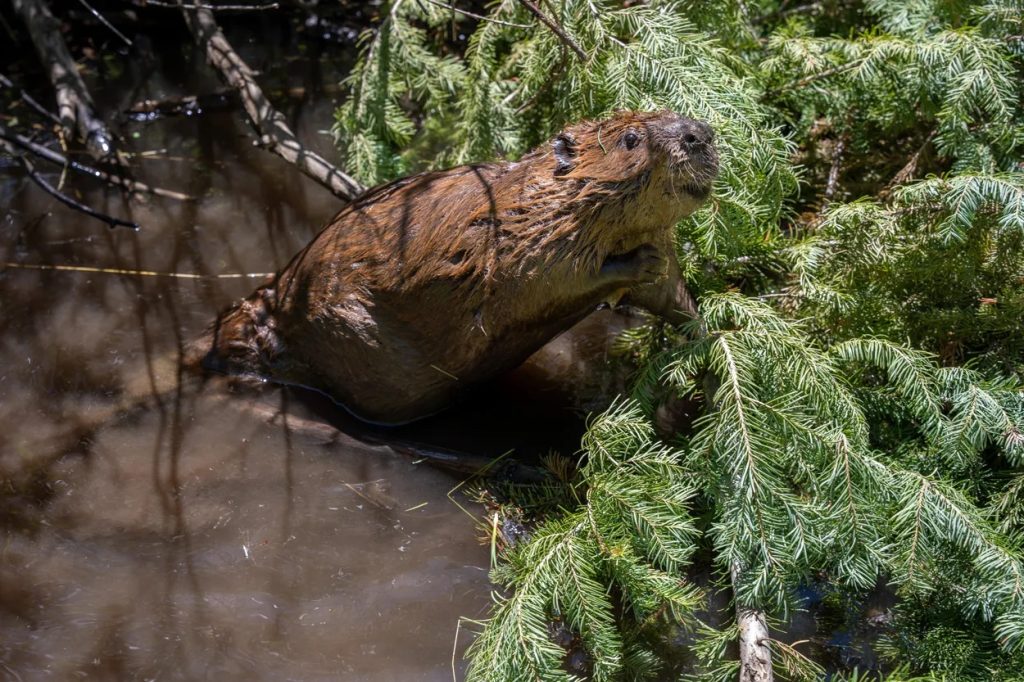
Rachael Gonzales/Colorado Parks and Wildlife
Seven months after finalizing a plan to increase and sustain the state’s beaver populations, Colorado Parks and Wildlife is joining two other state agencies to push the conservation program forward after the governor declared it was a “wildly important goal” for the state.
“Successful beaver restoration can improve watershed health and resilience and the governor fully supports the beaver restoration work and plan of Colorado Parks and Wildlife,” said Ally Sullivan, a spokesperson for the governor’s office, in an emailed statement. “Gov. [Jared] Polis knows that a cross-agency effort to protect beavers, habitat and waterways will further improve Colorado’s watershed health and balance our ecosystem.”
The governor uses wildly important goals to identify high-priority policy areas, directing cross-agency efforts to make progress toward their achievement. This summer, Polis requested that Parks and Wildlife, the Colorado Department of Agriculture and the State Land Board develop one of these goals to track implementation of the Beaver Conservation and Management Strategy for fiscal year 2027, running from July 1 to June 30, 2027.
At its September commission meeting, Parks and Wildlife staff provided an update on the strategy and goal — which includes nine measurable targets around staffing, habitat restoration, coexistence with landowners, translocation and interagency collaboration — and their progress toward each. The work is supported by $1 million in funding from oil and gas production fees.
“Beavers are essential ecosystem engineers that play a pivotal role in building drought resilience, improving water quality, creating critical wetland habitats and increasing biodiversity across our state,” said Sherri Huwer, the terrestrial programs supervisor for Parks and Wildlife.
Understanding and monitoring beaver populations
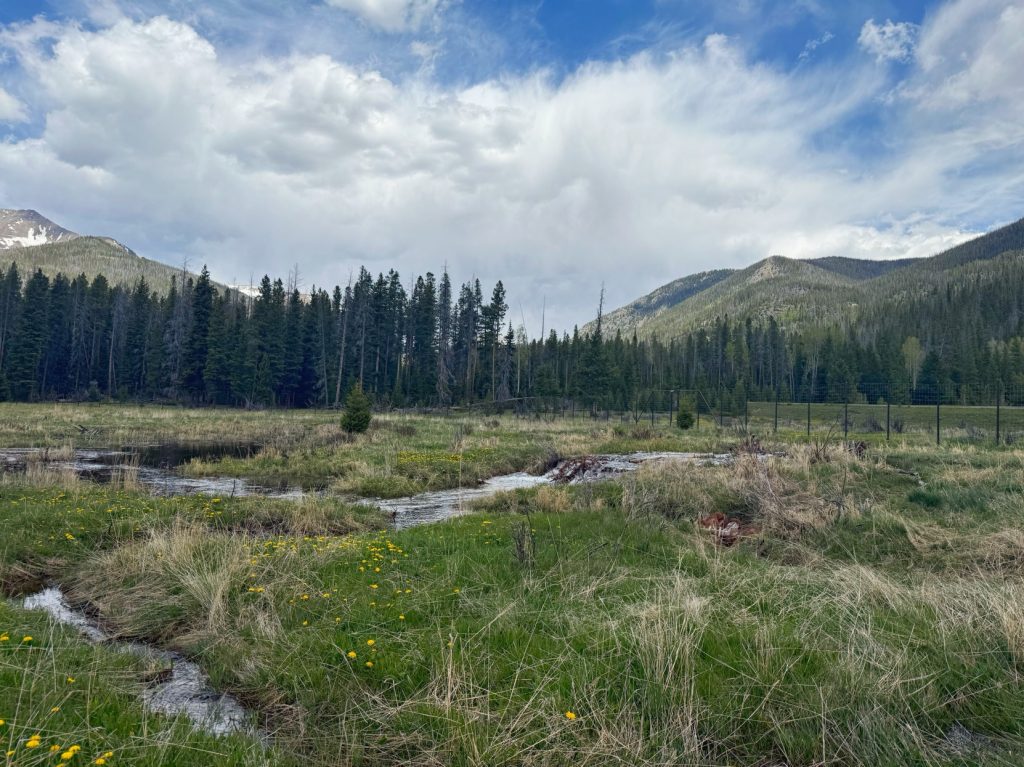
The strategy’s overarching goal is to “increase beaver populations and beaver-occupied wetland habitats until a social or ecological carrying capacity is reached,” Huwer said.
Part of this includes better understanding where and how much suitable beaver habitat there is, in addition to monitoring how many beavers are living in these wetlands.
North American beaver populations fell from an estimated 60 to 400 million animals before European settlement to between 6 and 12 million in contemporary estimates, the strategy reports, adding that it is “generally believed” that the state trends have followed this and Colorado’s beaver population is greatly reduced from former levels.
Habitat degradation, it notes, has been the largest driver for the population declines, with the most recent causes including “reduced stream flow in headwater streams from declining snowpack and drought, larger and higher intensity wildfires, loss of suitable forage through overgrazing by domestic and wild ungulates, and increased human-beaver conflicts with development in former riparian habitats.”
In the 1960s, the then Colorado Department of Game, Fish and Parks conservatively estimated there were around 60,000 beavers, after which “intensive efforts to inventory beaver populations and habitats subsided,” the strategy states. A 2021 analysis by the Colorado Beaver Activity Mapper — which estimates populations based on mapped beaver ponds — concluded that there are around 53,000 dam-building beavers in Colorado.
Nearly 90% of the beaver ponds in Colorado are in the mountains, with the majority located west of the Continental Divide in the Colorado River headwaters basin, the analysis found.
Parks and Wildlife has completed several “major milestones” to monitor beaver populations and manage avocation hunting in Colorado, Huwer said.
Beavers are among the species that the state manages as furbearers, a group of small carnivores that can be hunted for their fur in Colorado. The commission recently passed a regulation to require hunters to submit any beaver killed for inspection, which was a goal outlined in the strategy. The agency intends to use this information to understand which watersheds beavers are located in, and impose watershed-specific limits on beaver hunting in the future.
While not contemplated in the strategy, the commission also added a new limit on the number of furbearers, including beavers, that a hunter can kill in a day. Down from a previous unlimited standard, hunters are now limited to two of each furbearing species a day.
In September, Brian Dreher, Parks and Wildlife’s assistant director of terrestrial wildlife, said that while the agency has set aside funds and resources to “better estimate beaver abundance,” it is not the most critical part of its efforts to boost their numbers.
“Counting animals is just a marker,” Dreher said. “Conservation and expansion of beaver abundance is not going to be because we count them. It will be because we partner with landowners to do the right thing, to help them. It will be because we build translocation facilities so that we can restore beavers to where they were once out of the landscape. That’s where conservation happens. It doesn’t happen just by counting them.”
Relocations, reintroductions, habitat restoration and matchmaking
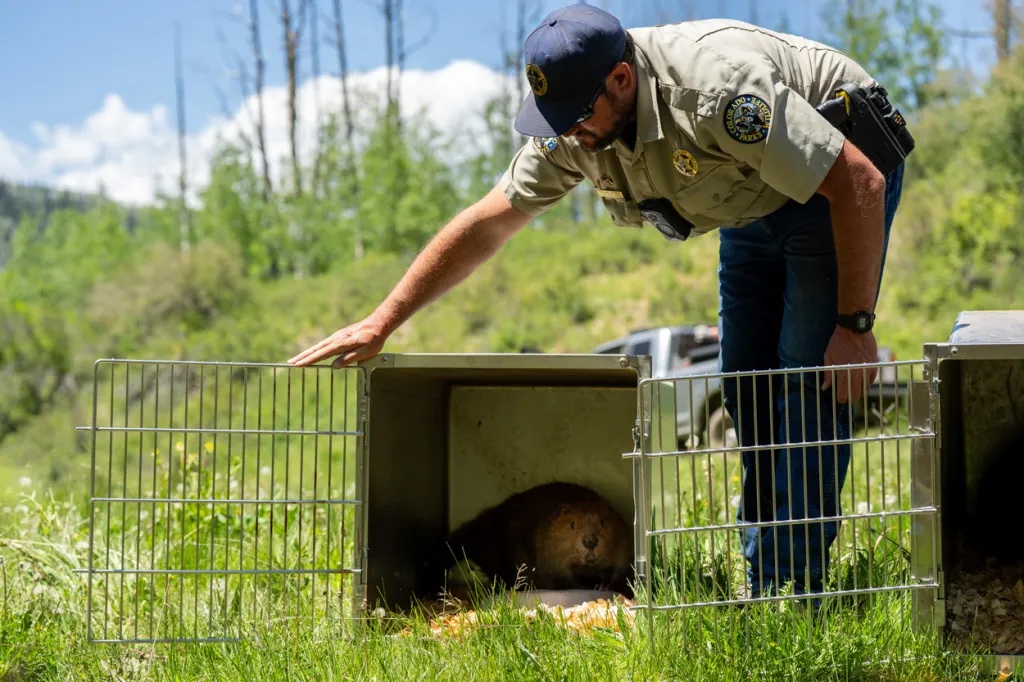
In its “wildly important goal,” the majority of the remaining strategies are aligned with finding and creating suitable beaver habitat and restoring them to these spaces.
As ecosystem engineers, beavers’ structures help to slow and spread out the flow of water to create healthy wetlands that are not only critical to their survival, but also help trap sediment nutrients and rehydrate landscapes.
After the strategy and the Colorado Beaver Activity Mapper work to map suitable beaver habitat and identify watersheds with the best opportunities for restoration, Parks and Wildlife will distribute $333,000 in grants to seven beaver-related restoration projects on Sept. 30. This is part of its Wetlands for Wildlife grant program.
It also is working to create policies and procedures to translocate beavers.
“Translocation is a vital tool for reestablishing beavers in suitable unoccupied habitat, but it must be done responsibly and with strict biosecurity,” Huwer said.
Part of the cross agency efforts with the State Land Board will include finding a way “to leverage state land trust lands for watershed conservation,” Huwer said.
This includes inventorying beaver populations on current State Land Board properties and working with their leasees to understand the benefits of the state’s conservation and coexistence efforts. It will also include identifying two properties with willing lessees to reintroduce beavers.
Beavers are among those that the state identifies as a nuisance species, meaning that private landowners and producers can kill the animals for causing damage to crops, private property or livestock without a license. In partnership with the Colorado Department of Agriculture, Parks and Wildlife’s strategy will work to craft a guide to share ways that landowners can resolve and prevent conflict with beavers without killing them.
Huwer said that in the future, the state is looking for ways to create a “matchmaking service” for beavers and suitable habitat.
“We have lists of lands where beavers are in conflict with humans and then we have a list of people who are ready to receive beavers and we will be kind of the matchmaker, taking beavers from where they’re not wanted and putting them into places where they are wanted,” she added.
Colorado Agriculture Commissioner Kate Greenberg said that in working with landowners, the Department of Agriculture is looking at “how does this support working lands and how does our collaboration with the landowner community to protect beavers and help beavers do their great work on the landscape actually come back to support our food system and the people doing the work?”
Greenberg added that, for the agency, the work is not about “completing checkboxes” on a governor-director goal, but is something that has integrated into its culture because the work of beavers and things like beaver dam analogs are needed now more than ever.
“Just take a year like this where we have unprecedented winter temperatures, driest snowpack. We’re going to be seeing, due to climate change winters with less snow, more rain,” she said. “We’re not prepared to hold that moisture in the High Country; that’s not how our infrastructure is developed. With higher temperatures and higher winds, we’ll have higher evaporation and evapotranspiration. So protecting the soil and keeping that groundwater in the soil is critical. These are all tools that beavers provide.”









Support Local Journalism
Support Local Journalism
Readers around Glenwood Springs and Garfield County make the Post Independent’s work possible. Your financial contribution supports our efforts to deliver quality, locally relevant journalism.
Now more than ever, your support is critical to help us keep our community informed about the evolving coronavirus pandemic and the impact it is having locally. Every contribution, however large or small, will make a difference.
Each donation will be used exclusively for the development and creation of increased news coverage.